EV Fleet Charging · Toronto & the GTA
Charging for your whole fleet.
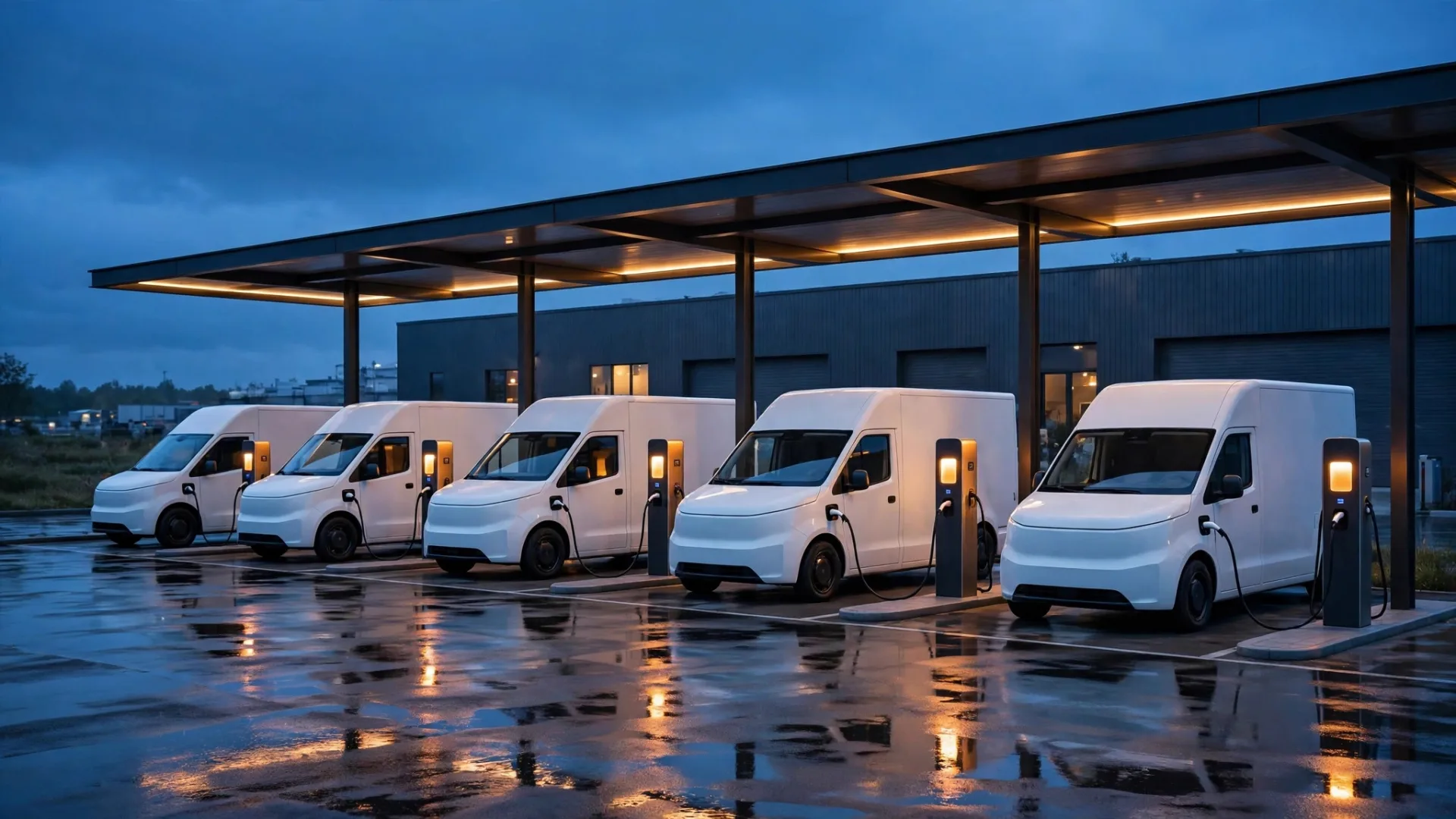
3e Electrical designs and builds fleet EV charging around how your vehicles actually work — site assessment, utility coordination, ESA permits, installation and load management, handled by one engineer-led team.
What will it cost to charge your fleet?
It’s the first question every fleet operator asks, and the honest answer is: it depends on your vehicles, your routes and your building’s electrical capacity. So instead of a made-up number, we put together an info pack with the real cost ranges for Level 2 and DC fast charging, what drives the price up or down, which incentives and tax measures apply right now, and how load management can keep you off an expensive service upgrade.
Leave your email and we’ll send it over — and reach out to walk you through what it means for your fleet.
Fleets that make the switch
If your vehicles come back to the same place every night, you already have the hardest part of fleet charging solved: somewhere to plug in.
🚐
Delivery & logistics
Back at base every night — the textbook case for overnight Level 2 charging, full by morning.
🔧
Service & trades
Vans that leave loaded and come home empty. Charge at the shop, skip the gas station detour.
🚕
Taxi fleets
High daily kilometres and short breaks — a mix of DC fast top-ups and overnight charging.
🔑
Rental fleets
Vehicles that turn around fast need charging that keeps up — and records for every session.
📱
Ride-share fleets
Central charging for driver fleets, scheduled around peak earning hours, not against them.
🏛️
Police & municipal
Depot charging designed for vehicles that cannot be out of service — staged, redundant, secure.
🚌
School buses
Long midday and overnight dwell times make school buses one of the easiest fleets to electrify.
🚍
Public transit
High-capacity depot distribution, engineered for growth as routes convert.
How it works
Three steps from first call to a fleet that plugs in at home base.
Tell us about your fleet
How many vehicles you’re converting, how far each one travels in a day, and how many more you expect each year. That’s enough to start.
Engineer consultation & utility check
You meet with our in-house principal engineer. We open a dialogue with your electricity provider about the capacity available at your building — before anyone quotes you hardware.
Design, permit, build
We design the charging distribution, pull the ESA permit, and stage the installation around your operation, so your fleet keeps working while we build.

Level 2 or DC fast?
Matched to how long your vehicles sit.
Charging speed is really a question about dwell time. Vehicles parked overnight for eight hours or more rarely need more than Level 2 — it costs less per port, it’s gentler on batteries, and every vehicle is full by morning.
Vehicles that turn around in under an hour — taxis, rentals, two-shift delivery — are the case for DC fast charging. Most fleets end up with a mix, and the design work is getting that mix right.
Load management: more chargers, same service
Smart load management shares your building’s existing capacity across every port, charging vehicles in turn through the night. It routinely avoids a five- or six-figure service upgrade — and keeps demand charges in check. And because fleets charge overnight, they land in Ontario’s cheapest electricity window — the Ultra-Low Overnight rate drops to 3.7¢/kWh between 11 p.m. and 7 a.m. from November 1, 2026.
What your price depends on
Four things move a fleet charging budget. Everything else is detail.
Number of chargers
Ports today, plus the ones your conversion plan adds in years two and three. Conduit and capacity are cheapest to oversize once, at the start.
Charger level & speed
Level 2 ports cost a fraction of DC fast chargers. Paying for speed your dwell time doesn’t need is the most common way fleets overspend.
Your building’s capacity
Spare capacity and load management keep a project lean. A service upgrade through the utility is the single biggest cost swing — we establish it early.
Distance & ground work
Chargers beside the panel are simple. Chargers across the yard can mean trenching, concrete and bollards — priced honestly once we’ve seen the site.
Your numbers depend on your site. The info pack has the ranges — a consultation turns them into a budget for your fleet.
Why fleets switch
The vehicles get the attention. The savings are in the operating costs.
Lower fuel & maintenance costs
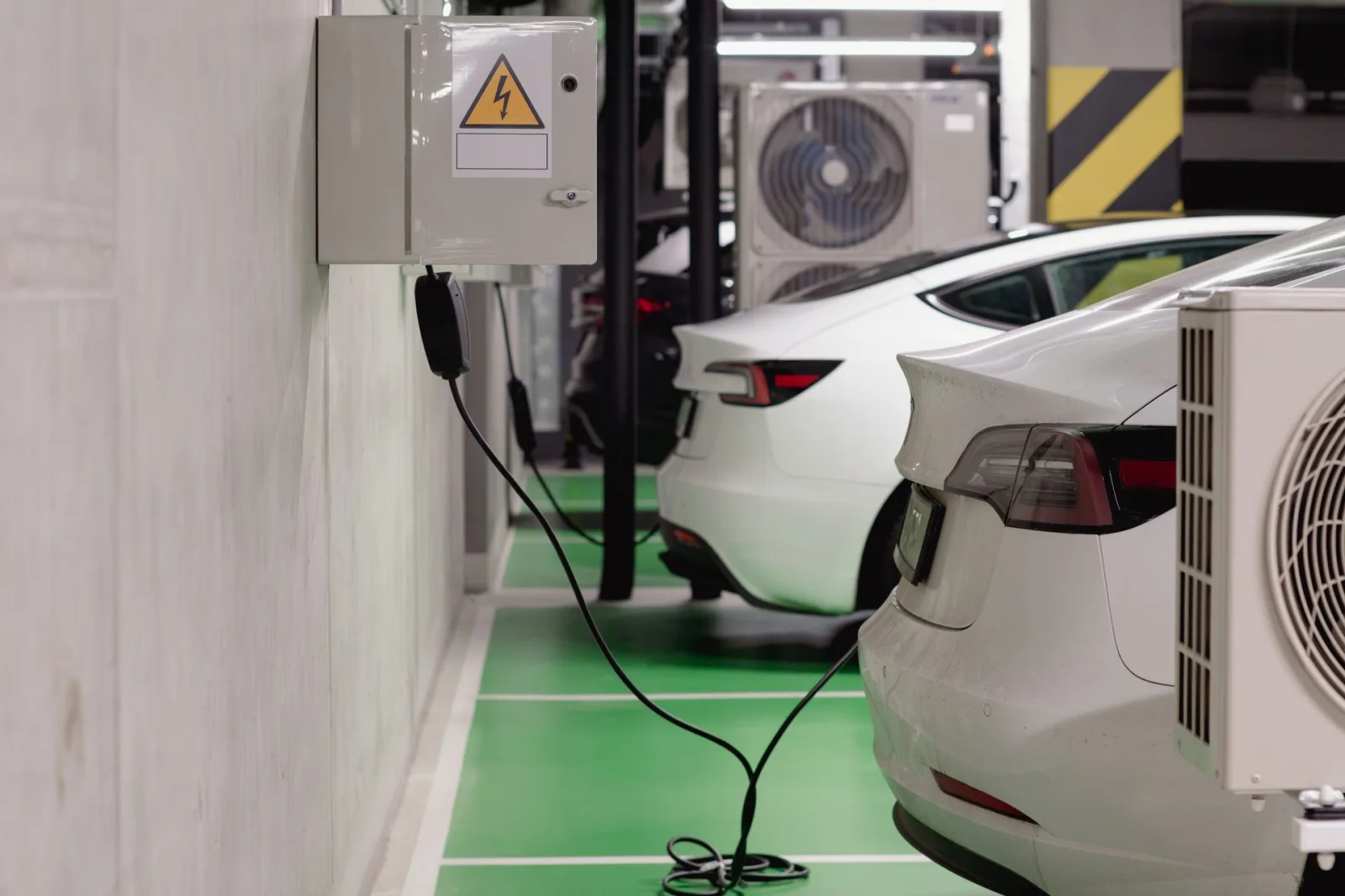
Electric drivetrains have a fraction of the moving parts of gas or diesel. Industry estimates put lifetime savings around $10,000 for a light-duty vehicle — and up to $100,000 for heavy-duty.
No more fuel runs
Vehicles charge where they park. Your drivers stop spending paid time detouring to gas stations.
Cleaner, quieter yards
No exhaust idling at the dock, no early-morning diesel noise — and emissions your customers and your city can see you cutting.
Why 3e Electrical
Fleets need a lot of power, delivered on a schedule. Getting it is not amateur work.
Engineer-led design/build
Architecture, engineering, construction and project management under one roof — the design and the build are the same team.
Built to grow
We design for where your company is going. Distributions are laid out so adding chargers later is cost-effective, not a rebuild.
Utility coordination handled
We deal with your electricity provider on capacity and approvals — the part of the project most likely to stall without an engineer pushing it.
Phased rollouts & financing
Design/build with financing and private-partnership options, so the rollout can match your budget year by year.
Fleet charging questions
The things operators ask us first.
How much does it cost to install fleet charging?
Will our building have enough electrical capacity?
Level 2 or DC fast charging — which do we need?
How long does a fleet charging project take?
Can we start small and add chargers later?
Are there incentives for fleet charging in Ontario?
Ready to talk fleet charging?
Tell us about your fleet and your building. We’ll come back with next steps and a consultation with our principal engineer.
Request a Quote Call (647) 560-7995
Not ready to talk? Start with the fleet charging info pack — the cost ranges and the questions to answer before you budget.