3e Electrical — Service Repair
Clevis Installation & Repair in Toronto
The clevis is the steel anchor that holds Toronto Hydro’s service drop to your house. When it rusts out, pulls loose, or tears out of the brick, we replace it — anchored into the structure of the wall, and built to hold for decades.
Also: clevis installation in Etobicoke · clevis installation in North York
How much does clevis repair cost? See the full breakdown ↓
We quote it. You approve it. We do it. ⚡
Request a Quote★★★★★ 4.9 from 200+ reviews
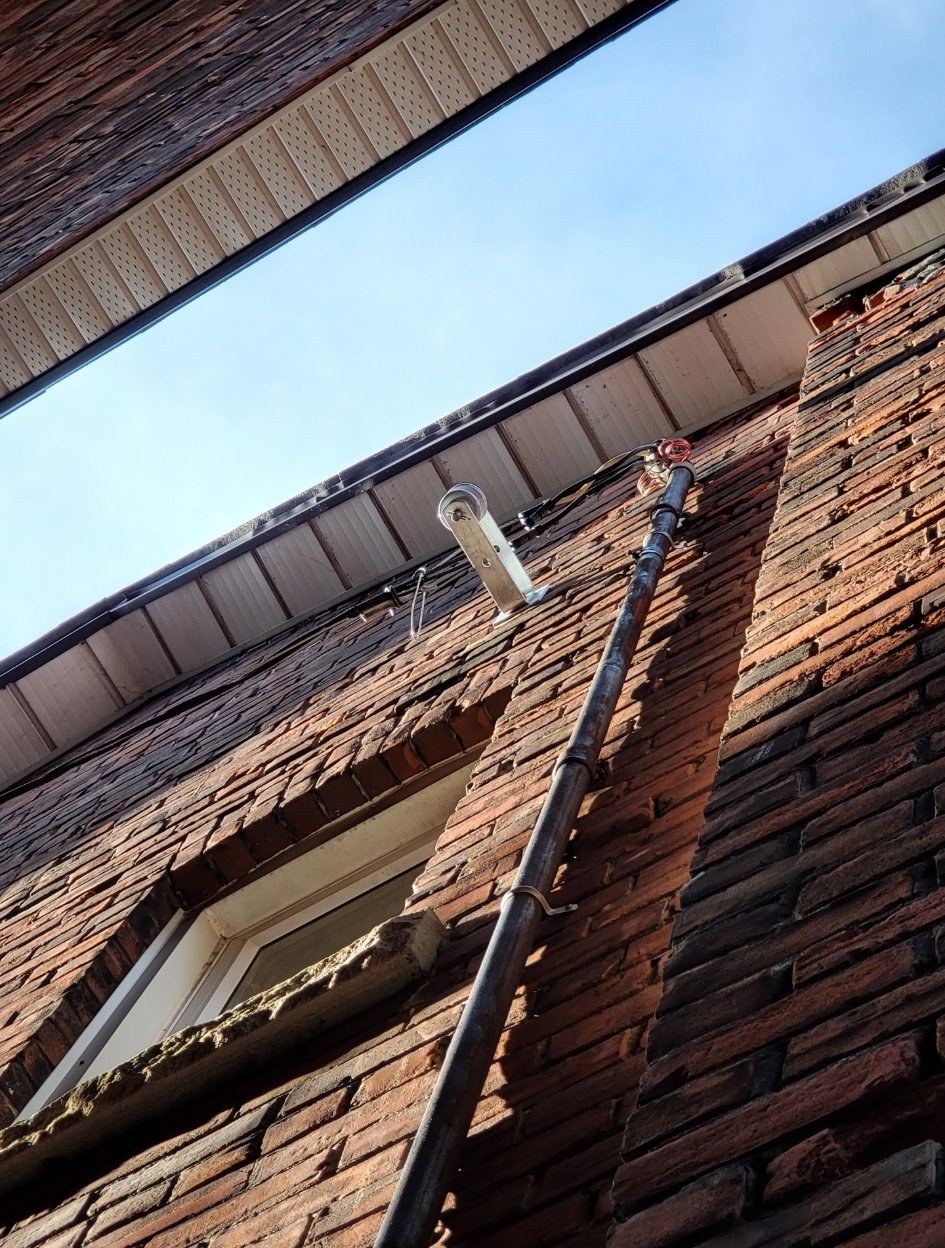
The small part holding up your power
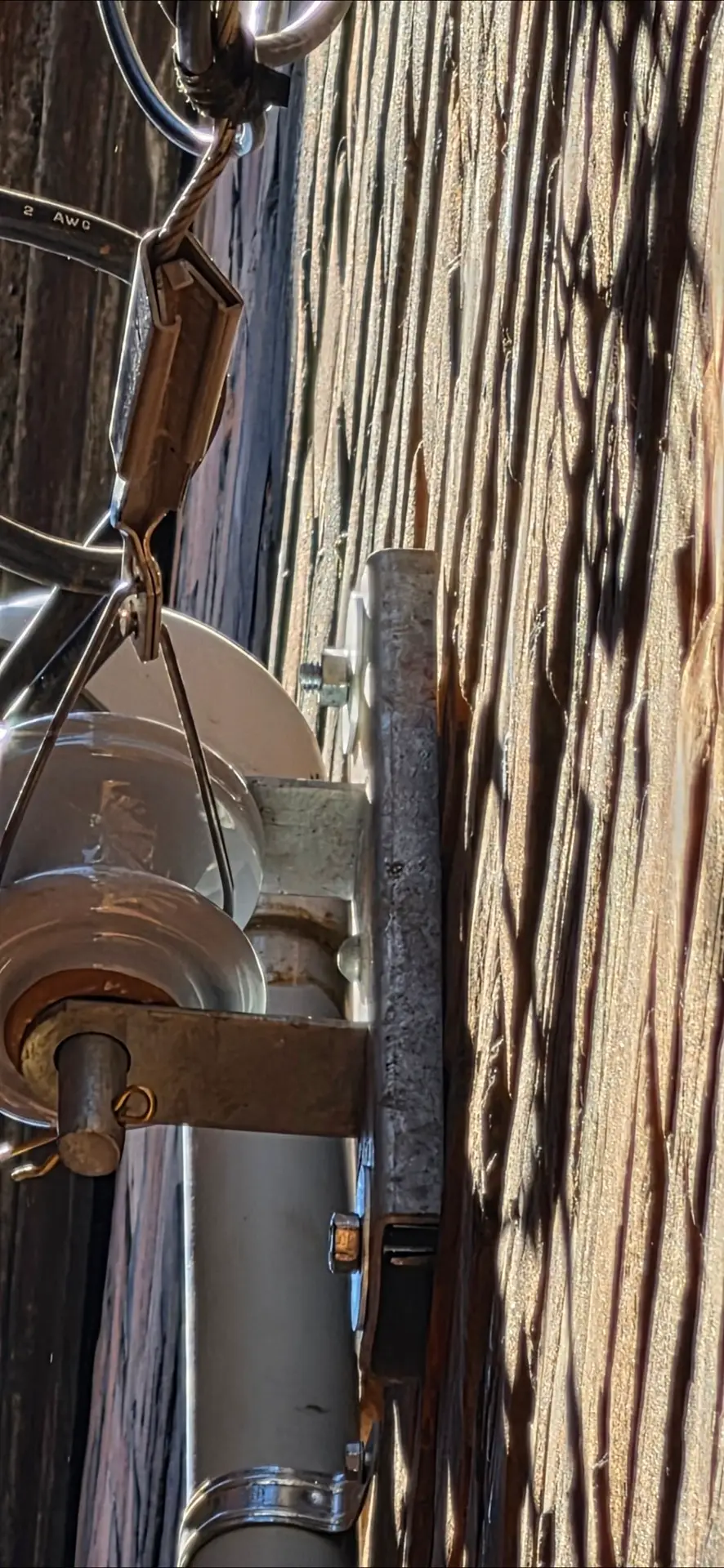
Every overhead electrical service ends at a clevis. It is a forged steel bracket bolted to your house, and the Hydro cable — the triplex drop from the pole — hangs from it. That one anchor carries the full weight and tension of the cable, day and night, for decades: wind working it back and forth, ice loading the line in a storm, freeze and thaw cycling the brick around it.
It is also your part, not Hydro’s. Toronto Hydro’s service standard puts the clevis on the customer’s side of the connection: the homeowner supplies, installs and maintains it. Hydro makes the electrical connection to it — but if the clevis fails, the repair is the homeowner’s, and it needs a licensed electrical contractor.

Got a letter about your electrical service?
Most clevis repairs don’t start with the word clevis. They start with paper — a notice from Toronto Hydro or the ESA about the equipment on your house. If that’s what’s in your hand, these are the words on it, and what they mean:
“Deficiencies.” That’s Toronto Hydro’s word. Under its Conditions of Service, when Hydro finds deficiencies in customer-owned equipment — the service mast is named on their list — it notifies the customer, gives a reasonable time to correct them, and may disconnect the supply if they aren’t corrected.
“Defect notice.” That’s the ESA’s. An inspection that finds problems with your service produces a list of defects to be corrected by a Licensed Electrical Contractor — and the point of attachment is one of the things inspected.
“30 days to make the temporary repairs permanent.” After storm damage, a temporary repair can get your power back — with a letter giving you 30 days to make it permanent.
If your letter mentions the point of attachment, the service mast (Hydro also calls it the standpipe), the connection point, or customer-owned equipment — it’s describing the clevis and the hardware around it. The ESA draws the ownership line where the wires attach to the house. That repair is this page: permitted, inspected, and done before the deadline on your letter.
Signs your clevis is failing
- The clevis is pulling away from the wall, or its bolts are working loose
- Cracked, crumbling or blown-out brick around the anchor
- Heavy rust on the clevis or the spool it carries
- The service mast is leaning, or the drop is sagging lower than it used to
- Toronto Hydro or an ESA inspector has flagged your point of attachment
- Storm damage — a tree, ice, or wind has already pulled on the drop
If the drop is down or hanging by a wire: treat every wire as live. Keep people and pets well clear, call Toronto Hydro first, then call us for the repair.
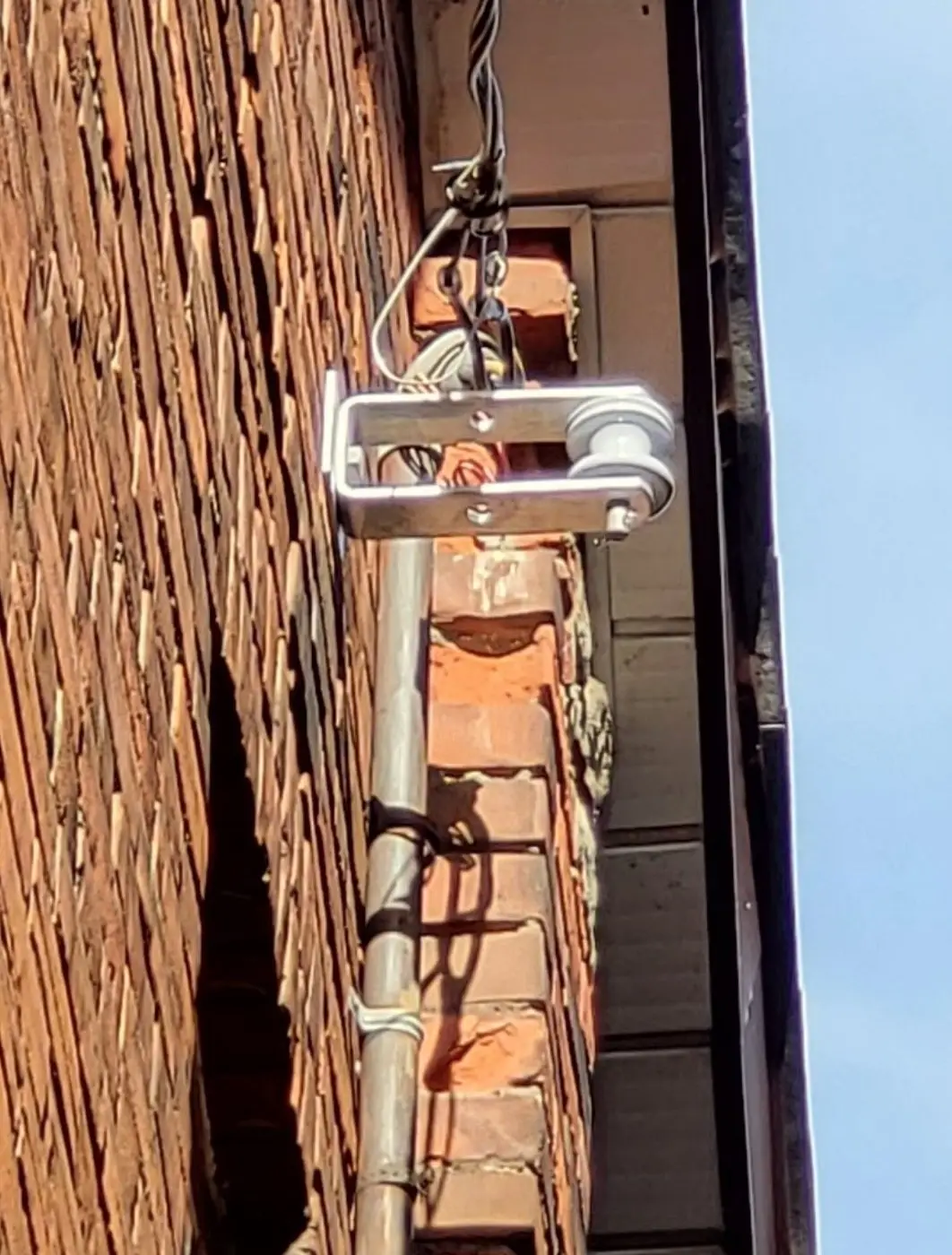
How we install a clevis — and what we do differently
We start with the wall, not the hardware. Solid brick and block can carry an anchor. Brick veneer — the single decorative layer on most Toronto houses — cannot: it is a finish, not structure. Most of the failed clevises we replace were anchored into veneer or into a mortar joint, and they were always going to tear out.
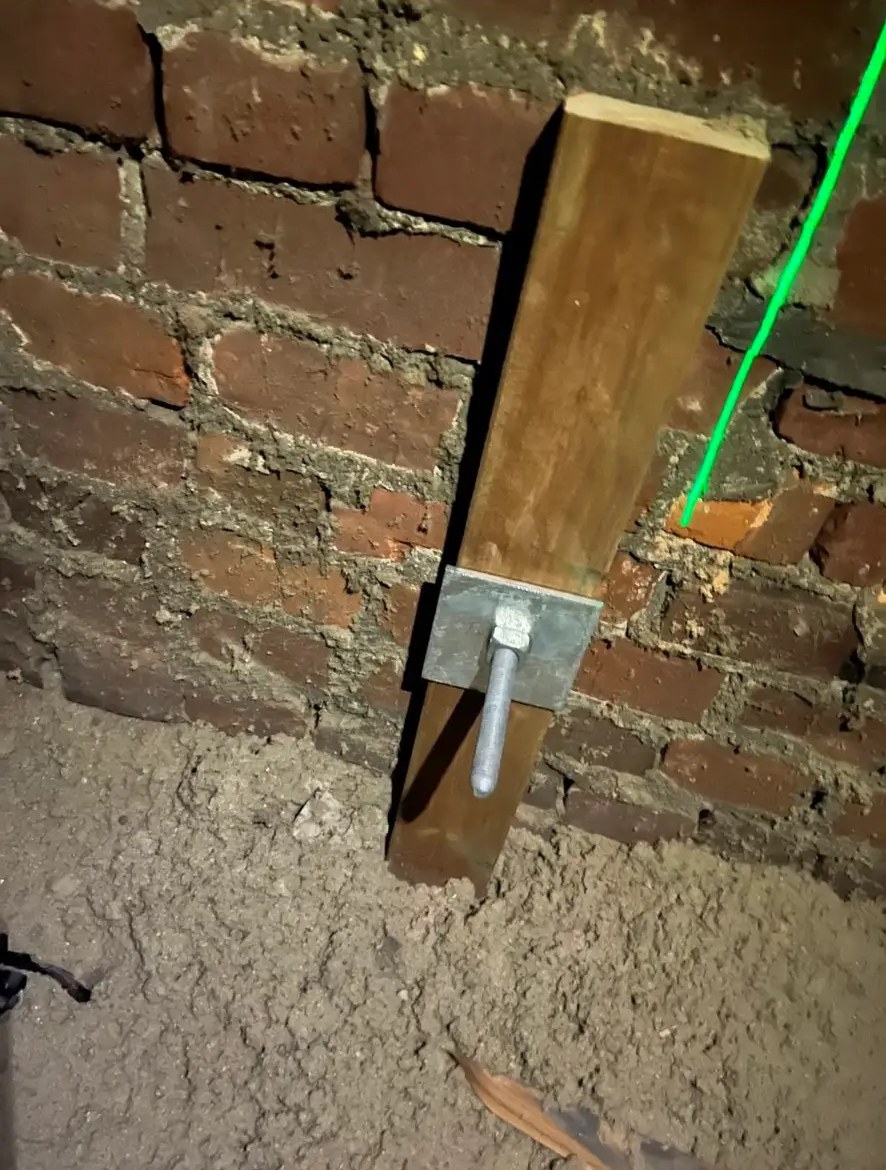
Where the wall needs it, we install an extended clevis that passes through both layers of brick and through-bolts to a plate inside, so the pull of the drop spreads across the whole wall instead of prying at the surface. Where solid structure is there to anchor to, we anchor into the structure — never the finish.
Installed to standard, permitted, and inspected. Attachment height and clearances follow Toronto Hydro’s service standard and the Ontario Electrical Safety Code. Every job runs on an ESA permit with an inspection, and we coordinate Toronto Hydro’s disconnect and reconnect so the power side is handled in the same visit window.
Finished properly. Galvanized hardware, the wall made good around the work, and the completed installation photographed for your records — backed by our 10-year workmanship warranty.
More than the clevis
Replacing the clevis puts us at the top of your service — so we finish the whole run while we are there:
- Service mast straps renewed — the straps holding your mast to the house, replaced as part of the job
- Meter straps renewed — the straps below the meter base, too
- Panel inspection and maintenance — your panel cleaned out, and every connection in it checked and tightened
The anchor, the mast, and the panel leave as one sound system — not a new clevis hung on tired hardware.
Built for Toronto weather
A clevis does not get a day off. Winter ice can add serious weight to the drop; a January wind off the lake works the anchor for hours at a time; and the brick around it expands and contracts through every freeze–thaw cycle. A clevis installed into real structure, with the load spread the way it should be, simply holds — the way the originals on Toronto’s older homes held for fifty years. That is the standard we install to.
Clevis and service work
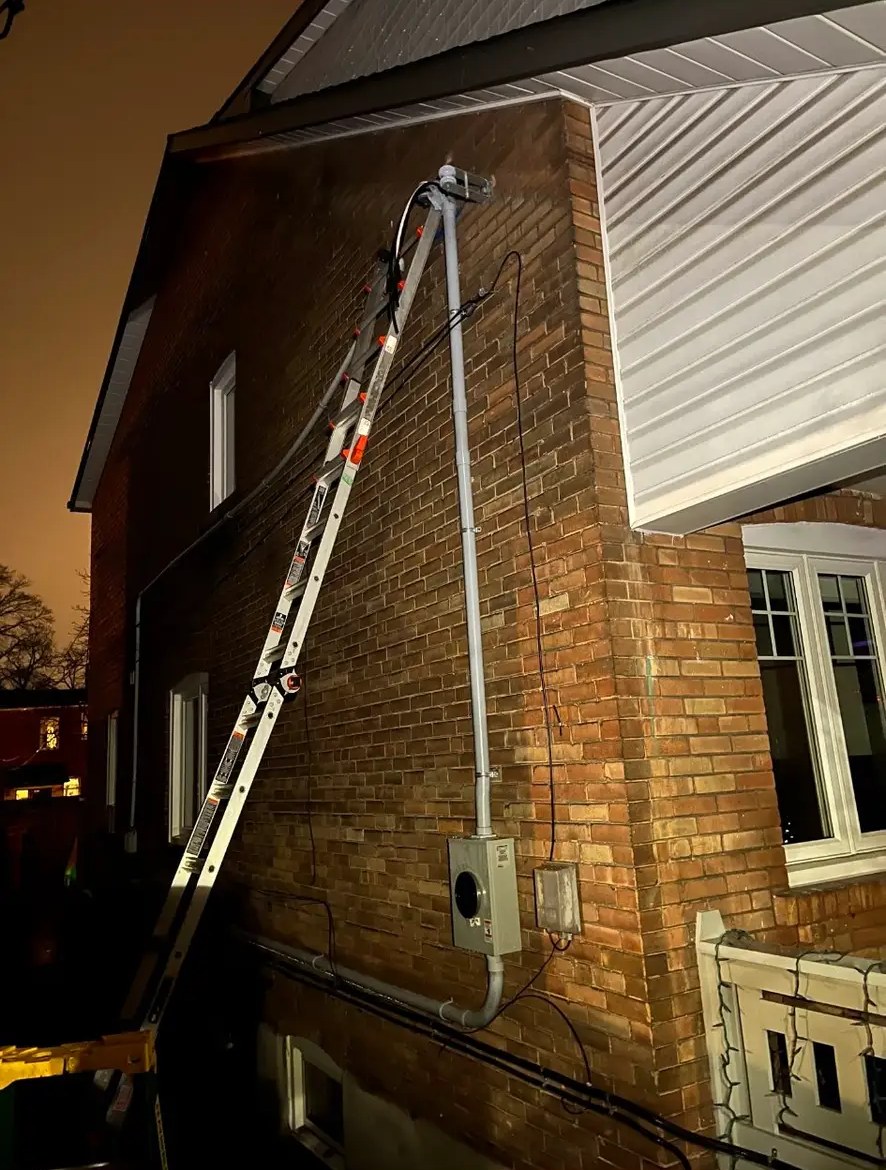
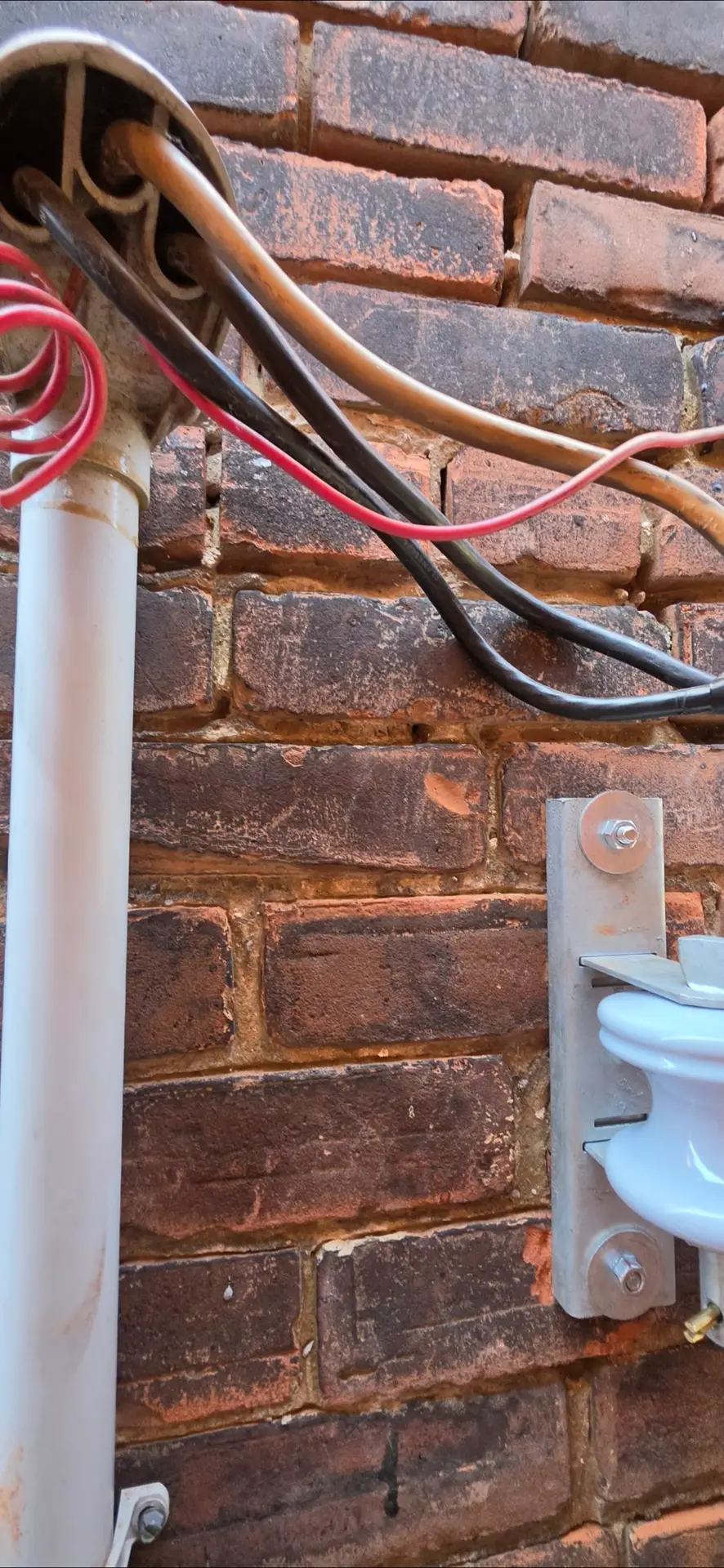
Clevis repair cost in Toronto
How much does it cost to replace a clevis in Toronto? Two fixed fees come before our work even begins — and neither one is ours:
$600 + HST = $678
$92 + HST = $103.96
The $600 is a Toronto Hydro price. Toronto, Etobicoke and North York are all Toronto Hydro territory, and the fee applies no matter who does the repair. Other utilities — Alectra, for one — don’t charge it.
All in, most Toronto clevis repairs land between $1,450 and $2,400 + HST. Where yours sits depends on the job:
- Height — Toronto Hydro’s standard sets the attachment at 4,500–5,500 mm (15–18 ft) above grade, and a clevis at 18 feet is more work than one at 15
- Access — tight side yards, laneways, and close neighbouring houses (the classic old-Toronto squeeze) make everything slower and more careful
- The wall — solid brick anchors straightforwardly; veneer that needs an extended, through-bolted clevis adds work
- Company it keeps — a mast, weatherhead or service conductors that also need repair are cheaper to do while the drop is down
Send us a photo of your clevis and the wall around it, and we will tell you where in the range your job sits — before anyone climbs anything.
Request a Quote★★★★★ 4.9 from 200+ reviews
Questions, answered straight
I got a letter from Toronto Hydro about “deficiencies.” Is that about the clevis?
Very likely — if it names the service mast, the standpipe, the connection point, or the point of attachment. Hydro’s Conditions of Service call problems with customer-owned equipment “deficiencies,” and the clevis is customer-owned. Send us a photo of the letter and of the wall, and we will tell you exactly what it needs and how long you have.
Is the clevis my responsibility, or Toronto Hydro’s?
Yours. Toronto Hydro owns the drop and makes the connection, but their service standard puts the clevis — like the mast and weatherhead — on the customer’s side: the homeowner supplies, installs and maintains it. That work needs a licensed electrical contractor, which is us. Hydro reconnects to the new clevis once it is in.
How much does clevis repair cost in Toronto?
Most clevis repairs in Toronto land between $1,450 and $2,400 + HST. Two fixed fees come first: Toronto Hydro’s disconnect and reconnect fee, $600 + HST ($678), and the ESA permit and inspection, $92 + HST ($103.96). What moves it is the complexity of the job: the structure of the facade, the height of the clevis, and how tight the space is to the neighbouring house. An attachment at the top of Hydro’s height band — 5,500 mm (18 ft) — on a tight lot with a veneer wall is the top of the range; one near the bottom of the band, at 4,500 mm (15 ft), on solid brick with room to work is the bottom. Your quote is fixed before we start.
Do I need a permit for a clevis replacement?
Yes — the work runs on an ESA permit and is inspected, and Toronto Hydro’s disconnect and reconnect are coordinated as part of the job. We handle all of it.
How long does the job take?
Most clevis repairs are completed in a single visit. If your service is being upgraded at the same time, we will lay out the schedule in the quote.
My clevis has pulled out — is that an emergency?
If wires are on the ground or hanging loose, yes: treat them as live, keep everyone clear, and call Toronto Hydro. If the clevis is holding but pulling, rusted, or cracking the brick, it is not a tonight emergency — but do not leave it. A partially attached drop is carrying a load it was never meant to carry in that state, and the next ice storm votes on it.
Will a new clevis pass a Hydro or ESA inspection?
Yes. We install to Toronto Hydro’s service standard — attachment height, position, and clearances to spec — under an ESA permit, and the work is inspected. If Hydro or ESA flagged your attachment, a proper replacement is what clears it.
Get your clevis quoted
Tell us what you are seeing — a photo of the clevis and the wall helps more than anything — and we will come back with a straight quote and a plan.
Request a Quote★★★★★ 4.9 from 200+ reviews
Serving Toronto’s overhead-service neighbourhoods — Swansea, Bloor West Village, Baby Point, The Junction, High Park, Parkdale, Leslieville, Riverdale, East York, and across the old city where aerial drops are the norm.
Prices are subject to change without notice. Errors and omissions excepted. All prices plus HST unless stated otherwise.