Business Owner Electrical Guide
Power your business safely.
Straight answers about loads, safety, code compliance, and everyday electrical headaches — from licensed electricians serving Toronto and the GTA.
Know your system
Illustration
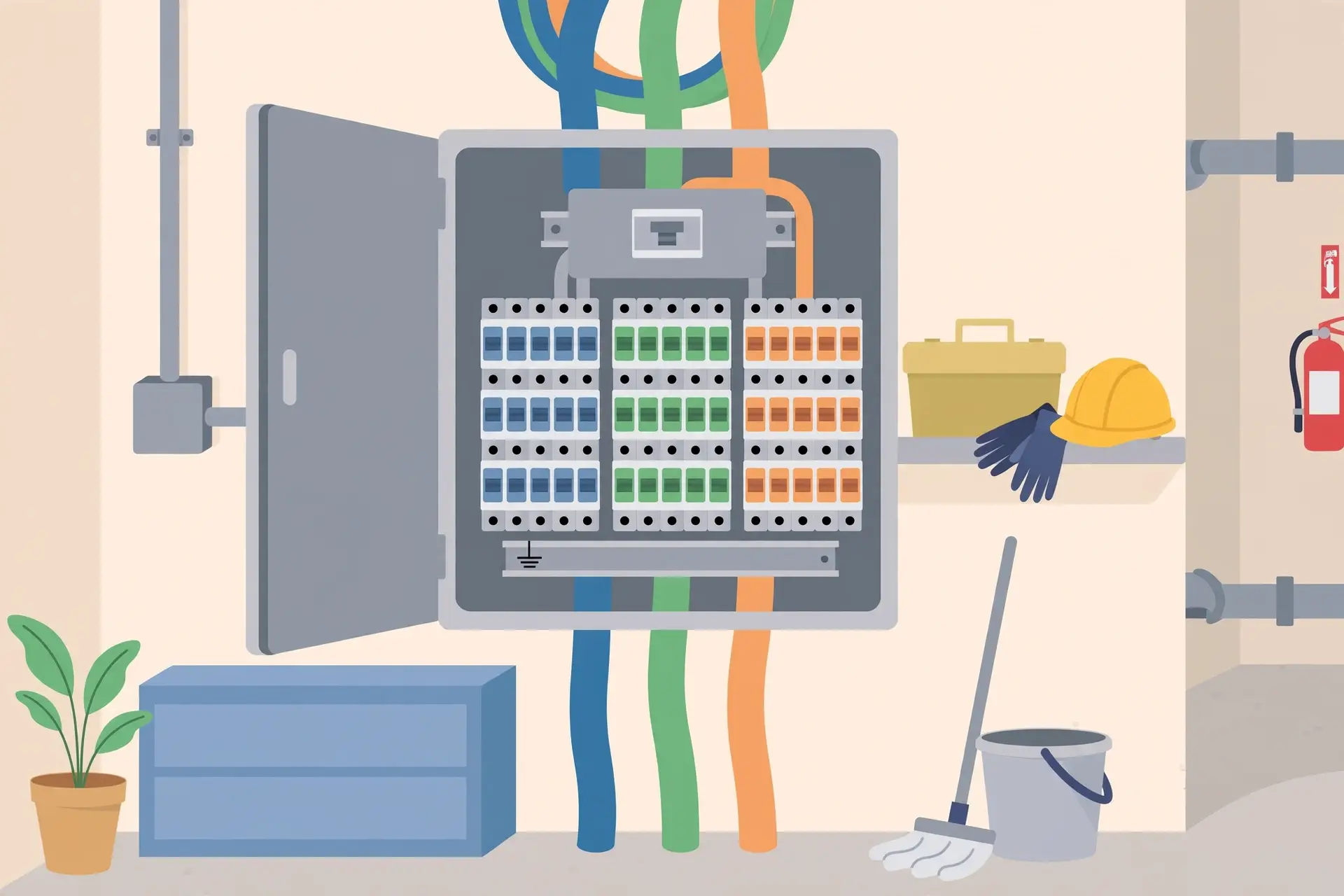
How do I know if my building’s electrical system can handle all of our equipment?+
Start with a load assessment: an electrician adds up the wattage of everything you run — HVAC, lighting, computers, kitchen or shop equipment — and compares it against your panel’s capacity and service size. Warning signs you’re maxed out include breakers that trip when multiple things run at once, warm or buzzing panels, and dimming lights when large equipment starts. Many older Toronto commercial buildings still sit on 100-amp services never designed for today’s loads, so get an assessment before any expansion or new equipment. Contact 3e for a free remote estimate — our licensed electrical contractors perform commercial load assessments across Toronto and the GTA.
What’s the difference between single-phase and three-phase power, and which does my business need?+
Single-phase (120/240V) is standard for homes and small shops — fine for lighting, outlets, and small equipment. Three-phase (typically 208Y/120V or 600V in Ontario commercial buildings) delivers power more efficiently and is required for large motors, commercial HVAC, welders, compressors, and heavy machinery. Rough rule: mostly lights and plug loads, single-phase is fine; multiple large motors or high-draw equipment running at once, you likely need three-phase. Upgrading later is far more expensive than getting it right at fit-out — decide before you sign a lease or renovate. 3e’s licensed electrical contractors design commercial electrical systems across Toronto, Etobicoke, Mississauga, and North York.
Safety for people-facing businesses

Illustration
We run a spa, salon, or medical/dental clinic with equipment used on people. What extra electrical safety do we need?+
Anywhere electricity meets water or human bodies, shock protection is critical. The Ontario Electrical Safety Code requires GFCI protection on spa and hot-tub circuits plus bonding of all nearby metal parts, and receptacles near sinks in washrooms and treatment rooms need GFCI protection. Patient-care and wet-procedure areas also carry stricter grounding and bonding rules to eliminate even tiny voltage differences between equipment. Public spas face additional health-unit requirements, including regular testing of ground-fault protection. Have a licensed electrical contractor verify your treatment rooms — not a general handyman. 3e’s licensed electrical contractors verify treatment-room safety across Toronto and the GTA.
Everyday headaches
Illustration
Why do space heaters keep tripping our breakers every winter?+
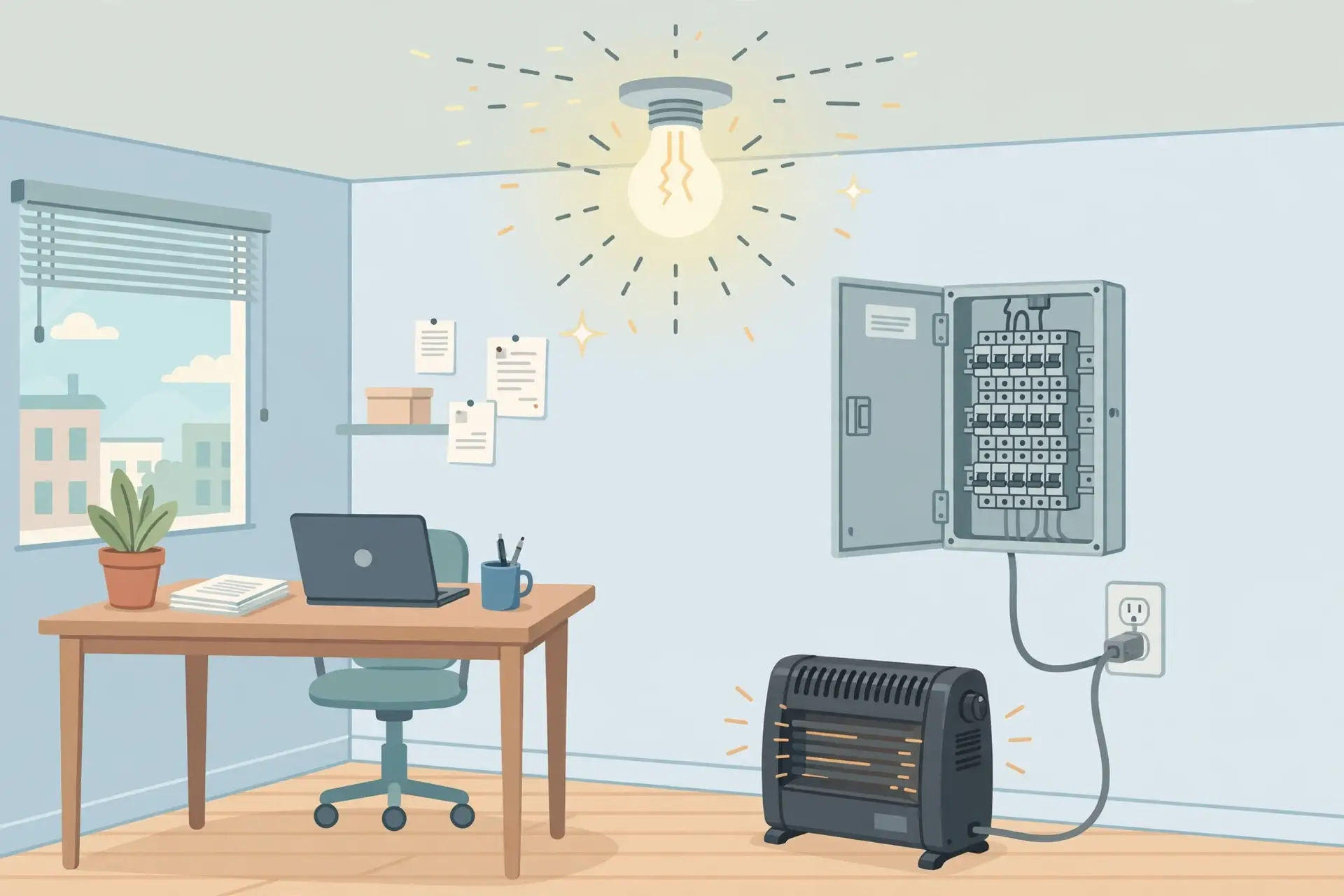
A typical portable space heater draws 1,500 watts — about 12.5 amps on a standard 120V circuit — while a normal 15-amp office circuit only has 1,800 watts of total capacity. That leaves almost nothing for computers, monitors, and lights on the same circuit, so the breaker trips exactly as designed. Heaters also cycle on and off, and repeated heat-cool cycles degrade connections over time. Safer fixes: install a dedicated circuit for heater locations, use heaters only on the low (750W) setting, or fix the root cause — the building’s heating — or add hardwired baseboard heat on its own circuit. 3e’s licensed electricians install dedicated circuits for commercial spaces across Toronto, Etobicoke, Mississauga, and North York.
Our office lights flicker, or breakers trip when we add new equipment. What’s going on?+
Flickering when large equipment starts usually means a loose connection, an overloaded circuit, or voltage drop on a long run — all of which deserve prompt attention, because loose connections are a leading cause of electrical fires. Breakers that trip when you add equipment are telling you that circuit is at capacity; the fix is redistributing loads across circuits or adding new ones — never swapping in a bigger breaker. If problems affect the whole floor or coincide with utility events, you may have a power-quality issue rather than a wiring fault. 3e provides commercial electrical troubleshooting across Toronto and the GTA.
What are “power quality” problems, and how do they damage our equipment?+
Not all electrical problems trip breakers — voltage sags, brief interruptions, harmonics from computers and variable-speed drives, and transient surges can silently degrade servers, POS systems, and control equipment over time. Symptoms include equipment that reboots for no reason, premature motor or drive failures, and breakers or transformers that run hot without an obvious overload. Diagnosis starts with power-quality monitoring at your main service, followed by mitigation like dedicated circuits for sensitive loads, harmonic filters, or UPS units on critical equipment. 3e’s licensed electricians perform power-quality assessments for businesses across Toronto and the GTA.
Code & compliance
Illustration
What electrical work in my business legally requires an ESA permit — and who is allowed to do it?+
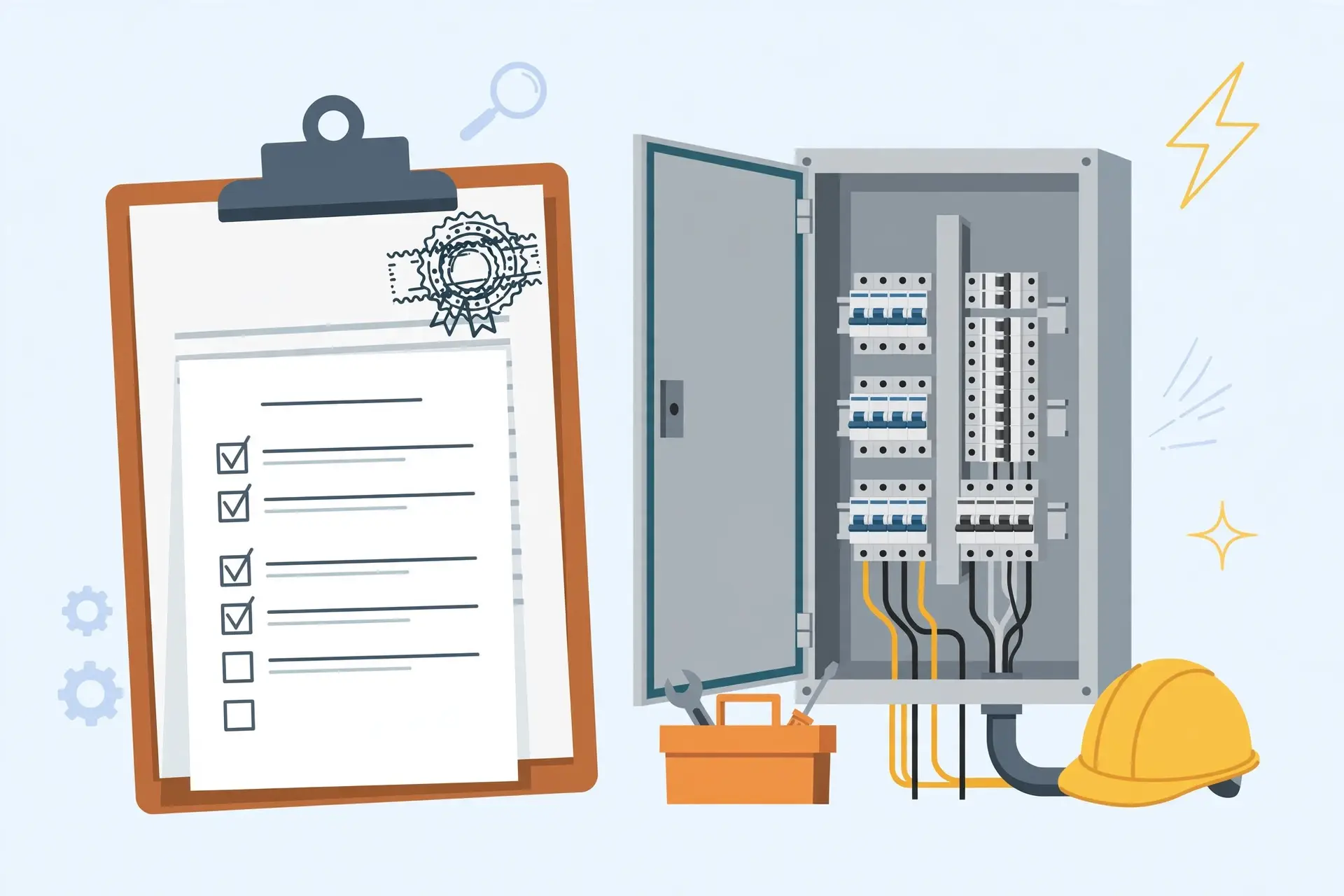
In Ontario, with limited exemptions, only ESA-licensed electrical contractors are legally authorized to perform electrical work — including new wiring, panel upgrades, lighting changes, and equipment installations. The contractor must file a notification (permit) with the ESA, and after inspection you receive an ESA Certificate of Acceptance confirming the work meets the Ontario Electrical Safety Code. ESA can issue administrative penalties up to $10,000 for unlicensed or unpermitted work — and as the business owner, you can be penalized for hiring an unlicensed contractor. Always ask for the contractor’s ESA licence number and your copy of the certificate. 3e is an ESA-licensed electrical contractor serving Toronto, Etobicoke, Mississauga, and North York — we file the permit and provide your Certificate of Acceptance.
How often should our building’s electrical system be inspected?+
Beyond the ESA inspection that follows any permitted work, plan your own preventive schedule: an annual visual and thermal inspection of panels, switchgear, and major connections is the industry baseline. Infrared thermography is the highest-value tool — a camera scans energized panels without shutdown and finds loose, overloaded, or corroding connections by their heat signature before they fail. Keep dated records of every inspection; insurers and fire inspectors both ask for them, and reports let you trend problem spots year over year instead of reacting to failures. 3e offers preventive electrical inspections with infrared thermography for commercial buildings across Toronto and the GTA.
What are the rules for emergency lighting and exit signs in our building?+
The Ontario Fire Code requires illuminated exit routes — stairwells, corridors, and paths to exits — that switch on automatically when power fails, plus illuminated exit signs with battery backup. Battery units need a 30-second functional test every month and a full 90-minute load test annually, with records kept for inspection. Dead batteries are the most common failure, and the annual load test is specifically designed to catch them before a real emergency does. 3e’s licensed electricians install and maintain emergency lighting systems across Toronto and the GTA.
Protect the business
Illustration
How do we protect our computers, servers, and equipment from power surges?+
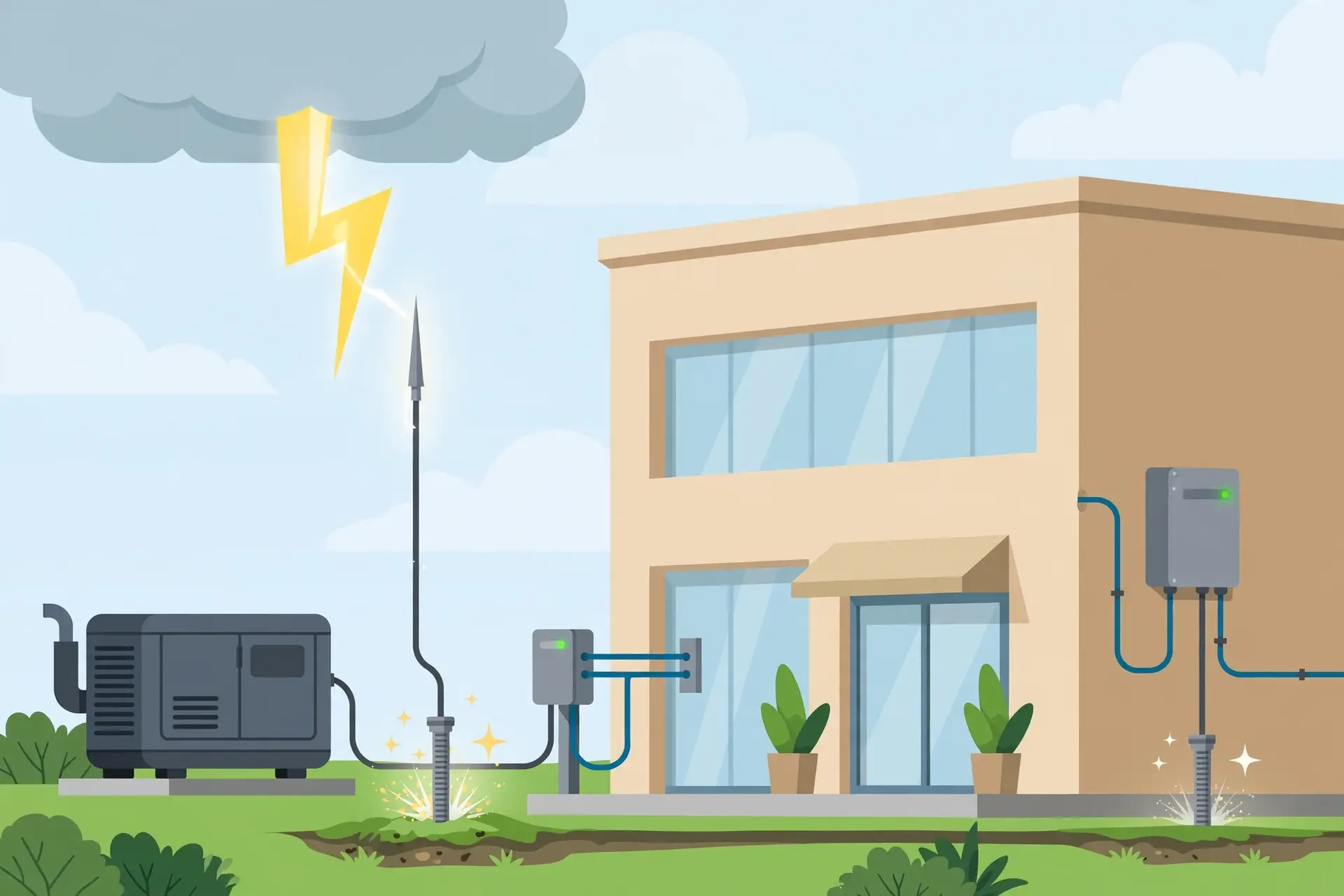
Layered surge protection is the standard: a Type 1 device at the main service entrance handles big external surges like lightning, Type 2 devices at distribution panels catch switching surges and residual energy, and Type 3 point-of-use protectors shield individual sensitive devices. For a typical office, Type 2 at the panels plus Type 3 at servers and networking gear is the recommended combination. Surges also arrive when utility power is restored after an outage — a common and overlooked source of equipment damage. Proper grounding is essential; without it, surge devices can’t divert energy safely. 3e designs layered surge protection for commercial buildings across Toronto, Etobicoke, Mississauga, and North York.
Do we need backup power or a generator? What are Ontario’s rules?+
If outages would cost you refrigerated stock, data, production time, or tenant safety, a standby generator is worth sizing properly — start by listing only the critical loads, since backing up everything is rarely necessary. Any generator connected to building wiring must go through an approved automatic transfer switch installed by a licensed electrical contractor, with an ESA permit and inspection. ESA explicitly warns against backfeeding — plugging a generator into a panel or outlet without a transfer switch can energize utility lines and endanger line workers. All equipment must bear a recognized certification mark such as CSA or ULC. 3e’s licensed electrical contractors size and install standby generators with automatic transfer switches across Toronto and the GTA.
Plan ahead
Illustration
Should our business install EV chargers for employees or customers?+
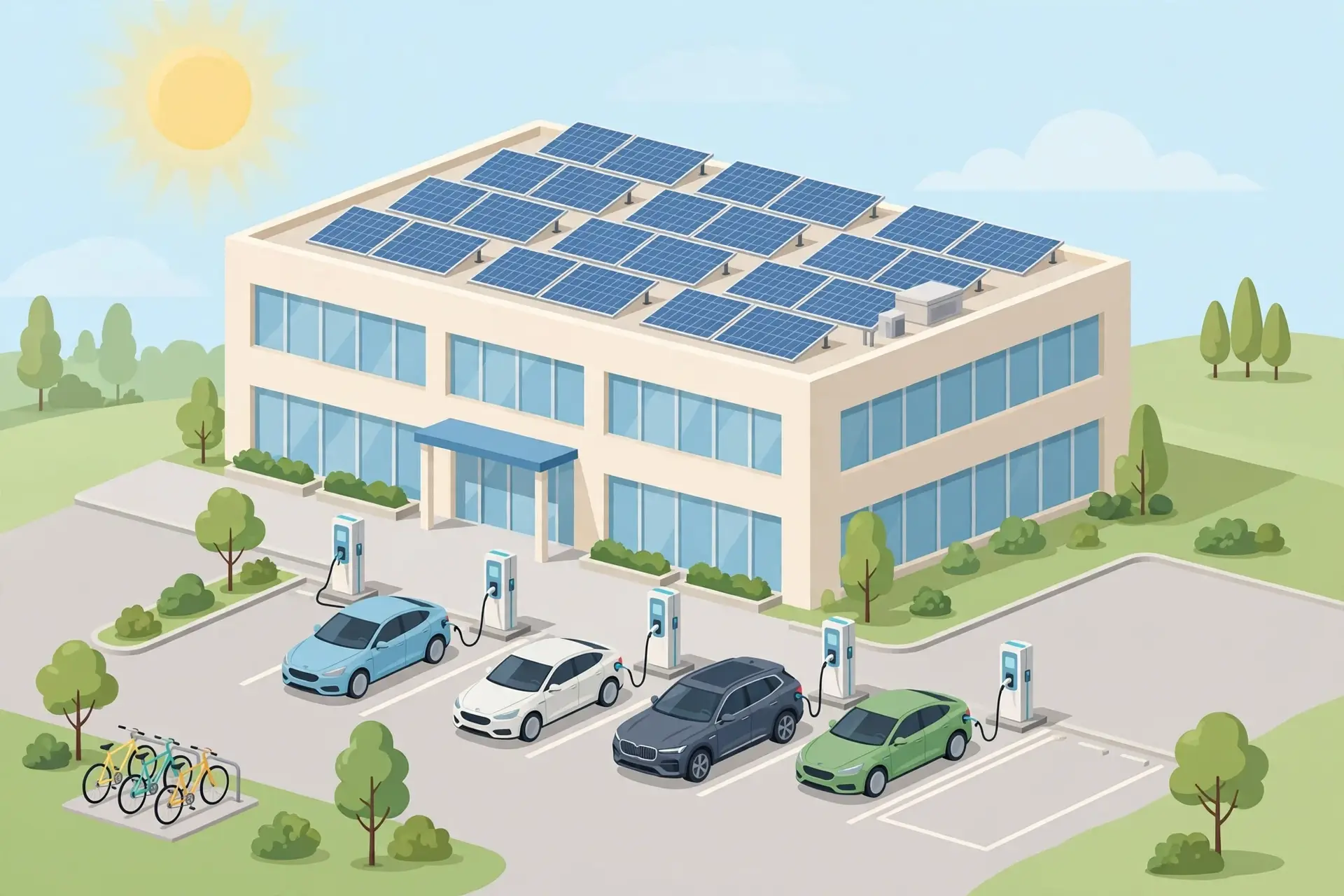
Workplace charging is increasingly expected by staff and visitors, and it’s worth planning deliberately. First define the use case — employee-only, customer, or fleet charging — because each has different needs for access control, billing, and scheduling. Then get a load assessment: chargers are large continuous loads, and your contractor needs to confirm whether existing capacity covers them or whether load management (sharing available power across chargers) is required. Networked “smart” chargers let you meter usage, bill drivers, and schedule charging for off-peak hours. 3e installs workplace EV charging across Toronto, Etobicoke, Mississauga, and North York — contact us for a free remote estimate.
How can we cut our electricity costs without disrupting the business?+
Lighting is usually the fastest win: LED retrofits with occupancy sensors and daylight dimming cut lighting energy dramatically in offices, retail, and warehouses. Next, look at what’s running when nobody’s there — HVAC setbacks, equipment left on overnight, and standby loads add up on commercial bills. For larger facilities, power-factor correction and shifting heavy loads off peak demand periods can reduce demand charges, which are often a bigger line item than total consumption. An electrician can audit your panels and identify the biggest draws before you spend on upgrades. 3e’s licensed electricians perform commercial energy audits across Toronto and the GTA.