EV Owner Electrical Guide
Keep your EV charged, safe, and healthy.
Straight answers about battery care, charging in Canadian weather, and protecting your charger — from licensed electricians serving Toronto and the GTA. For the installation side, 3e is a licensed electrical contractor — permits, panel work and inspection are part of every job it does.
Battery health
Illustration
How do I keep my EV battery healthy for the long term?+
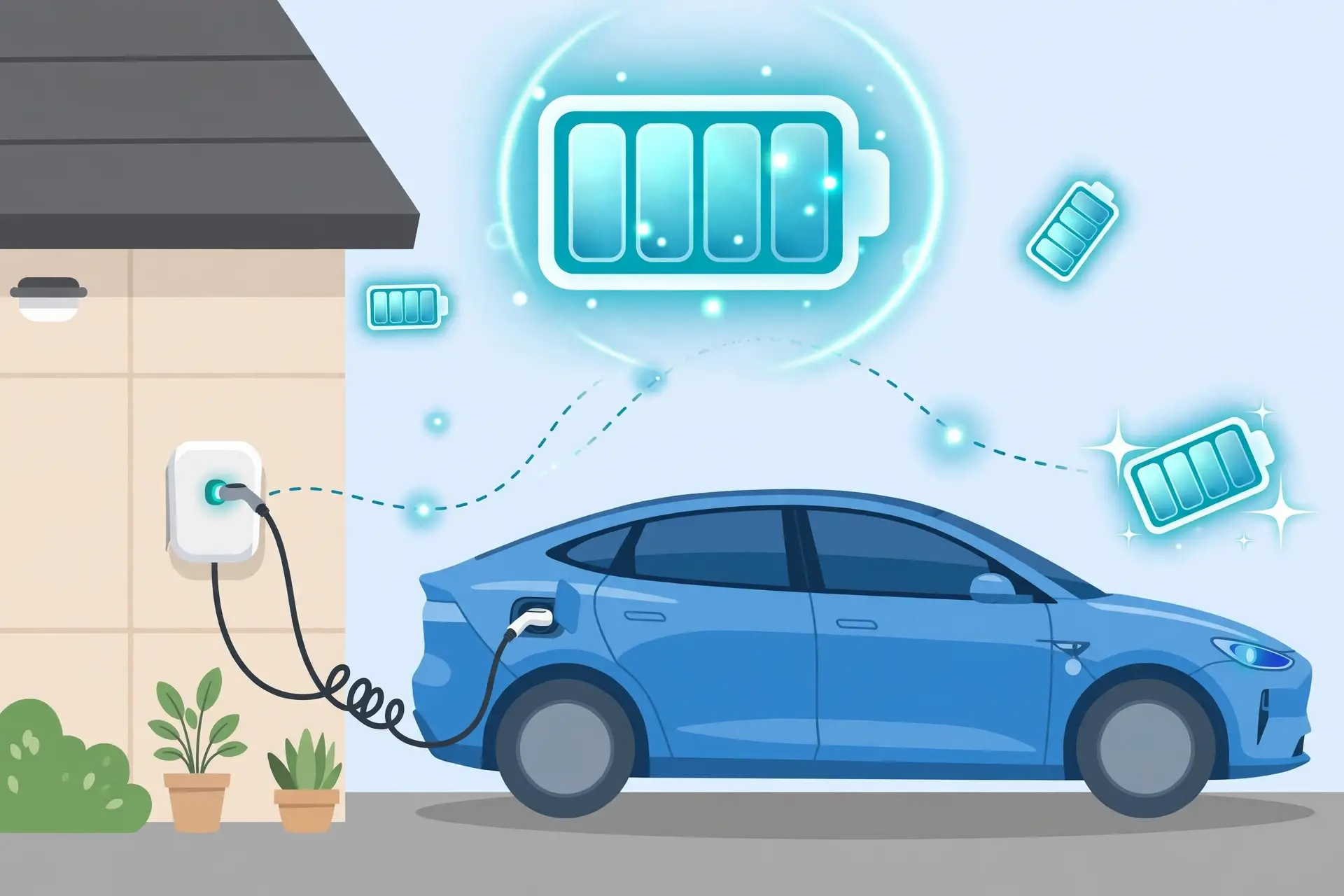
For daily driving, keep your charge between 20% and 80% using your car’s charge-limit setting — lithium-ion cells degrade fastest at voltage extremes, and fleet data shows an 80% daily limit roughly halves 10-year capacity loss. Reserve 100% charges for road trips, and avoid deep discharges near 0%. Note: LFP (lithium iron phosphate) batteries in many standard-range models tolerate 100% better than nickel-based packs — follow your owner’s manual. For the charging side — home charger installation, panel capacity, and surge protection — 3e’s licensed electricians serve EV owners across Toronto and the GTA.
How often can I use DC fast charging without damaging the battery?+
Occasional fast charging is fine — controlled testing showed just 1.8% capacity loss over 100 DC fast-charge cycles at room temperature. The real stress comes from frequent fast charging, charging above 80% on a fast charger (where heat builds up), and fast-charging a cold battery. Best practice: use Level 2 AC charging daily, reserve DC fast charging for road trips, stop around 80%, and precondition the battery before arriving at a fast charger in cold weather. For daily driving, a Level 2 home charger installed by a licensed electrician is the battery-friendliest option — 3e installs EV chargers across Toronto, Etobicoke, Mississauga, and North York.
Weather & seasons
Illustration
How should I charge my EV in an Ontario winter?+
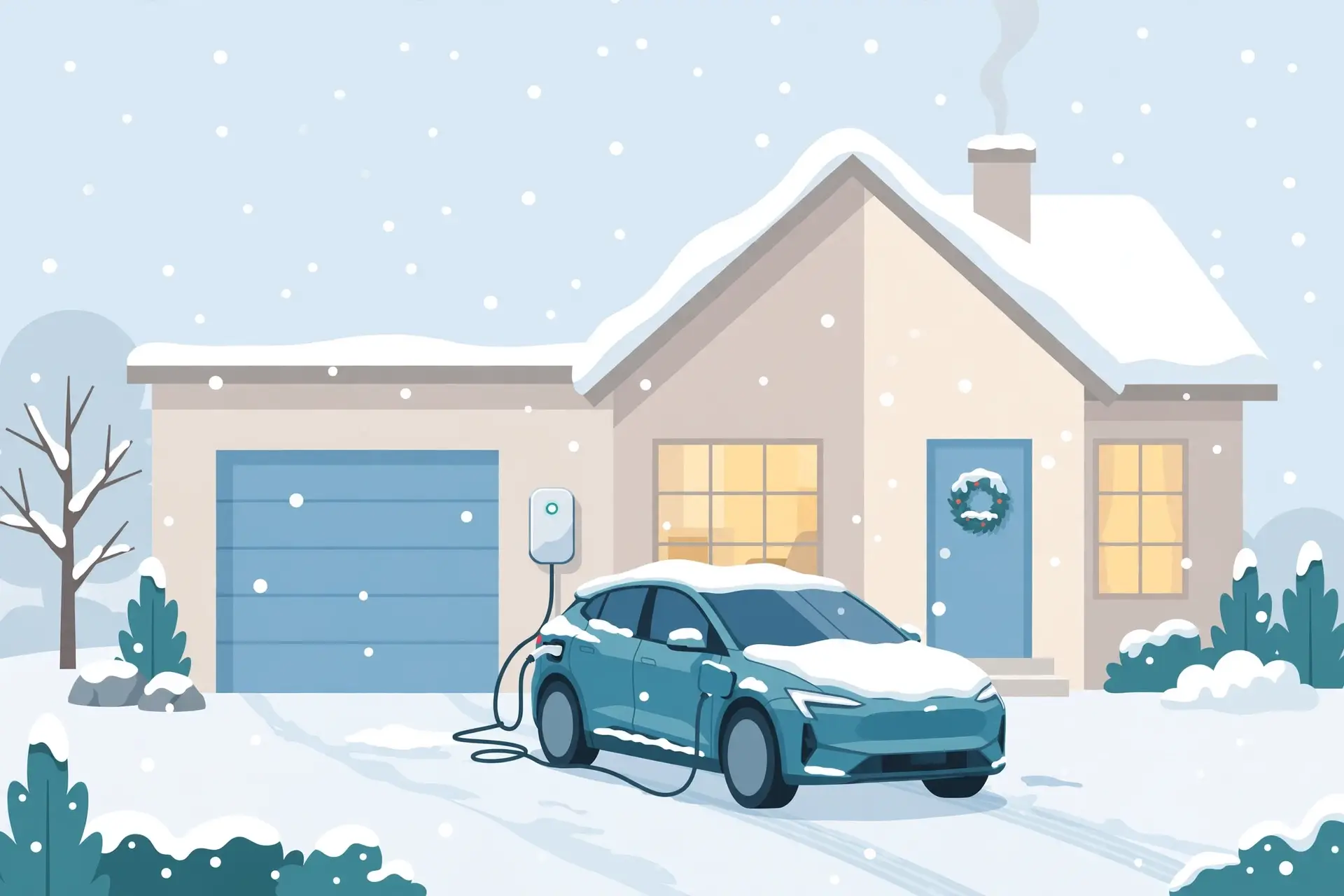
Expect roughly 20–25% less range at freezing temperatures — cold thickens the air, stiffens tires, and forces the battery to spend energy heating itself and the cabin. The single biggest habit: precondition (warm) the cabin and battery while still plugged in, so the energy comes from the grid, not your battery — most EVs let you schedule this from the app. Park in a garage when possible, time your overnight charge to finish just before departure, and use heated seats and steering wheel instead of blasting cabin heat. If winter has you thinking about a garage charging setup, 3e’s licensed electricians install EV chargers across Toronto and the GTA — contact us for a free remote estimate.
Is it safe to charge my EV during a lightning storm?+
Charging in ordinary rain is routine — EVs and quality charging equipment use weather-sealed connectors, and the car’s metal body acts as a Faraday cage. Lightning is the real risk: a nearby strike can send a surge through the grid that fries charger electronics or damages the car’s battery management system. If lightning is visible or thunder is nearby, pause the session and unplug once safe — and never charge if the outlet or equipment is sitting in water. A whole-home surge protector installed by a licensed electrician adds a layer of defence — 3e installs surge protection across Toronto and the GTA.
How should I charge on the hottest summer days?+
Heat accelerates battery degradation, and charging adds more heat — so avoid charging to 100% in extreme heat, park and charge in the shade or a garage, and let the battery cool about 30 minutes after driving before plugging in. Charge overnight or early morning when temperatures are lowest, and avoid DC fast charging during peak afternoon heat unless you need it. If the car must sit in extreme heat, a mid-range charge (50–70%) with the car plugged in lets active thermal management protect the pack. 3e’s licensed electricians can assess your home charging setup across Toronto and the GTA.
Your home’s electrical
Illustration
Why does whole-home surge protection matter so much for EV owners?+
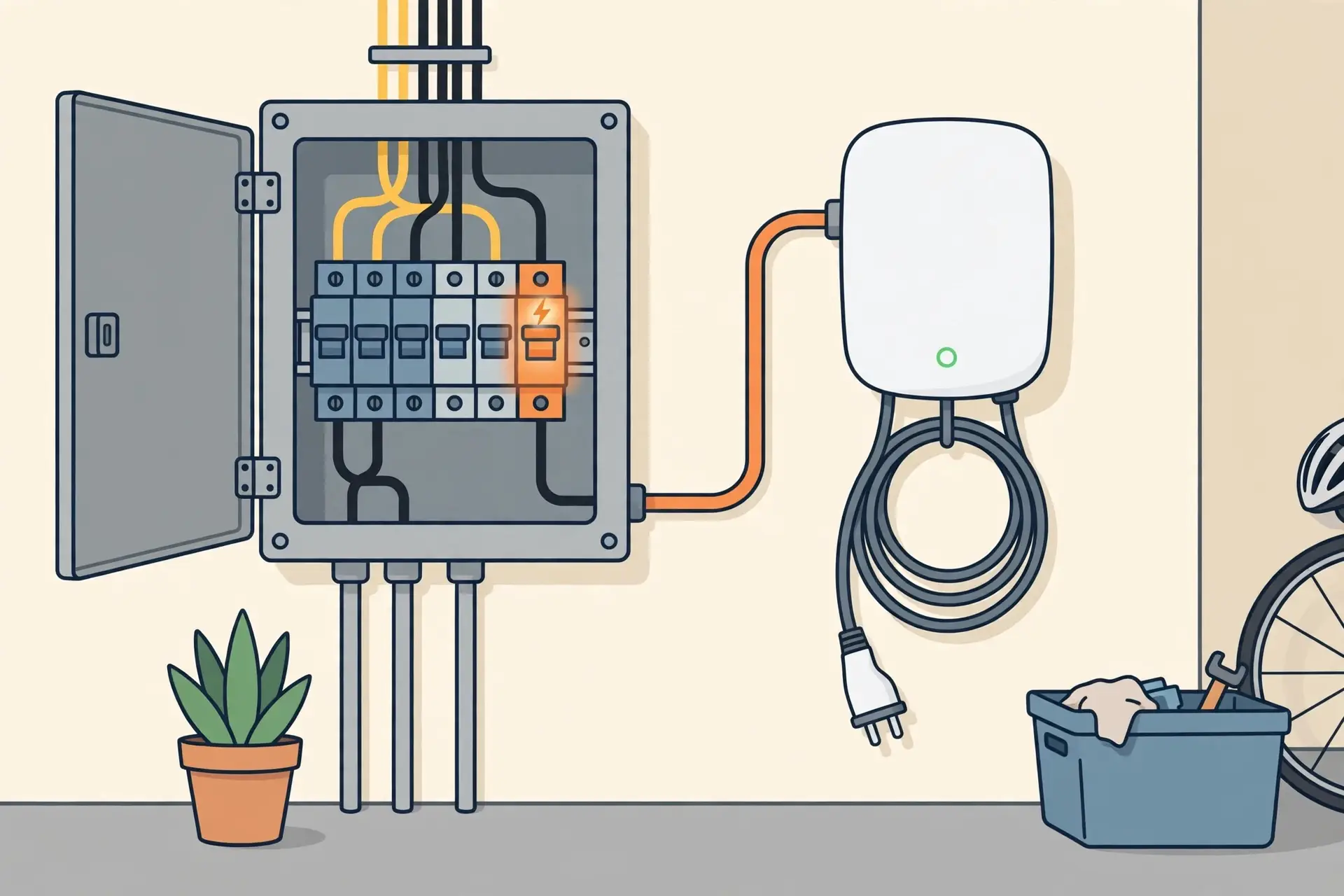
Your EV charger is one of the most expensive and most electrically sensitive devices in your home — a single surge from a lightning strike or grid event can destroy the charger or damage the car’s onboard charger and battery management system. A whole-home surge protective device (SPD), installed at your main panel, intercepts surges where they enter — before they reach the charger, the car, and your appliances. Standard power strips can’t protect a hardwired 240V charger; layered protection (panel SPD plus the charger’s built-in safeguards) is the correct approach. 3e installs whole-home surge protection across Toronto, Etobicoke, Mississauga, and North York — contact us for a free remote estimate.
Does my home’s electrical panel need an upgrade for an EV charger?+
A typical Level 2 charger needs a dedicated 240V circuit on a 30–60A breaker — on a 100A panel, that’s over half the usable capacity, so a load calculation is required. Most 200A homes can add a charger without issue; older 100A homes may need a service upgrade or a code-recognized energy management system that monitors home demand in real time and throttles charging to prevent overloads. A licensed electrician must perform the load calculation and pull an ESA permit. Contact 3e for a free remote estimate — our licensed electricians perform load calculations and handle ESA permits across Toronto and the GTA.
What is a load management device, and when do I need one?+
A load management device (energy management system) watches your home’s total electrical draw in real time and automatically reduces power to the EV charger when the house approaches its service limit — so the panel never overloads and breakers don’t trip. It’s the standard solution for 100A homes whose load calculation doesn’t leave room for a full-power charger circuit. The device must keep working locally even without an internet connection, per Canadian Electrical Code requirements. 3e’s licensed electricians design load-managed EV charging for 100A homes across Toronto and the GTA.
Charging safely
Illustration
Can I use an extension cord to charge my EV?+
No — every major EV maker and electrical safety authority says never to use an extension cord, power strip, timer, or adapter between the outlet and your charging equipment. A charger drawing 12–48 amps for hours overheats ordinary cords, creating a serious fire risk, and using one can void your vehicle warranty and complicate insurance claims. If the outlet doesn’t reach your car, the correct fix is a properly installed, closer outlet or a hardwired charger — not a longer cord. 3e’s licensed electricians install EV chargers across Toronto, Etobicoke, Mississauga, and North York.
Does my EV charger circuit need GFCI protection?+
In most home scenarios, yes. The Ontario Electrical Safety Code requires GFCI protection for receptacles in garages and outdoors — so a plug-in charger on a NEMA 14-50 outlet in your garage or driveway needs it. Hardwired chargers have different requirements (many include their own ground-fault detection), so the correct configuration depends on the charger model and location — exactly what a licensed electrician confirms during install — 3e confirms the correct configuration on every EV charger installation across Toronto and the GTA.
How do I protect my charging cable from damage?+
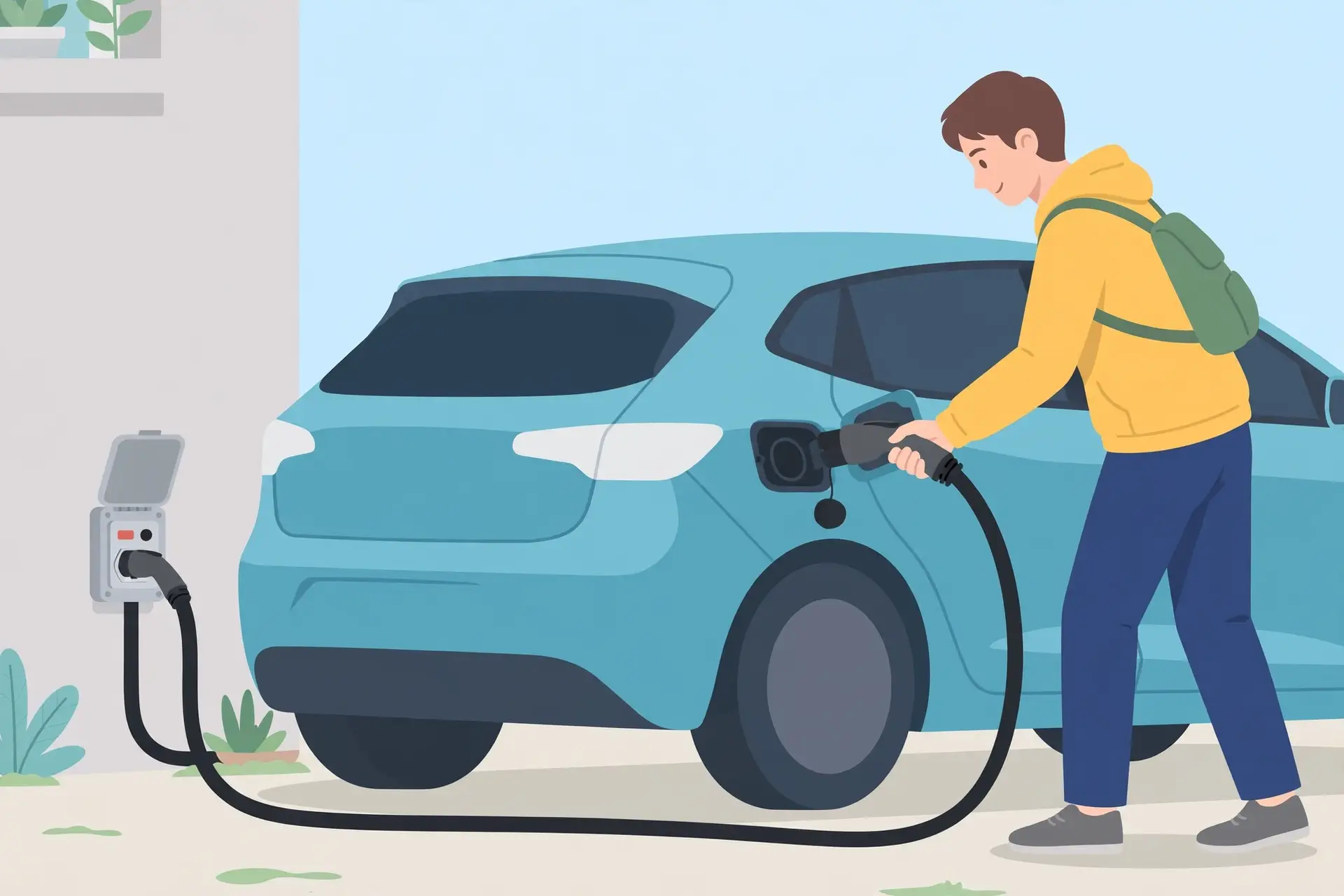
Route the cable so it can’t be driven over, stepped on, tripped over, or pinched — vehicle tires are the most common killer of home charging cables. Keep connectors off the ground and out of standing water, and in winter keep the cable clear of snowblowers and shovels. Before each charge, inspect the outlet, cable, and both plugs for damage, dirt, or moisture — never charge with damaged equipment. If your charging equipment needs relocating, 3e’s licensed electricians serve Toronto and the GTA.
Costs & upkeep
Illustration
When is the cheapest time to charge my EV in Ontario?+
Overnight. Ontario’s Ultra-Low Overnight rate is 3.9¢/kWh from 11pm–7am every day — a full 75 kWh charge costs roughly $3 in electricity alone. On standard Time-of-Use, off-peak is 9.8¢/kWh (7pm–7am weekdays plus all weekend). Use your car or charger’s scheduled-charging feature to start after 11pm. Note: the OEB resets rates every November 1, so verify current rates before switching plans — and ULO’s daytime on-peak rate (39.1¢) is the highest in Ontario, so it only pays off if you shift usage overnight. Pairing off-peak rates with a properly installed Level 2 charger maximizes savings — 3e installs EV chargers across Toronto and the GTA.
Does my home EV charger need maintenance?+
Very little, but don’t ignore it: inspect the cable and connectors every few months for cracking, heat discoloration, or loose fit; keep the unit’s vents clear of dust and spider webs; and make sure outdoor units still have intact weather seals after winter. If your whole-home surge protector has an indicator light, check it after major storms — a fault light means it absorbed a surge and the module needs replacing. If charging ever feels unusually slow, hot, or the breaker trips, stop using it and call a licensed electrician rather than resetting repeatedly — 3e provides EV charger troubleshooting across Toronto, Etobicoke, Mississauga, and North York.