Homeowner’s Electrical Guide
Learn your home’s electrical system.
Straight answers about panels, wiring, safety, and troubleshooting — from licensed electricians serving Toronto and the GTA.
Panels & electrical service
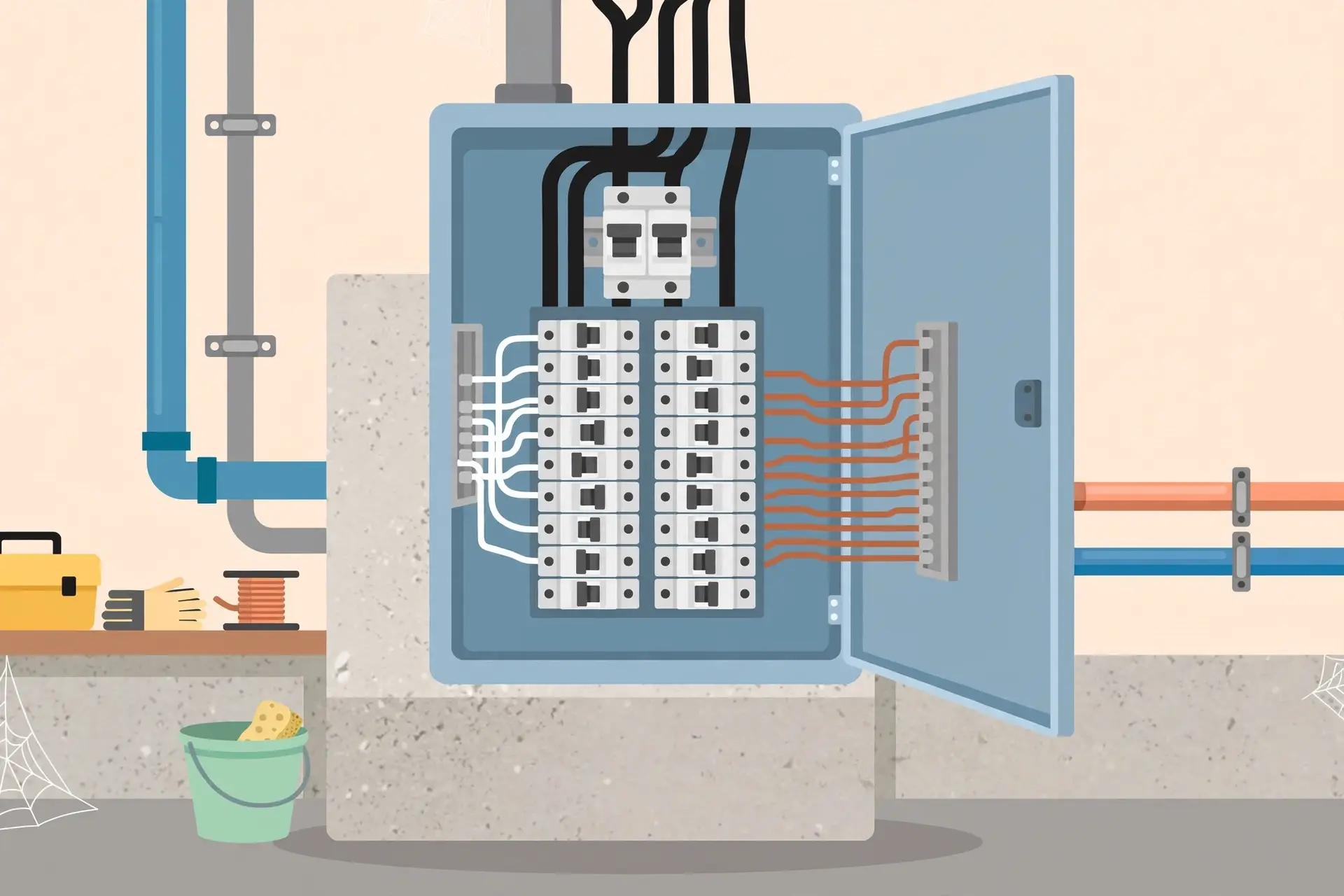
Illustration
Will I need an electrical service upgrade for an EV charger?+
It depends on your home’s current electrical load. For Level 2 EV charger installation, a 100-amp service often needs a 200-amp upgrade — but many Toronto homes need no upgrade at all. A licensed electrician performs a load calculation to know for sure. Contact 3e for a free remote estimate.
How do I know if my home needs an electrical panel upgrade?+
If your home is over 20 years old, has a 60- or 100-amp service, or shows warm panels, burning smells, flickering lights, or frequent breaker trips, you may need a panel upgrade. 3e’s licensed electricians serve Toronto, Etobicoke, Mississauga, and North York — contact us for a free remote estimate.
Do I need 200-amp service?+
It depends on your home’s size, heating type, and plans like EV charging or a hot tub. A licensed electrician does a load calculation — many Ontario homes still run fine on 100 amps. 3e’s licensed electricians perform load calculations across Toronto and the GTA.
Should I replace my fuse box with a breaker panel?+
Yes, in most cases. Fuse boxes can’t safely handle modern loads, and many insurers charge more — or refuse coverage — for homes with fuse boxes. A licensed electrical contractor can swap it for a modern breaker panel; 3e handles fuse-box upgrades across Toronto, Etobicoke, Mississauga, and North York.
Wiring & safety
Illustration
How do I reset a GFCI outlet, and what do the indicator lights mean?+
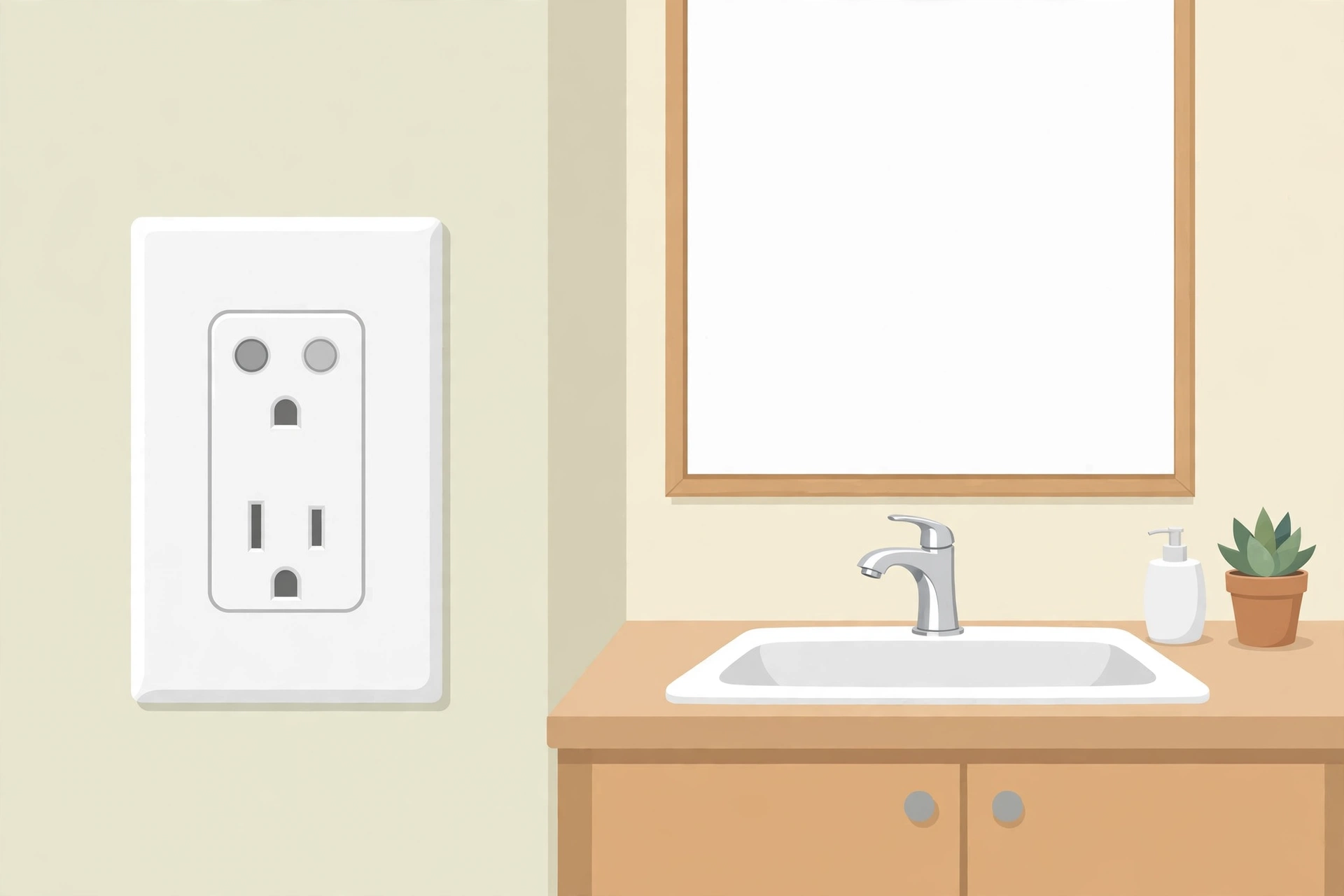
Illustration: a GFCI outlet in a bathroom.
A GFCI is the outlet with TEST and RESET buttons between the sockets — required in bathrooms, kitchens, garages, and outdoors. To reset: unplug everything on it, then press RESET firmly until it clicks and latches. If it won’t latch, press TEST first, then RESET again.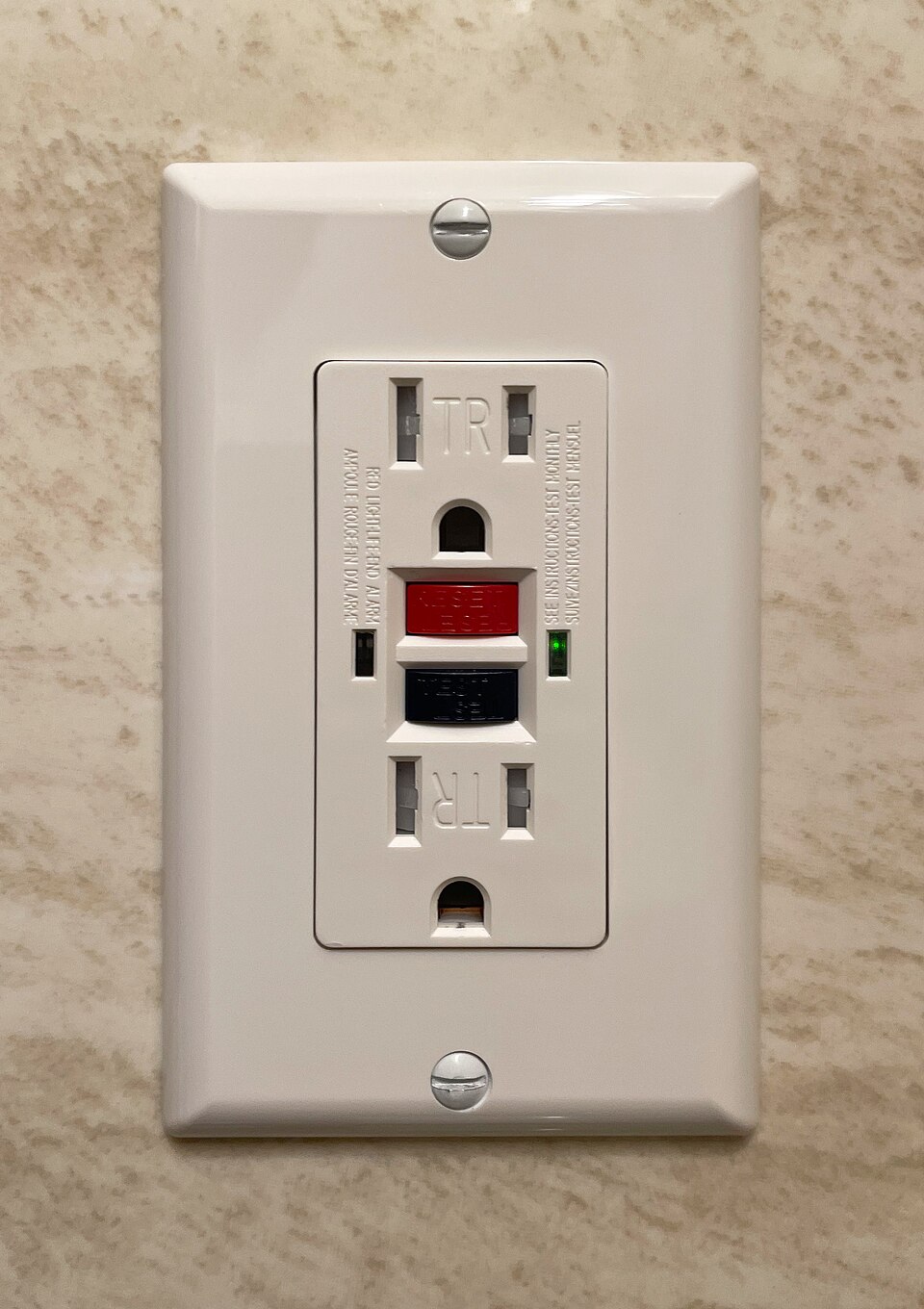 A real GFCI outlet — TEST and RESET buttons, with the green light showing it’s protecting you. Photo: Ben Kurtovic, CC BY-SA 4.0, via Wikimedia Commons.
Indicator lights: a steady green or amber light (varies by brand) means the outlet is powered and protecting you. A red light — or no light after a reset attempt — means it’s tripped or worn out; GFCIs last roughly 10 years. Test monthly: press TEST (power should cut out), then RESET to restore. If it trips again immediately or won’t reset at all, call a licensed electrician — don’t keep forcing it. 3e’s licensed electricians handle GFCI troubleshooting across Toronto and the GTA.
Eaton’s AF/GF receptacle installation and reset guide (PDF)
What is knob-and-tube wiring, and will it affect my home insurance?+
Knob-and-tube is the original wiring in pre-1940s Ontario homes — it has no ground wire. Many insurers won’t cover homes with active knob-and-tube, or charge significantly more. If your Toronto home still has it, 3e’s licensed electricians can plan a full wiring upgrade.
Is aluminum wiring safe?+
Aluminum wiring was common in 1960s–70s Ontario homes. It’s safe when properly maintained, but connections loosen over time, creating heat and fire risk. Have a licensed electrician inspect it — 3e offers aluminum wiring assessments across Toronto and the GTA.
Can I do my own electrical work?+
Homeowners can do some work with an ESA permit and inspection. Panel upgrades and service work require a licensed electrical contractor — 3e is ESA-licensed and serves Toronto, Etobicoke, Mississauga, and North York.
Do I need an electrical permit for home electrical work?+
Most installations require ESA notification — panel upgrades, new circuits, EV chargers, and rewiring. Your licensed electrical contractor handles the permit; 3e files ESA notifications on every job across Toronto and the GTA.
When should I replace my smoke and carbon monoxide alarms?+
Replace smoke alarms every 10 years and CO alarms every 5–10 years; test monthly. Ontario requires working alarms on every storey. 3e’s licensed electricians install hardwired, interconnected alarms across Toronto and the GTA.
What changed in Ontario’s smoke and CO alarm rules in 2026?+
As of January 1, 2026, Ontario requires a carbon monoxide alarm on every storey of your home — including storeys where nobody sleeps, like the basement and the main floor — and beside the bedrooms, as before. Smoke alarms are required on every storey and outside the sleeping areas. These rules are in the Ontario Fire Code, so they apply to homes people already live in, not just new builds. Our blog post walks through the 2026 smoke and CO alarm rules in full.
How do I know if my smoke or CO alarms need replacing?+
Alarms expire — replace them by the manufacturer’s date, usually 10 years from the date printed on the back of the unit. Test them monthly so you know they still work. When an alarm comes down, replace it like for like: a hardwired alarm is never replaced with a battery-only one. If your home is short alarms under the 2026 rules, or the wiring is old, a licensed electrician can bring the whole set up to standard — 3e installs hardwired, interconnected alarms across Toronto and the GTA.
What happens if my home isn’t compliant?+
Your local fire department enforces the Fire Code, and a fire prevention officer can inspect your home and order the missing alarms installed. Failing to comply is an offence under the Fire Protection and Prevention Act, with fines of up to $50,000 on conviction for a first offence. There is no grace period — the rules have applied since January 1, 2026. A home that isn’t up to the Fire Code can also put an insurance claim at risk after a fire or a carbon monoxide incident. If your alarms need bringing up to standard, see what our smoke & CO alarm installation service covers.
How often should my home’s electrical system be inspected?+
Every 10 years, or when buying or selling. Older homes with knob-and-tube or aluminum wiring should be checked more often. 3e offers home electrical safety inspections across Toronto, Etobicoke, Mississauga, and North York.
Can rodents damage my home’s wiring?+
Major construction or renovations on your street can displace rats and mice, sending them looking for new shelter — often in your home. Once inside, rodents chew through electrical wiring, which can cause power failures, arc faults, and even house fires.
The damage isn’t just dangerous — it’s expensive. Rewiring chewed circuits typically costs thousands, and severe cases run past $10,000.
Warning signs:
• Flickering lights or dead outlets with no clear cause
• Scratching in walls or ceilings, especially at night
• Droppings near your electrical panel or in the attic
If rodents have reached your wiring, have a licensed electrician inspect it right away — 3e’s licensed electricians assess wiring damage across Toronto and the GTA.
Breakers & troubleshooting
Illustration
Why are my lights flickering?+
Flickering usually means a loose connection or overloaded circuit. If it persists or spans several rooms, have a licensed electrician investigate — 3e provides electrical troubleshooting across Toronto and the GTA.
What should I do if my circuit breaker keeps tripping?+
Unplug devices on that circuit, then reset once (push firmly to OFF, then ON). If it trips again immediately, call a licensed electrician — 3e’s troubleshooting team serves Toronto, Etobicoke, Mississauga, and North York.
Why did the outlets in my bathroom stop working?+
Usually a tripped GFCI outlet. Find the GFCI (with TEST/RESET buttons) and press RESET. If it won’t reset, call a licensed electrician — 3e serves Toronto and the GTA.
How do I reset a GFCI outlet, and what do the indicator lights mean?+
Illustration: a GFCI outlet in a bathroom.
A GFCI is the outlet with TEST and RESET buttons between the sockets — required in bathrooms, kitchens, garages, and outdoors. To reset: unplug everything on it, then press RESET firmly until it clicks and latches. If it won’t latch, press TEST first, then RESET again.A real GFCI outlet — TEST and RESET buttons, with the green light showing it’s protecting you. Photo: Ben Kurtovic, CC BY-SA 4.0, via Wikimedia Commons.
Indicator lights: a steady green or amber light (varies by brand) means the outlet is powered and protecting you. A red light — or no light after a reset attempt — means it’s tripped or worn out; GFCIs last roughly 10 years. Test monthly: press TEST (power should cut out), then RESET to restore. If it trips again immediately or won’t reset at all, call a licensed electrician — don’t keep forcing it. 3e’s licensed electricians handle GFCI troubleshooting across Toronto and the GTA.
Eaton’s AF/GF receptacle installation and reset guide (PDF)
How do I reset an AFCI/GFCI breaker, and what are the blinking lights telling me?+
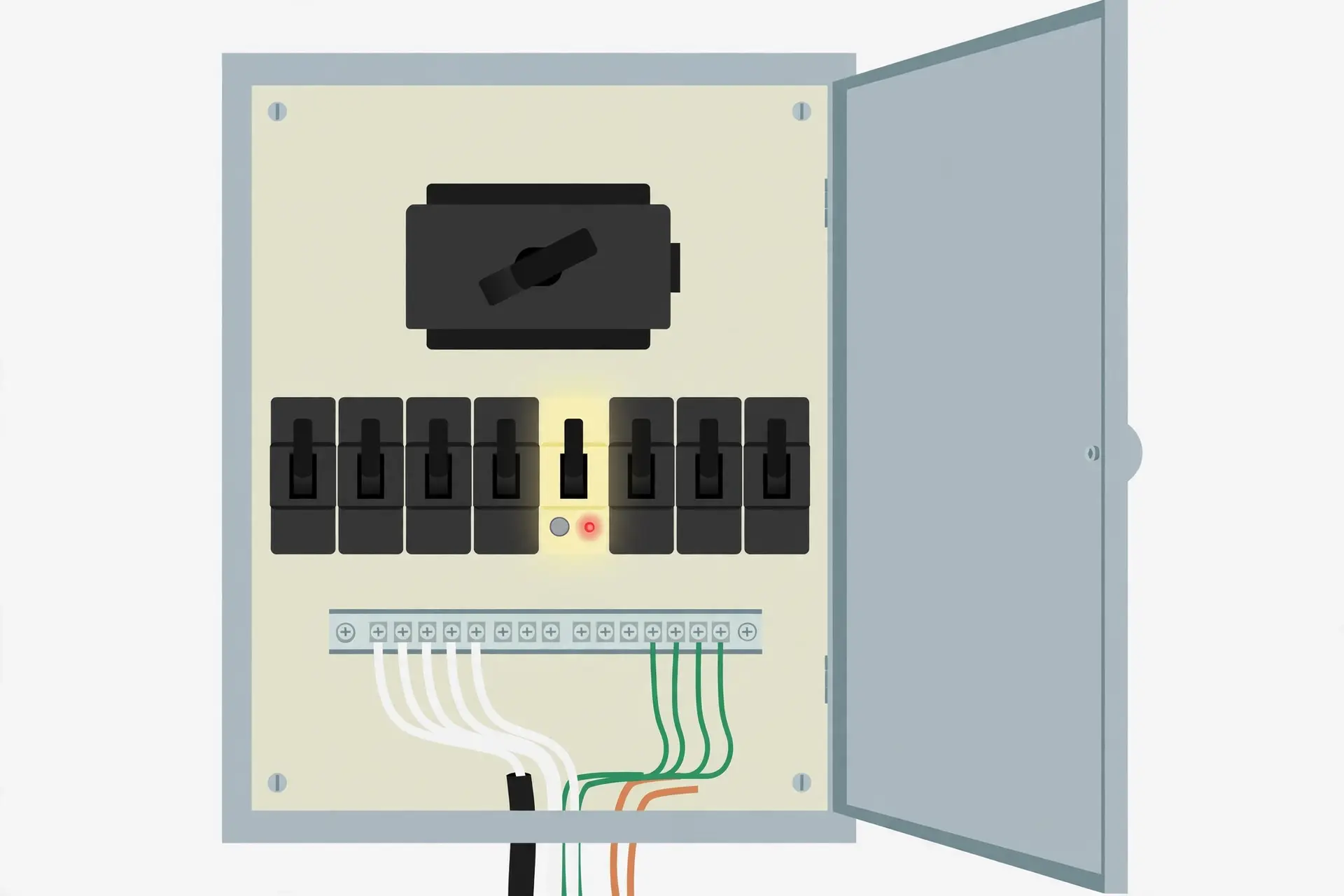
Illustration: an AFCI/GFCI breaker with TEST button and diagnostic LED.
First, identify your breaker: open the panel door and read the label on the breaker face — in most Ontario homes it’s Eaton, Siemens, or Square D, plus the amperage. Count the blinks before you reset — that’s the diagnostic code telling you why it tripped. To reset, push the handle fully to OFF, then firmly to ON.
Eaton (red LED, 1–6 blinks): 1 = series arc (worn cords, loose connections); 2 = parallel arc (damaged wiring, e.g. a nail through a wire); 3 = overload (too much plugged in); 4 = overvoltage (160V+, often a loose neutral); 5 = ground fault; 6 = self-test failure — the breaker must be replaced.
Siemens (two yellow LEDs, shown for 5 seconds after switching ON): both off = overcurrent; first LED on = arc fault; both on = arc fault to ground / ground fault.
Square D TIME SAVER (LED on power-up): solid for 10 seconds = arc fault; 2 pulses = ground fault; 4 pulses = grounded neutral; 7 pulses = replace the breaker.
If the breaker trips again immediately, or shows a self-test failure code, stop resetting it and call a licensed electrician. 3e provides breaker and panel troubleshooting across Toronto, Etobicoke, Mississauga, and North York.
Siemens AFCI/GFCI diagnostic guide (PDF)
Schneider Electric: troubleshooting a Square D AF/AFGF breaker with a blinking LED