
Smoke & CO Alarm Installation · Toronto & the GTA
Smoke & CO Alarms, Installed Right.
Ontario’s CO rules changed on January 1, 2026. A CO alarm is now required on every floor of the home — including floors where nobody sleeps, like the basement — and beside the bedrooms, as before. We replace expired alarms like-for-like: hardwired, interconnected, and good for ten years.
What the law requires
Two sets of Ontario rules decide what your home needs — and one of them changed on January 1, 2026. Many homes that passed before no longer do. Here is the short version.
CO alarms — every storey
New for 2026: in homes with a fuel-burning appliance, a fireplace or an attached garage, a CO alarm is required on every storey — including storeys with no bedrooms, like a basement with the furnace. The alarm beside the sleeping areas is still required too. Two separate requirements — not the same one counted twice.
Smoke alarms — every storey
Smoke alarms are required on every storey and outside all sleeping areas. That part of the rules did not change.
Like-for-like replacement
Toronto Fire is clear: a hardwired alarm is replaced with a hardwired alarm. Downgrading a hardwired home to battery-only units is not allowed.
Alarms expire
Every alarm has a working life of 10 years. Past the date on the back of the unit, the sensor can’t be trusted — even if it still beeps when you press test.
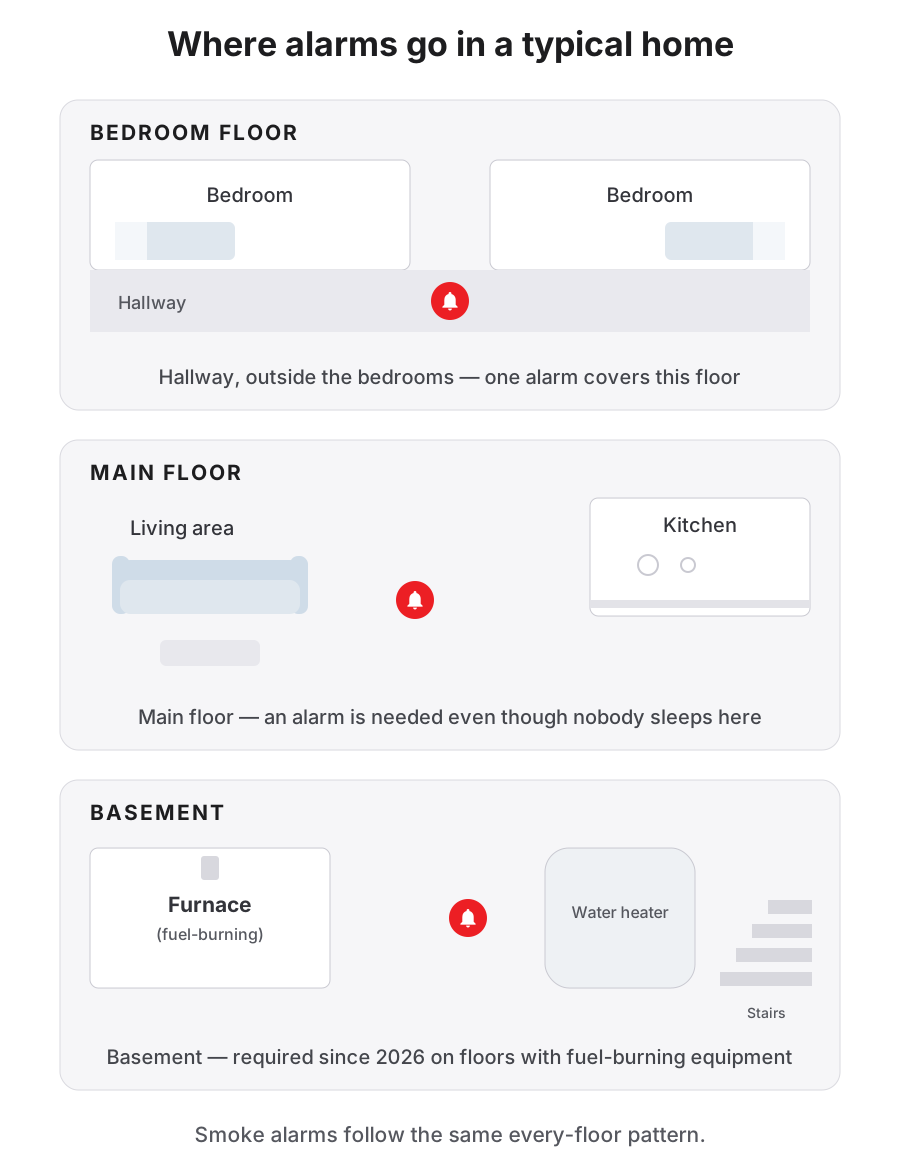
Tap the diagram to view it full size.
Read the full story: what changed in Ontario’s CO alarm rules in 2026 →
What “required” actually means
It covers the home you already live in. The 2026 change was made to Ontario’s Fire Code — the rules for existing homes. It is not limited to new builds or renovations; those are covered separately by the Building Code.
It is enforced by your fire department. Fire prevention officers can inspect a home and order the required alarms installed. Leaving a home short of alarms is an offence under the Fire Protection and Prevention Act — on conviction, an individual faces a fine of up to $50,000 for a first offence.
Your insurance expects it, too. A home that is not up to the Fire Code can put an insurance claim at risk after a fire or CO incident. And if you rent your home out, the duty is yours directly: alarms installed, kept working, and tested at least once a year.
It protects the neighbours, too. In a semi or a rowhouse, fire and carbon monoxide do not stop at the wall between homes. Keeping your alarms current looks after the family on the other side of it as well.
What we do
One visit, and every alarm in the house is the right type, in the right place, in date — and talking to the others.
Whole-home alarm replacement
Every expired or non-compliant unit swapped in one visit.
We check the type and the date of every alarm in the house, then fit one matched set — so interconnection works the way it should, everywhere.
Hardwired & interconnected
When one alarm sounds, they all sound.
Hardwired units linked by the interconnect wire, or modern wireless units linked by radio — placed where the Fire Code requires them, including the storeys the 2026 rules added.
Coverage the new rules added
Many homes now need CO alarms on storeys that never had them.
We add alarms on the levels the January 2026 change brought in, and confirm the coverage beside the sleeping areas is right.
Tested, and shown to you
Every unit tested before we leave.
We’ll show you the monthly test, and how to keep the sensors clear with a gentle vacuum and a soft brush — a minute of care keeps them honest.
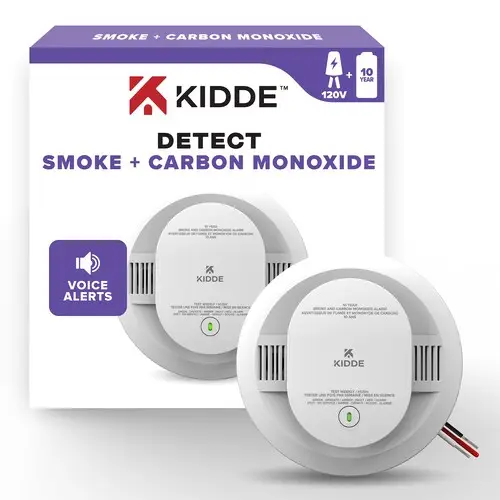
The alarms we install
Kidde Detect — the alarm we recommend
A hardwired smoke & CO combination alarm with voice alerts and a 10-year sealed battery backup. Every unit we install carries a 10-year sealed battery — we don’t fit AA-battery models.
See the alarms we install →How it works
Tell us about your home
Storeys, basement, hardwired or battery, and the ages of your current alarms — photos help. Free remote estimate.
Get one upfront price
One clear price for the whole home — alarms, installation and testing — before we book. No hourly surprises.
We install, interconnect & test
Every alarm fitted, linked and tested in one visit, and we walk you through the monthly test before we go.
Renting out your home?
Landlords carry the legal duty for alarms in a rental: installing them, keeping them working, and testing them at least once a year and at every change of tenancy. If your rental predates the 2026 change, it may be short a CO alarm on one or more storeys. We bring rental homes up to the current rules in a single visit — part of the compliance work we do for Toronto landlords, including RentSafeTO buildings.
Questions
What changed in Ontario’s alarm rules in 2026?
On January 1, 2026, Ontario’s Fire Code changed where carbon monoxide alarms are required. Before 2026, a CO alarm was only required beside the sleeping areas. Now, in homes with a fuel-burning appliance, a fireplace or an attached garage, a CO alarm is also required on every storey — including storeys with no bedrooms, like a basement with the furnace. The two requirements are separate: the alarm beside the bedrooms is still needed, and every other storey needs one of its own. On the bedroom floor, one alarm in the hallway outside the bedrooms covers that floor. A home that was compliant before 2026 may not be now. The smoke alarm rules did not change: smoke alarms are required on every storey and outside all sleeping areas.
My home isn’t new — do the 2026 rules apply to me?
Yes. The January 1, 2026 change was made to Ontario’s Fire Code, and the Fire Code is the set of rules for homes people already live in — it is not limited to new construction or renovations, which are covered separately by the Building Code. “Required” means the alarms are a legal requirement for your home: the local fire department enforces the Fire Code, its fire prevention officers can inspect a home and order the alarms installed, and leaving a home short is an offence under the Fire Protection and Prevention Act, with fines of up to $50,000 on conviction for a first offence. A home that is not up to the Fire Code can also put an insurance claim at risk after a fire or CO incident. And in a semi or a rowhouse, your alarms protect more than your own family: fire and carbon monoxide do not stop at the wall between homes, so keeping your alarms current looks after the neighbours too.
How many alarms does my home need?
Walk through it floor by floor. On the bedroom floor, one alarm in the hallway outside the bedrooms covers that floor — for smoke and for CO. Every other floor then needs an alarm of its own: the main floor, even though nobody sleeps there, and the basement, especially if the furnace or another fuel-burning appliance is down there. Those extra alarms on the floors without bedrooms are exactly what the 2026 rules added for CO, and smoke alarms follow the same every-floor pattern. Where one unit can do both jobs, a combination smoke & CO alarm covers the floor. The exact count depends on your layout, so we count them with you during the free estimate — and check the dates on your existing units at the same time.
How often do smoke and CO alarms need to be replaced?
Every 10 years, or by the replace-by date printed on the back of the unit. The sensors wear out even when the test button still makes a sound, so an alarm that beeps on test can still be past its working life. If there is no readable date on yours, it is time.
My alarms are hardwired. Can I switch to battery ones?
No. Toronto Fire requires like-for-like replacement: a hardwired alarm is replaced with a hardwired alarm, never downgraded to a battery-only unit. Staying hardwired also keeps your alarms interconnected, so when one sounds, they all sound. The hardwired units we install carry a 10-year sealed battery backup, so there is no battery to change.
Do all the alarms really need to match?
For interconnection, yes. Alarms talk to each other within their own brand and system — hardwired units over the interconnect wire, wireless units by radio. Mixing brands on the same system means some alarms may not trigger the others. It is one reason a whole-home refresh with one matched set makes sense when several units are due.
I’m a landlord. What am I responsible for?
Landlords are responsible for installing and maintaining the smoke and CO alarms in a rental home, and for testing them at least once a year and at every change of tenancy. Tenants must not disable an alarm, and should report any problem to the landlord. We can bring a rental home up to the current rules in one visit and test every unit while we are there.
Neighbourhoods we serve
Smoke & CO alarm installation across Toronto and the GTA — including the west-end neighbourhoods where so many of our calls come from.
Every alarm working. Every storey covered.
Tell us about your home and we’ll come back with one upfront price. We are among the best in the business.
Request a QuoteLicensed electrical contractor · ECRA/ESA 7014948