
ONTARIO FIRE CODE · 2026 UPDATE
Ontario’s CO Alarm Rules Changed in 2026. Is Your Home Covered?
On January 1, 2026, Ontario expanded its carbon monoxide alarm rules. If your home has a gas furnace, a fireplace, or an attached garage, a CO alarm beside the bedrooms is no longer enough on its own: every floor needs one now, including the basement and any other floor where nobody sleeps. Here is what the law now asks for, where smoke alarms fit in, and how to check your own home in about ten minutes.
THE SHORT VERSION
- Since January 1, 2026, homes with a fuel-burning appliance, a fireplace, or a storage garage need CO alarms on every storey, not just beside the bedrooms. The basement and any floor where nobody sleeps are included — those floors are what the change added.
- Smoke alarms are still required on every storey and outside all sleeping areas, and they expire. Replace them every 10 years.
- A chirp that keeps going after a battery change is an end-of-life signal. The alarm is finished, not the battery.
- Hardwired alarms must be replaced with hardwired alarms. Never downgrade a wired home to battery-only units.
What changed on January 1, 2026
The change came through Ontario Regulation 87/25, which rewrote Section 2.16 of the Ontario Fire Code. The older rules, in place since the Hawkins Gignac Act took effect in 2014, asked for a CO alarm beside each sleeping area in any home with a fuel-burning appliance, a fireplace, or a storage garage.
The 2026 rules keep the alarm beside the bedrooms and add the floors that alarm never covered: a CO alarm on every storey of the home. The bedroom alarm already looks after its own floor. What is new is the basement, and a main floor with no bedrooms — floors where nobody sleeps needed no CO alarm at all before 2026, and now they do. The rules also reach homes heated by a fuel-burning appliance located outside the house itself, for example a furnace in a separate utility building.
The alarms themselves can be hardwired, battery-operated, or plug-in, as long as they carry a Canadian certification mark, CSA, cUL, or ULC, on the unit. The new requirements took effect on January 1, 2026, with no grace period written into the regulation, and municipal fire services enforce them the same way they enforce the smoke alarm rules.
How many alarms does your home need now?
Walk through a typical Toronto house floor by floor — basement, main floor, bedrooms upstairs, heated by a gas furnace:
- Upstairs, the bedroom floor: alarms in the hallway outside the bedrooms cover this floor. That is the spot the rules have always asked for.
- Main floor: nobody sleeps here, but it still needs a smoke alarm, and since 2026 it needs a CO alarm of its own too.
- Basement: a smoke alarm, and a CO alarm. The basement is exactly the kind of floor the 2026 rules added: no bedrooms, still counted.
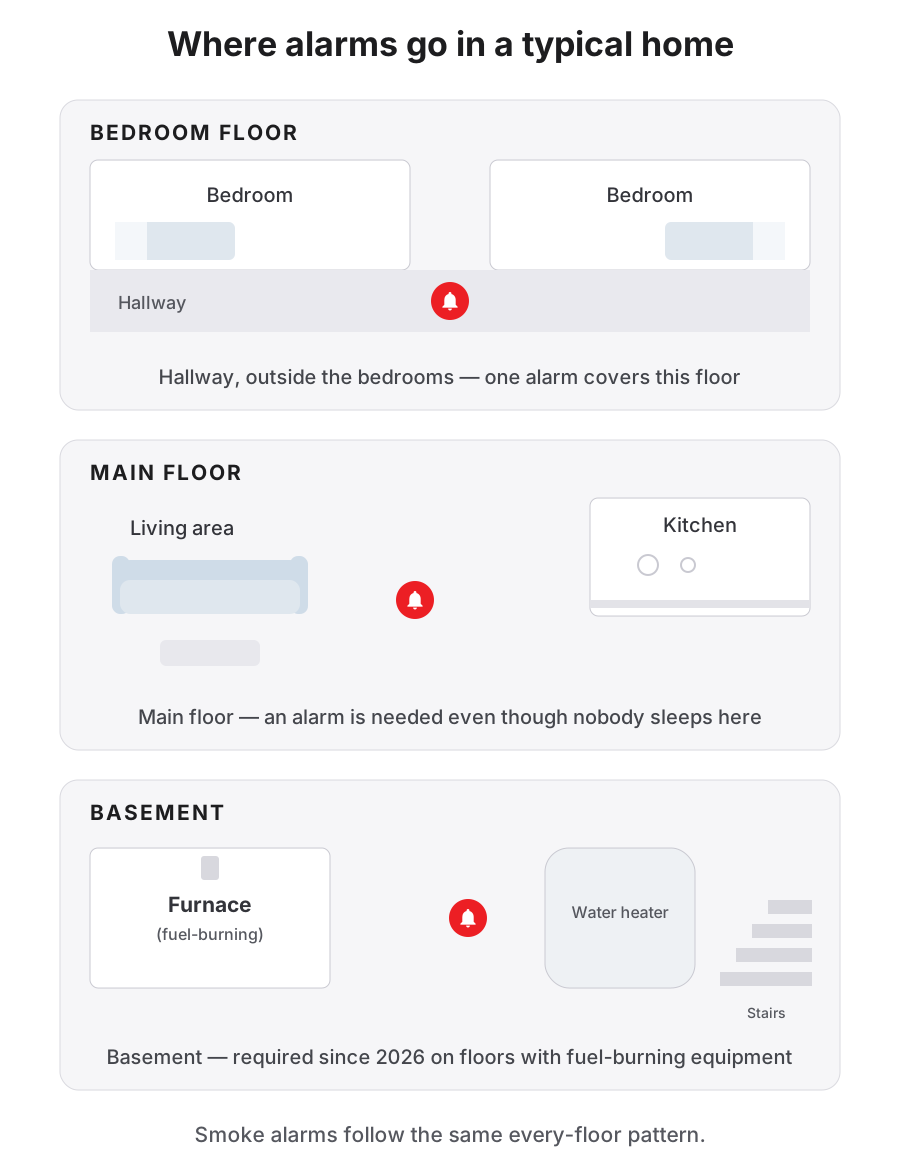
Combination smoke and CO units can cover both jobs in the same spot, which is why most homes we see end up with three or four alarms in total rather than six separate ones. Newer homes, and homes renovated under a building permit, follow the Ontario Building Code instead: hardwired, interconnected alarms inside each bedroom as well as in the hall, with battery backup and a visual strobe component.
Do smoke alarms really expire?
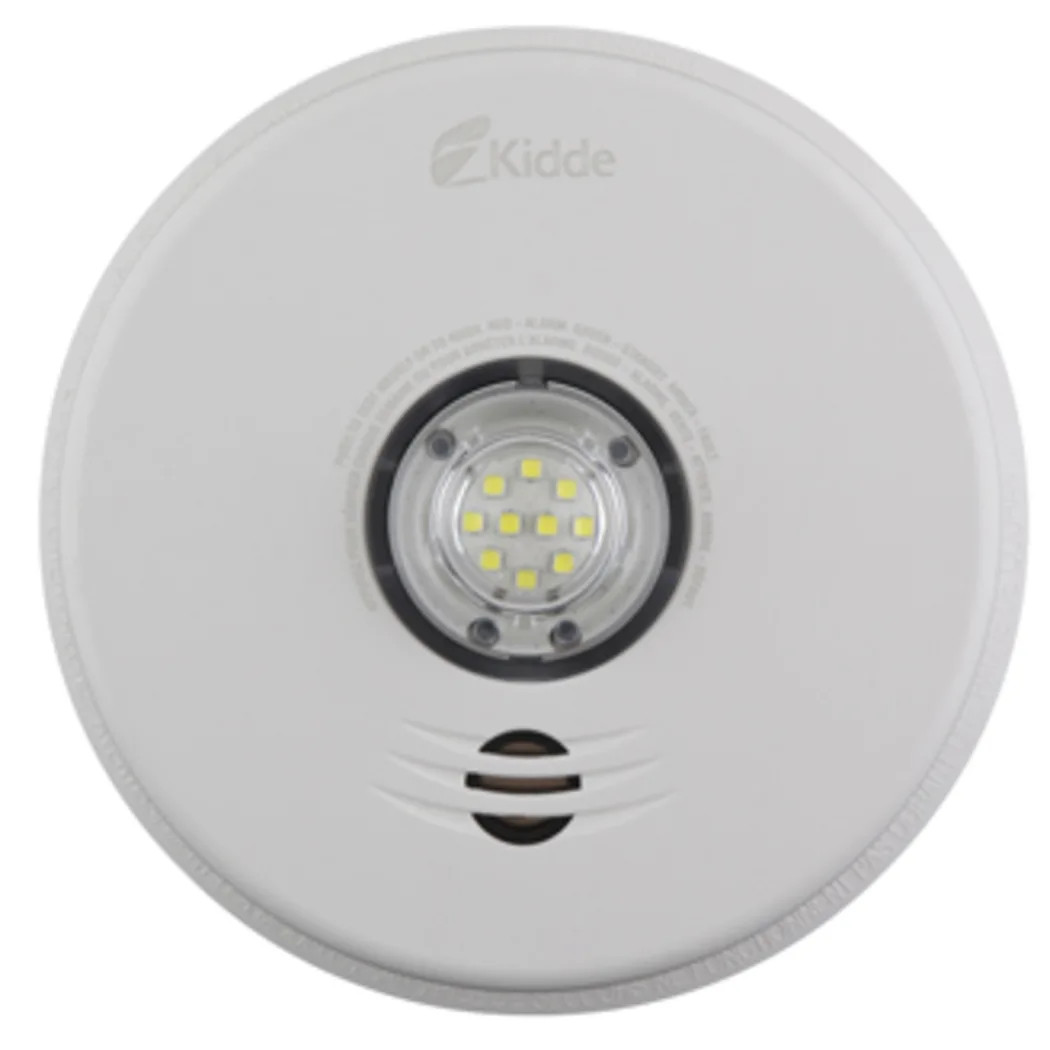
Yes. Smoke alarms are rated for 10 years from the date of manufacture, which is printed on the back of the unit, and the Fire Code requires replacement on the manufacturer’s schedule. CO alarms last 7 to 10 years on their own, and combination units 5 to 10 years depending on the model. The date on your specific unit is the one that counts.
An alarm at the end of its life tells you. Kidde units give a quick beep every 30 seconds with a red light flash, and First Alert combination units chirp five times a minute at end of life, compared with one chirp a minute for a low battery. Putting in a fresh battery will not stop an end-of-life chirp. The sensor is done, and the unit needs replacing.
Hardwired or battery? The one rule that matters
Toronto Fire Services puts it simply: replace an alarm with the same type it already is. If your home is wired for alarms, the replacement stays hardwired. Swapping a hardwired alarm for a battery-only unit lowers the level of protection the home was built with, and it is the single most common mistake we see.
Hardwired alarms on an interconnected line all sound together, which is the point, but it also means one dirty or failing unit can set the whole house off at 3 a.m. That is usually a cleaning or expiry problem, not a wiring problem. It is also why every alarm on the same line should be the same brand: mixing brands on one interconnect line can stop the alarms from sounding together.
The ten-minute home check
Run through these four checks and you will know exactly where your home stands:
- Test every alarm. Press the test button on each unit. Fire services say test monthly.
- Check the date. Twist the alarm off its base and read the manufacture date on the back. A smoke alarm past 10 years gets replaced.
- Count your CO alarms against the new map. One beside the bedrooms, plus one on every other floor, basement included. Floors where nobody sleeps count now.
- Vacuum the covers. A soft brush attachment, about every six months. Never paint an alarm; paint clogs the sensing openings.
Renting your home out? The duty sits with the landlord
Ontario puts alarm duties on the owner. Landlords must install and maintain smoke and CO alarms, test them every year, at every change of tenancy, and after a battery replacement or a change to the electrical circuit, and give tenants the manufacturer’s maintenance instructions. Tenants must not disable an alarm, and should report any problem to the landlord. In Toronto, a tenant who cannot get an alarm fixed can call 311, and a fire inspector will attend. More answers like this live on our FAQ page.
Frequently asked questions
What exactly did Ontario change about CO alarms in 2026?
As of January 1, 2026, under Ontario Regulation 87/25, a home with a fuel-burning appliance, a fireplace, or a storage garage needs a carbon monoxide alarm on every storey, not just beside the bedrooms. The alarm beside the bedrooms covers the storey the bedrooms are on. What changed is the rest of the house: the basement, and any floor where nobody sleeps, need their own CO alarm now too. Before 2026, only the alarm beside the sleeping areas was required.
How many smoke and CO alarms do I need in my Ontario home?
Walk it floor by floor. On the floor with the bedrooms, one smoke alarm and one CO alarm in the hallway outside the bedrooms cover that floor. Every other floor needs its own smoke alarm and, since 2026, its own CO alarm as well — the main floor and the basement included, even though nobody sleeps there. That works out to at least three smoke alarms and three CO alarms in a typical two-storey house with a basement, and combination units can cover both jobs in the same spot.
Do smoke alarms expire?
Yes. Smoke alarms are rated for 10 years from the date of manufacture, printed on the back of the unit. Standalone CO alarms last 7 to 10 years, and combination smoke and CO units 5 to 10 years depending on the model. Replace the unit when it reaches its date.
Why is my smoke alarm chirping?
One chirp a minute usually means a low battery. A chirp pattern that continues after you change the battery, a quick beep every 30 seconds on a Kidde unit, or five chirps a minute on a First Alert combination unit, means the alarm has reached the end of its life. The sensor is finished and the unit must be replaced.
Can I replace my hardwired smoke alarm with a battery one?
No. A hardwired alarm should always be replaced with a hardwired alarm. Toronto Fire Services advises replacing an alarm with the same type, and downgrading to battery-only lowers the protection the home was built with. If your home has no alarm wiring at all and you want hardwired, interconnected alarms added, that is a wiring job that can involve your electrical panel.
How often should I test my alarms?
Fire services and the NFPA say test monthly, using the test button on each alarm. The manuals from Kidde and First Alert actually say weekly, which is stricter. Landlords in Ontario must test at least annually, at every change of tenancy, and after any battery or electrical circuit change.
What happens if my home isn’t compliant?
These rules live in the Ontario Fire Code, and the Fire Code governs homes people already live in. It is not a new-build rule — new construction and permitted renovations follow the Ontario Building Code instead. Your local fire department enforces the Fire Code: a fire prevention officer can inspect and order the missing alarms installed. Failing to comply is an offence under the Fire Protection and Prevention Act, with fines of up to $50,000 on conviction for a first offence. There is no grace period written into the 2026 change; it has applied since January 1, 2026. There is a quieter risk, too: a home that is not up to the Fire Code can put an insurance claim at risk after a fire or a carbon monoxide incident. And in a semi or a rowhouse, your alarms protect more than your own family — they protect the family on the other side of the wall too.
Not sure your alarms pass the 2026 rules?
Book a hardwired alarm check and replacement visit. We count, test, and date-check every alarm in the house, and replace the ones that are due with units matched to your home’s wiring. See what our smoke & CO alarm installation service includes. Licensed electricians · ESA/ECRA · DecadeShield 10-year workmanship warranty.
Request a QuoteWe quote it. You approve it. We do it.