Level 2 EV charger installations for business.
Turn your parking lot into an asset. 3e designs and installs Level 2 EV charging for workplaces, retail properties and small fleets across Toronto, Etobicoke, Mississauga, North York and the GTA — engineered to your building’s electrical capacity, not against it.

- Licensed ESA electricians
- ECRA 7014948
- 10-year workmanship warranty
- 4.9 stars from 200+ reviews across Google, HomeStars, Houzz and more
Why Level 2 is the right charger for most commercial sites
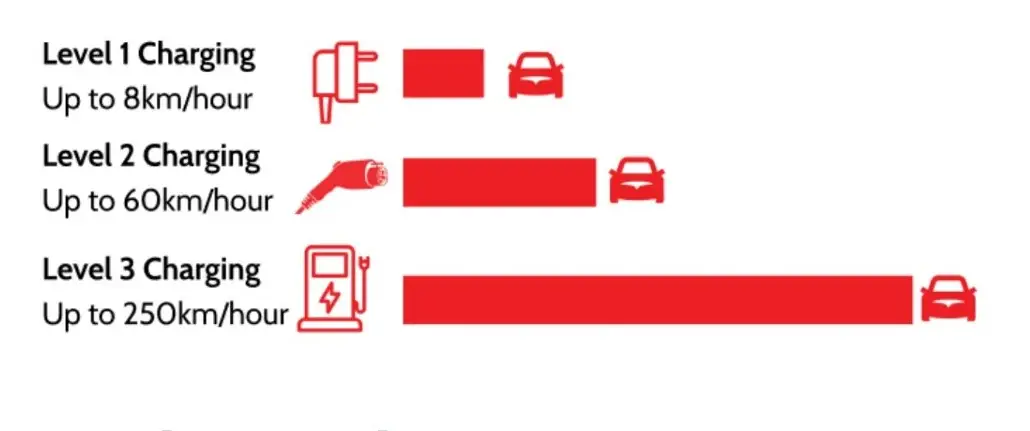
Level 2 charging runs on 240-volt power and delivers a full charge in roughly 4 to 8 hours — exactly the length of a workday, a shopping trip, or an overnight fleet park. It costs far less to install than DC fast charging, runs on the electrical service most commercial buildings already have, and scales cleanly from two stalls to twenty.
Workplace charging
Staff plug in when they arrive and leave with a full battery. It’s a concrete retention perk for the growing share of employees who drive electric — and it costs you a fraction of a raise.
Customer parking
EV drivers plan routes around charging. Stations in your lot pull new visitors in, keep them on site longer, and signal that your property is keeping up with where transportation is going.
Fleet top-ups
For small fleets driving under about 350 km a day, overnight Level 2 charging at your own depot is the simplest, cheapest fuelling model there is — no gas station stops, no idle drivers.
Property value & ESG
Charging infrastructure is a sought-after amenity for tenants and a visible line item in any sustainability report. It future-proofs the property as EV adoption keeps climbing in the GTA.
One team, start to finish
Commercial charging is an infrastructure project, not a plug swap. We manage the whole thing — design, permits, installation and commissioning — so you deal with one contractor and one accountable team.
Site assessment
We walk your property, review your electrical service and panel capacity, and map the shortest practical path from your electrical room to the stalls.
Value-engineered design
You get a plan built around what your building can actually support — charger count, placement, load management — with expansion capacity designed in from day one.
Permitted installation
Our licensed electricians handle the trenching, conduit, distribution equipment and charger mounting, with ESA notifications filed and inspections coordinated.
Commissioning & handover
Every stall is tested, networked chargers are configured, and your team is walked through how it all works before we hand over the keys.

The governing factor is your electrical system
“The first thing we look at is your electrical system — what it can offer in terms of ampacity and voltage. That’s the critical governing factor for every installation. The second is budget and ROI.”
— Marcello Piccinato, P.Eng, M.E., President of 3e Electrical
- Service and panel capacity review, with full load calculations
- Conduit routing across lots, garages and landscaped areas
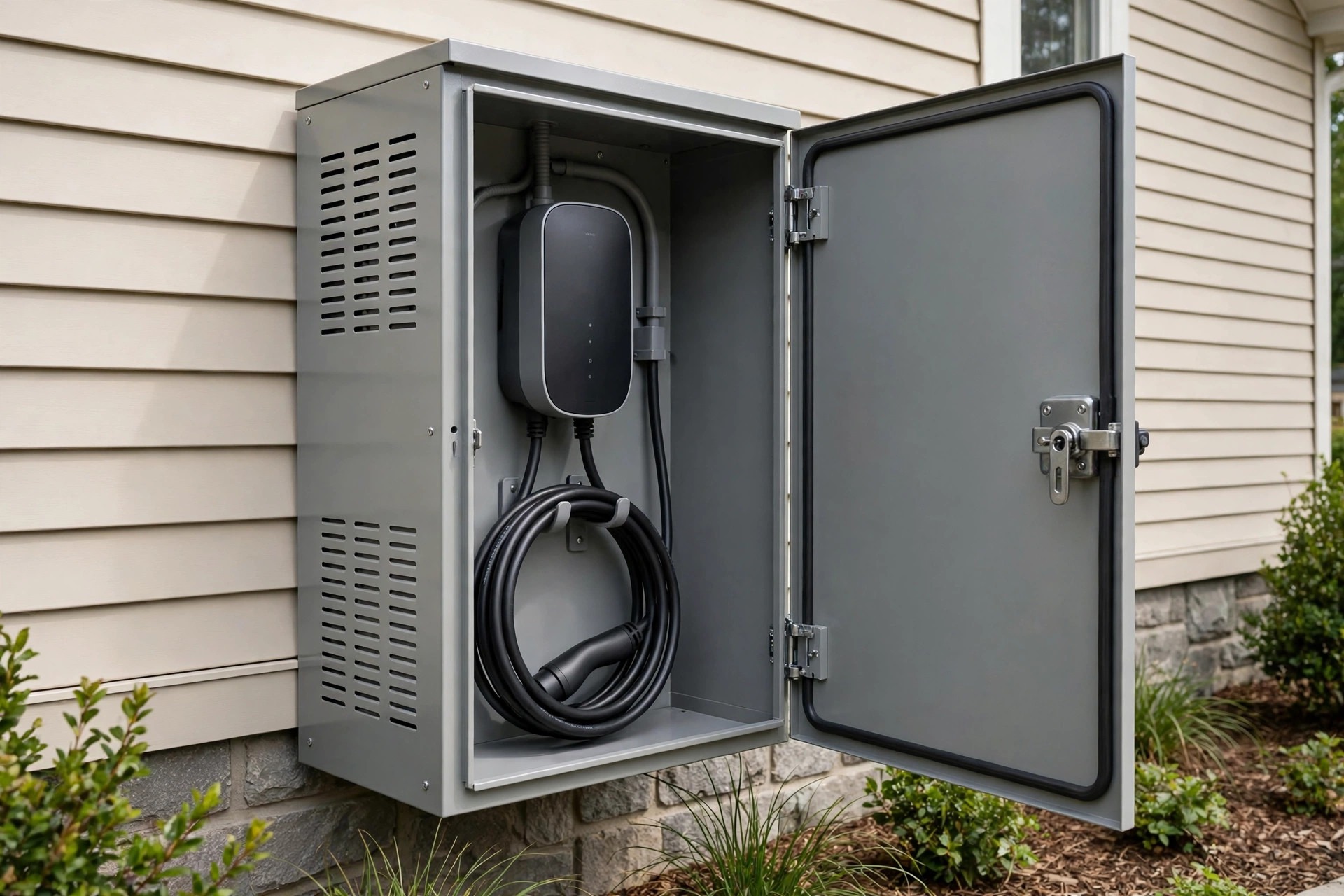
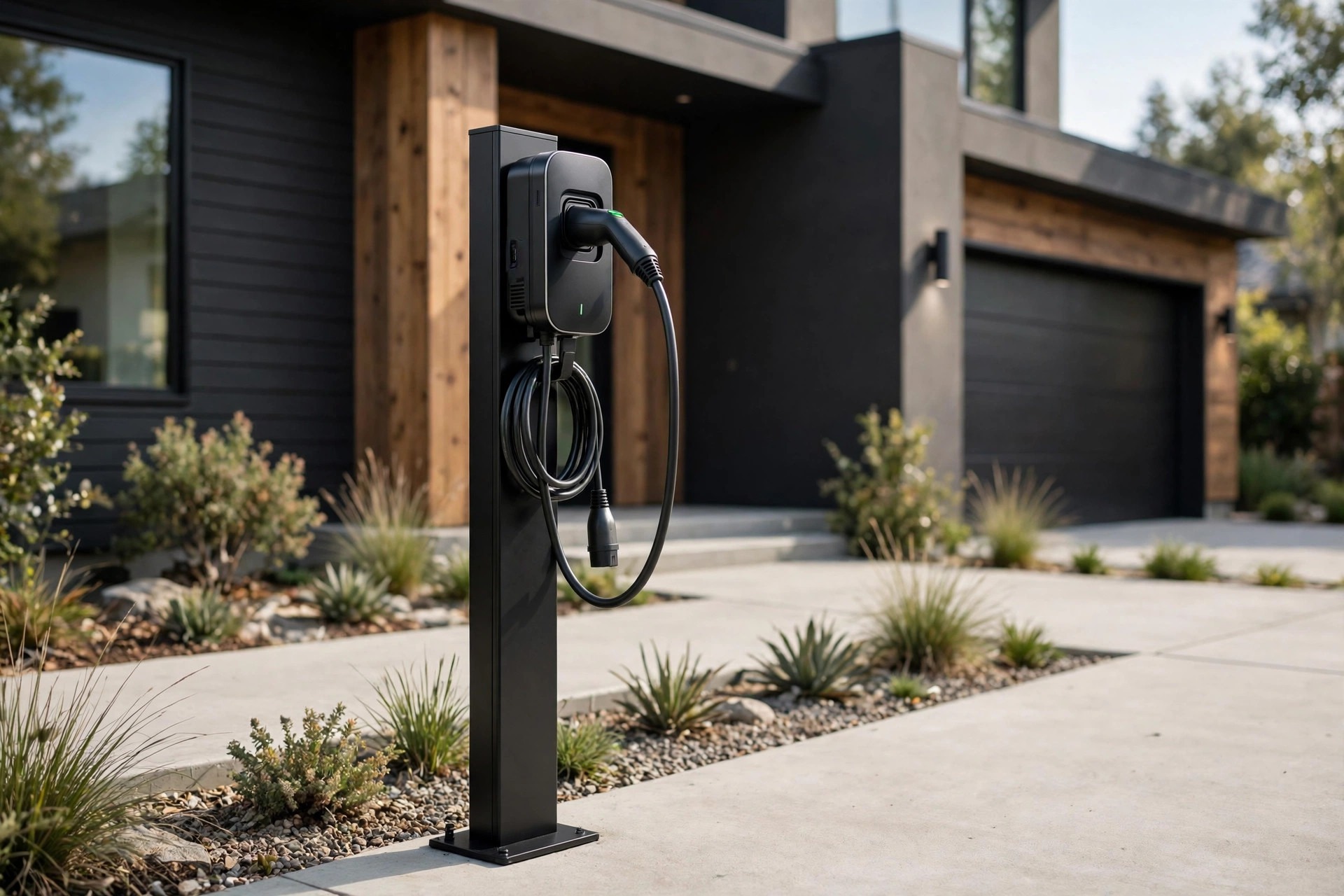
- Pedestals, bollards and weather-rated outdoor mounting
- Honest guidance when a service upgrade is — or isn’t — needed
More chargers, without a bigger service
The most expensive line on a commercial charging project is often a service upgrade you didn’t need. Dynamic load sharing lets multiple chargers draw from one circuit intelligently — distributing available power between vehicles in real time, so a 200-amp panel can support stalls that would otherwise demand a costly upgrade. We design for it from the start, and we leave spare capacity in the design so adding stalls later is a small job, not a second project.
Dynamic load sharing
Chargers talk to each other and split available power automatically — full speed when few cars are plugged in, balanced sharing when the lot fills up.
Expansion-ready design
We size conduit and distribution with future stalls in mind. Adding chargers later costs far less when the infrastructure was built for it.
Networking & billing
Choose networked stations and you can bill per kWh, per session or via subscription, control who can plug in, and see usage reports — or keep it simple with free, unmanaged charging for staff.
“A charging station at your place of business is a strong investment — if you have the space and the electrical capacity for it. Our job is to tell you honestly whether you do, and to engineer the most economical way to get there.”
Marcello Piccinato, P.Eng, M.E. — President, 3e Electrical
Commercial Level 2 charging, answered
Straight answers for owners, property managers and fleet operators.
Which businesses benefit most from Level 2 chargers?
Will Level 2 chargers work with all EV models?
What does the site assessment actually cover?
Do you handle permits and ESA inspections?
Can we charge drivers for using the stations?
Are there incentives available for businesses?
How do we get started?
Commercial EV services
Charging options for workplaces, fleets, retail and multi-unit properties across Toronto and the GTA.
Ready to electrify your property?
Request a free consultation and site assessment. We’ll tell you honestly what your building can support — and the most economical way to get chargers in the ground.