Cobot & Light Automation Power
Power for Cobots & Automation in Toronto
Cobots and light automation — carton erectors, pick-and-place arms, palletizers — don’t draw much power. What they can’t survive is bad power: a surge through the panel, a sag that scrambles the controller. We design the power they run on — capacity checked, circuits dedicated, protection at the panel.
3e Electrical is a commercial and industrial electrical contractor (ECRA/ESA 7014948), led by a professional engineer — Marcello Piccinato, P.Eng., Master Electrician. We power cobots and light automation across Toronto and the GTA, working alongside your integrator or machine supplier.
Request a QuoteCall 647-560-7995
- Load calculations first — what the cell actually draws, and the capacity your panel actually has
- Surge protection at the panel — cobots, drives and controls defended against lightning strikes and surges
- ESA permits and inspections handled — installed inspection-ready
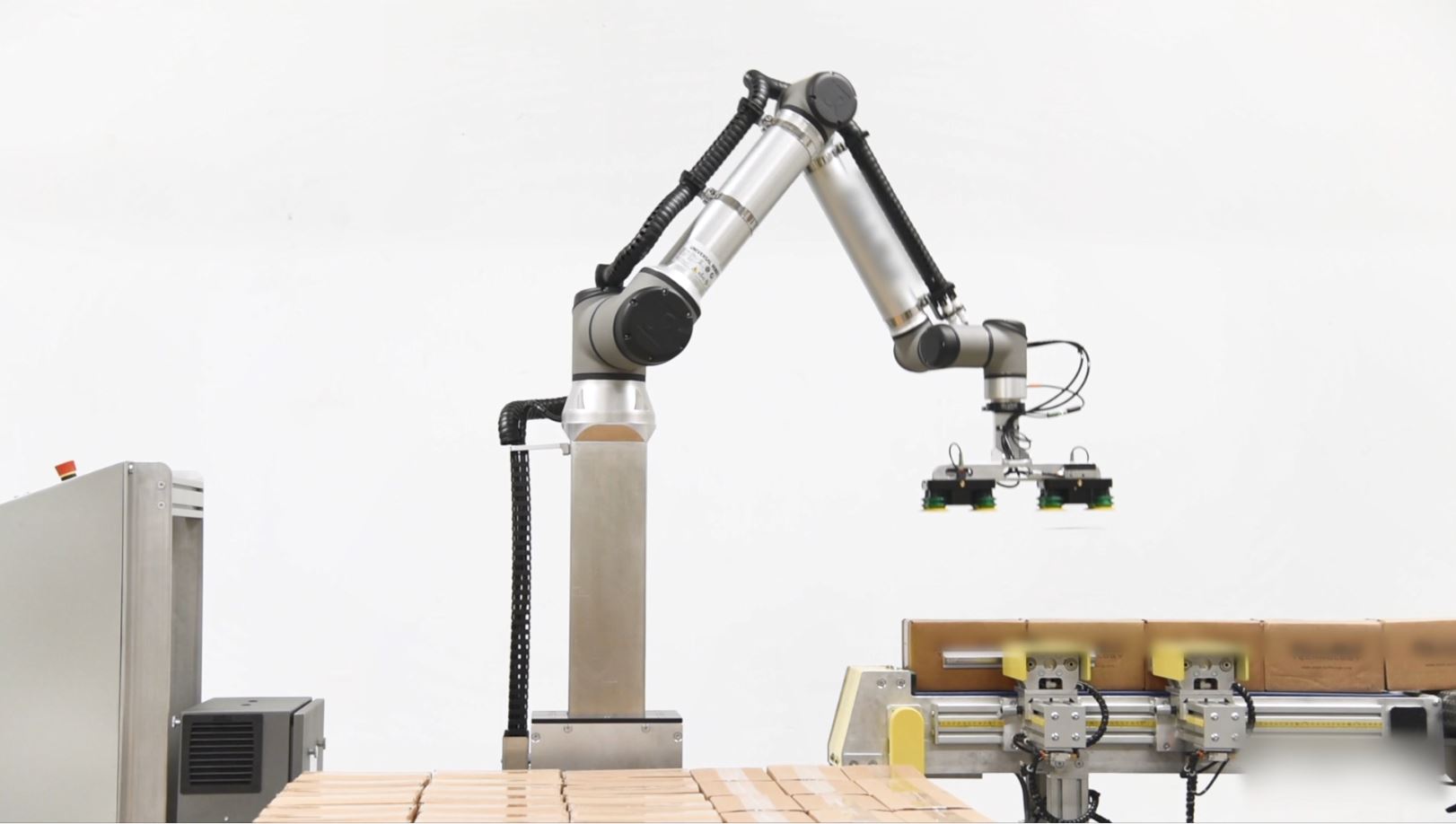
Photo: CollaborativePalletizer, CC BY-SA 4.0, via Wikimedia Commons.
Safe robot power.
We don’t sell robots. We power them.
Straight up: the cobot comes from your equipment supplier, and the programming and collaborative robot integration come from your integrator. What sits between your panel and a running cell is electrical work — the power requirements checked properly, dedicated circuits, control wiring, safety circuits, and the surge protection that keeps one lightning strike on the grid from frying the drives, control boards and network gear the cell depends on.
That is 3e’s part, and it is the part everything else depends on. It sits inside our wider commercial electrical services: the same commercial and industrial crews who wire warehouses and packaging plants now power the automation those buildings run.
Watch
A cell at work
A robot opens each carton, folds it and seals the bottom — no hands, no pause. Every one of those moves is a motor, a sensor and a control signal, running on power somebody had to design.
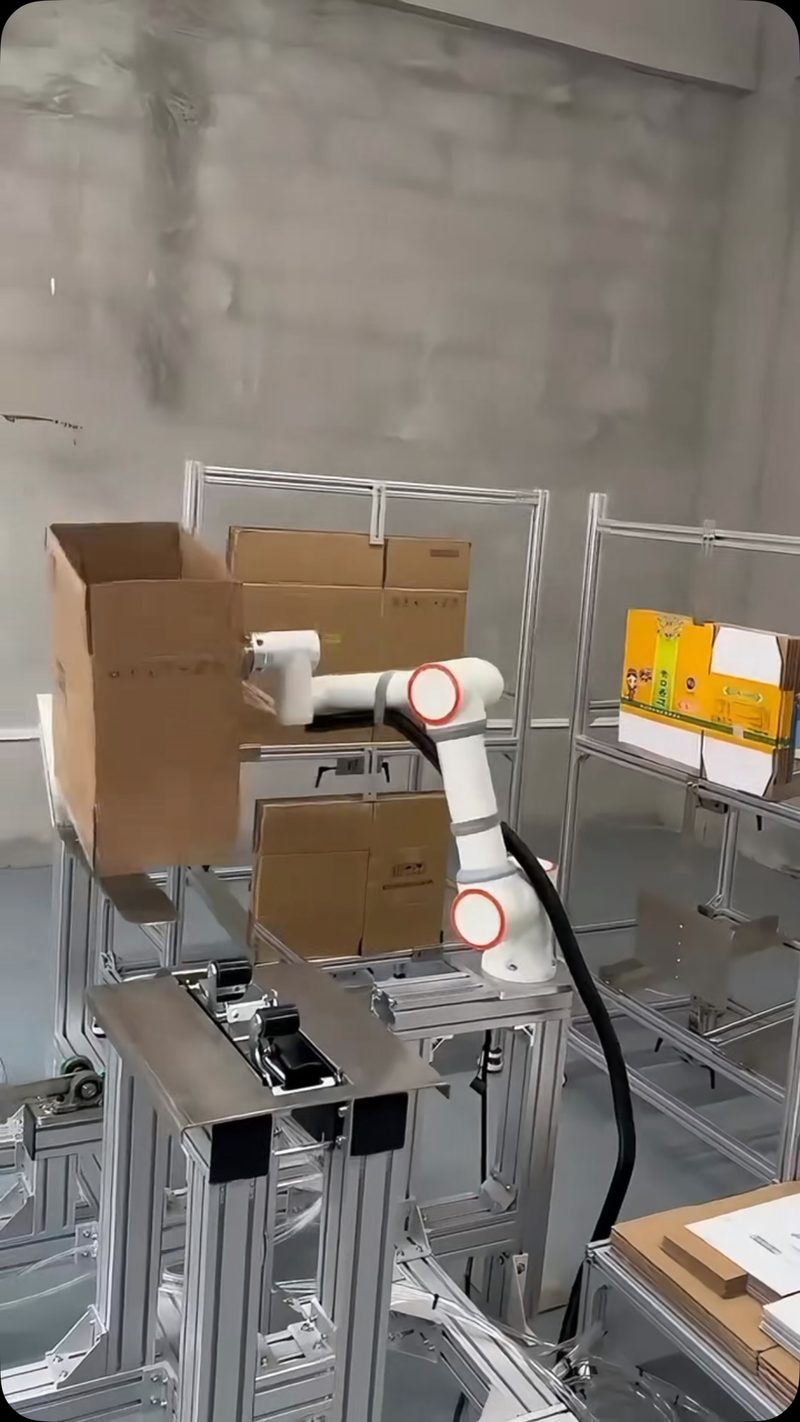
A carton-erecting robot cell, via @case_packer on Instagram.
What we do
The electrical scope of a cobot or light-automation cell, end to end — the electrical work warehouse automation and packaging automation projects run on, from checking what the cell draws to protecting it from the grid.
01
Power requirements & load calculations
Most cobots sip power — but the cell around them adds up: grippers, conveyors, erectors, sealers, the controller. We calculate what the whole cell actually draws and check your panel’s spare capacity first, so nothing is promised that the service can’t deliver.
02
Protect your investment.
Surge protection at the panel is the cheapest insurance on the cell. A lightning strike on the power network — or a surge from the utility — heads straight through your panel into everything connected to it: cobot controllers, servo drives, control boards, network switches. We install surge protective devices at the panel that clamp the surge where it enters, before it reaches the equipment.
03
Dedicated circuits & clean power
Each cell gets a circuit of its own, sized to its equipment and shared with nothing. No nuisance trips from somebody else’s load, no mystery shutdowns mid-shift — just clean, steady power of the kind drives and controllers are built for.
04
UPS & power conditioning
Controllers and PLCs hate sags and blinks — a half-second dip can drop a program or scramble a cycle mid-carton. A UPS on the controls lets the cell ride through disturbances and shut down in order, programs and positions intact.
05
Control circuit wiring
Power and control wiring between the controller, drives, sensors and the machines they run, terminated neatly in panels that are labelled and documented — so the next controls tech reads it in seconds.
06
Safety circuits
Cobots are built to work beside people, but the cell around one still needs its safety layer: e-stop circuits, safety relays and contactors, and power for guarding and interlocks where the assessment calls for it — wired to the integrator’s design and ready for the pre-start review.
07
Data, network & camera drops
Controllers, vision cameras and HMIs all live on the network — and network gear is surge-sensitive too. We run the Ethernet drops to the cell, terminate and label every one, and keep data cleanly separated from power.
08
Commissioning support & service
When your integrator powers up the cell, we are on site with them: circuits proven, loads measured, power problems solved the same day. After that we maintain the electrical side — and answer when the line goes down.
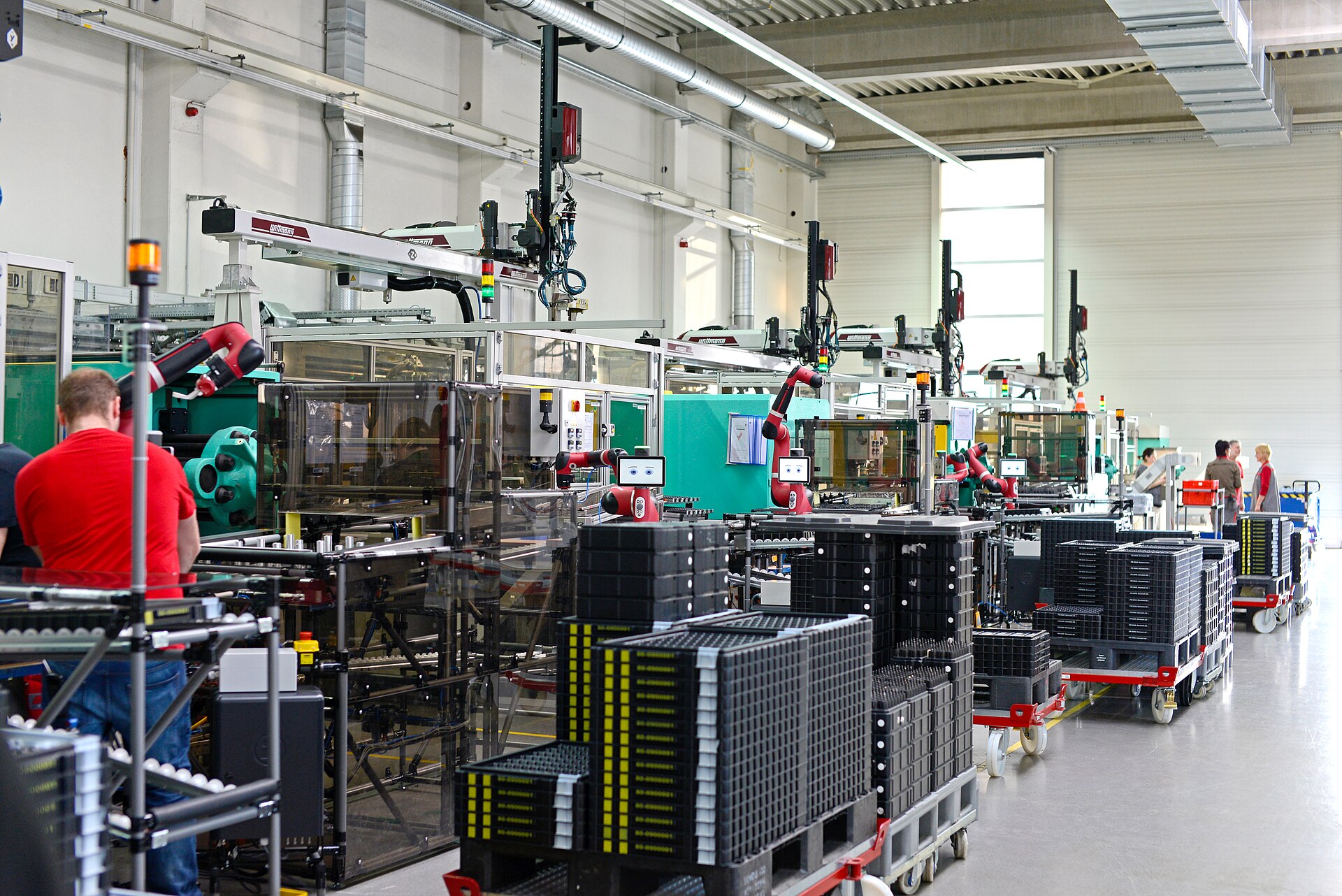
Small machines. Long shifts.
These cobots tend machines all day, working beside the people who run them. Dedicated circuits, clean power and protection at the panel are what keep a light cell like this earning — hour after hour.
Photo: Sawyer cobots tending machines — HAHN Group, CC BY-SA 4.0, via Wikimedia Commons.
Where it runs
Anywhere a cobot does the lifting — the electrical work underneath is the same discipline.
Packaging lines
Carton erectors, case packers and sealers, like the cell in the video above — fast, repetitive machines that punish weak power, and die expensively in a surge.
Warehouse automation & logistics
Pick-and-place arms, cobot palletizers, pallet lines and conveyor cells that run long hours — on dedicated power sized for the duty cycle, not just the nameplate.
Machine tending & small manufacturing
A cobot loading a CNC mill, a press or a test station — the classic first cell in a small shop. Most need surprisingly little power; all of them need it clean and protected.
Food & beverage packing
Case packing and end-of-line palletizing, where the runs are long, the washdowns are real, and one fried drive board stops the whole line.
How a project runs
Five steps, in order, with the paperwork done before the tools come out.
Step 1
Design & load calc
We start from each machine’s spec sheet — its voltage, phase and amperage — and calculate what the cell actually draws, and the protection it needs.
Step 2
ESA permit
The notification is filed and the inspection booked before installation starts — no surprises after.
Step 3
Install
Dedicated circuits, surge protection and the cell’s electrical hookup, installed and labelled as drawn.
Step 4
Commission
We power up alongside your integrator and prove every circuit under load.
Step 5
Maintain
Scheduled checks and a number to call when the line stops — because it will, one day.
Cobot power questions
Do you install the robots themselves?
No — and we will always tell you that up front. The cobot, its programming and its integration belong to your equipment supplier or integrator. We design and install the electrical work it runs on: power requirements and load calculations, dedicated circuits, surge protection at the panel, control wiring and backup power for the controls — coordinated with your integrator from day one.
How much power does a cobot need?
Less than most people expect. Most cobots sip power — many run on a standard 120-volt circuit and draw only a few amps, roughly like a desktop computer. What adds up is everything around the arm: vacuum grippers, conveyors, carton erectors, sealers, plus the controller and network gear. That is what our load calculation covers — the whole cell, checked against your panel’s capacity, before anything is installed.
Can a power surge kill a robot?
Yes — it is one of the most common ways automation electronics die. A lightning strike on the power network, or a surge from the utility, travels through your panel into everything connected to it, and cobot controllers, servo drives, control boards and network switches are exactly the kind of electronics surges kill. The defence is layered: a surge protective device at the panel, clamping the surge where it enters the building, and a UPS on the controls to ride through the sags and blinks in between. We install both.
Can you work with our integrator or machine supplier?
Yes — that is the normal way these projects run. Your integrator gives us the power and control requirements for each machine; we design the distribution and wiring to suit, then commission alongside them. One point of contact on the electrical side, no finger-pointing when something needs changing.
Can a cobot be added to our existing line?
Usually, yes — cobots are built to drop into lines that are already running, and adding one rarely means rebuilding the line. The questions are electrical: does your panel have the spare capacity, where does the cell’s dedicated, surge-protected circuit come from, and where do the disconnect and safety circuits go? That is what our load calculation settles up front — most first cells need surprisingly little power; they just need it planned.
Does automation electrical work need an ESA permit?
Yes. New circuits, distribution and machine connections in Ontario require an ESA notification and inspection. We file the permit, build to the Ontario Electrical Safety Code and meet the inspector — it is part of the job, not an extra.
Our plant runs on 600V three-phase. Can a cobot cell work here?
Yes. The cobot itself runs on ordinary 120V power — what changes is where that power comes from. In a 600V plant we feed the cell from the building’s 120/208V three-phase distribution, or install a step-down transformer sized for the cell — and a buck-boost transformer where a machine needs its voltage trimmed to spec. Either way, the cell gets its own dedicated, surge-protected circuit.
Photos on this page show equipment from other manufacturers’ facilities, published under open licences via Wikimedia Commons, and are shown to illustrate the kind of automation we power — they are not 3e projects. Packaging cell: CollaborativePalletizer, CC BY-SA 4.0. Production floor: HAHN Group, CC BY-SA 4.0. Video: @case_packer on Instagram.
We quote it. You approve it. We do it.
Planning a cell, a line, or a plant upgrade?
Send us the machine list, the layout, or just the idea. We will calculate the load, quote the electrical work in writing, and build it inspection-ready.