Industrial Automation — The Power Side
Industrial Automation Electrician in Toronto
Automation runs on power before it runs on code. When a machine goes down, when a new line needs feeding, when the panel has nothing left to give — that is electrical work, and it decides how long your plant stands still. We design, install and troubleshoot the power behind Toronto’s industrial automation: distribution, transformers, machine drops, and the fault tracing that gets production running again.
3e Electrical is led by a Professional Engineer and Master Electrician — Marcello Piccinato, P.Eng., Master Electrician (ECRA/ESA 7014948). The engineer who calculates your load is the master electrician who stands behind the install, across Toronto and the GTA.
Request a QuoteCall 647-560-7995
- Machine down? Engineer-led fault tracing — phase loss, voltage drops, tripped breakers, overheating — until production is running again
- Transformers and distribution sized by calculation: 600V in, 120/208V three-phase out, for one machine or the whole building
- ESA permits and inspections handled by us — installed inspection-ready, planned around your production schedule
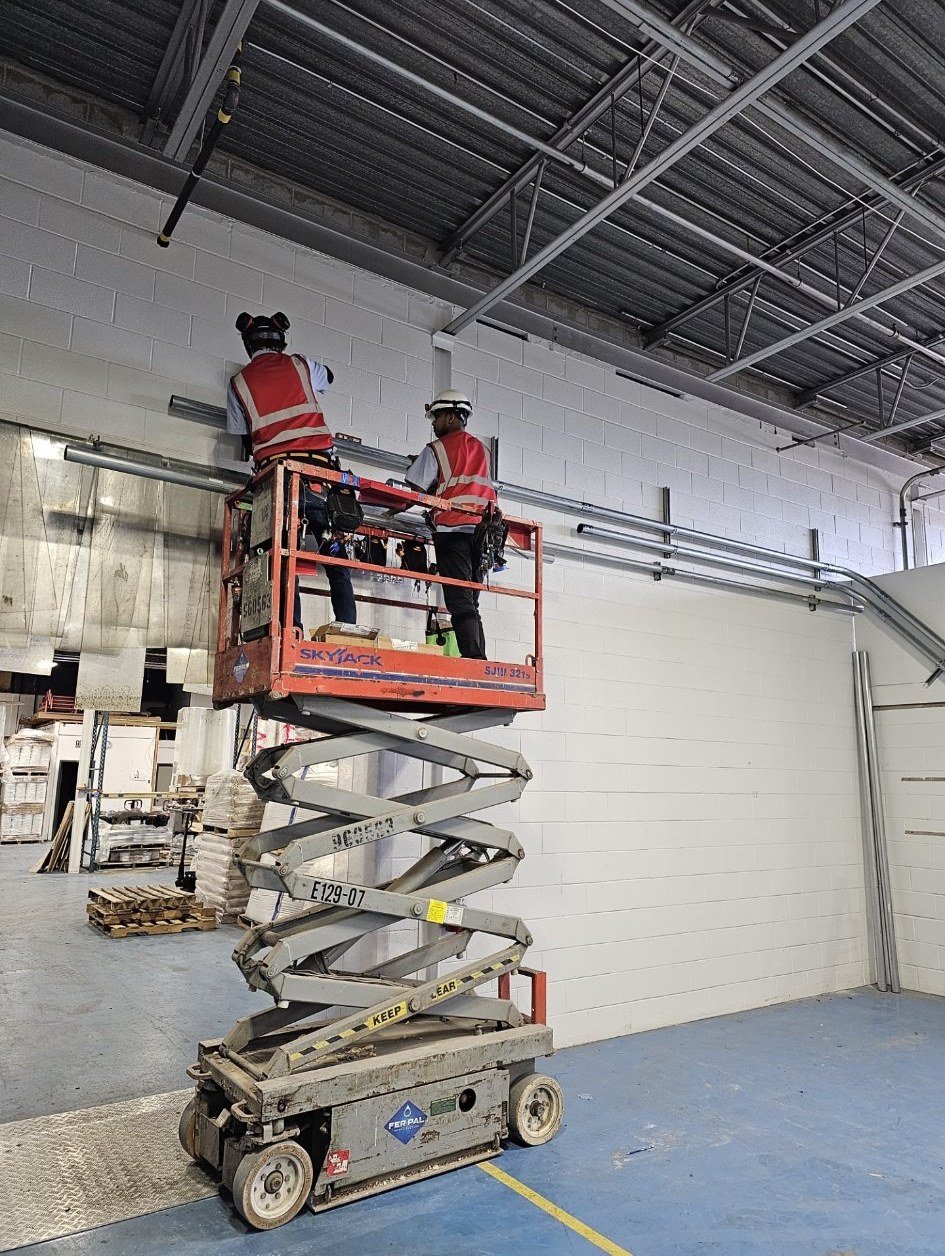
Power in. Production running.
The power side of industrial automation
Straight up: we don’t program PLCs and we don’t build control panels — your integrator and machine builder do that, and they do it well. What sits underneath every automated line is a different trade: the service and feeders that feed the floor, the transformers that make the right voltage, the panels with real spare capacity, the drops and disconnects at each machine, and the protection that keeps a surge out of your drives and controllers.
That is 3e’s part, and it is engineered, not estimated. Every automation project starts with a load calculation by a professional engineer, and every fault is traced the same way — methodically, from the machine back through the distribution, until the cause is found. It sits inside our wider commercial and industrial electrical services: the same crews who wire plants and warehouses across the GTA.
Troubleshooting & Downtime
Machine down? We trace the power fault and get you running.
A stopped line costs money by the hour, and most “machine problems” that reach us are power problems wearing a disguise. Error diagnosis on the power side is methodical: we measure, we trace, we prove each link from the service to the machine terminals — phase loss, a voltage drop that only shows under load, a breaker that trips at the same point in every cycle, a disconnect failing hot. No parts swapped on hunches.
Phase loss
One leg gone and motors single-phase, overheat and stall. We find where the phase was lost — fuse, contactor, lug or utility side — and repair the cause, not the symptom.
Voltage drops & sags
Drives faulting and controllers resetting under load usually means the circuit can’t hold voltage. We measure under real load and size the fix properly.
Tripped breakers & blown fuses
A breaker that keeps tripping is reporting a fault, not causing one. We trace whether it is overload, a failing breaker, or a machine-side short.
Failed disconnects & contactors
Burned contacts and welded or chattering contactors stop machines dead. We replace, torque and load-test so the repair holds.
Overheating panels & conductors
Hot breakers, discoloured insulation, that warm electrical-room smell — loose terminations and overloaded circuits found before they fail or worse.
Intermittent faults
The malfunction that never happens while anyone is watching. Engineer-led tracing with measurements over time, until the fault shows itself and is fixed.
The goal is always the same: production back up and running as soon as possible — and where a repair needs a shutdown, we plan it around yours, including evenings and weekends.
What we do
The electrical scope of an automated plant, end to end — from the service entrance to the disconnect at the machine, and the maintenance that keeps it all running.
01
Power distribution for automation
Services, feeders and sub-panels that give a plant room to grow: three-phase power distribution designed around the machines it feeds, with capacity calculated before a single machine is promised power.
02
Machine power drops & disconnects
Dedicated circuits run to where the machine actually lands, with a local disconnect within sight of the operator — for production machines, industrial robots and robot cells, packaging lines, compressors, welders and process equipment.
03
Transformers — 600V to 120/208V
Most GTA plants take 600V in; most machines and controls want 120/208V three-phase. We size and install step-down transformers for a single machine or for a building’s entire service — and step-up where equipment needs the reverse — plus buck-boost transformers where a machine needs its voltage trimmed to spec. See transformers on our commercial and industrial hub.
04
Panel capacity & load calculations
Before new equipment is ordered or a line is expanded, a professional engineer calculates what your service and panels can actually carry — and what an upgrade to 400A distribution would unlock if they can’t.
05
Surge protection for automation panels
Drives, servo controllers and network gear die quietly in surges that travel straight through an unprotected panel. Surge protective devices at the panel clamp the surge where it enters — the cheapest insurance on the line.
06
Machine wiring & retrofits
New machines wired in and older equipment re-fed, relocated or brought up to current code — the power side of a retrofit, coordinated with your machine builder so the machine lands and runs.
07
Commissioning support
When your integrator powers up, we are on site with them: circuits proven, voltages measured under load, power problems solved the same day instead of discovered the first week of production.
08
Preventive maintenance
Scheduled inspection of the distribution that feeds your automation — terminations checked and torqued, panels reviewed for heat and wear, problems fixed on a planned stop instead of an unplanned one.
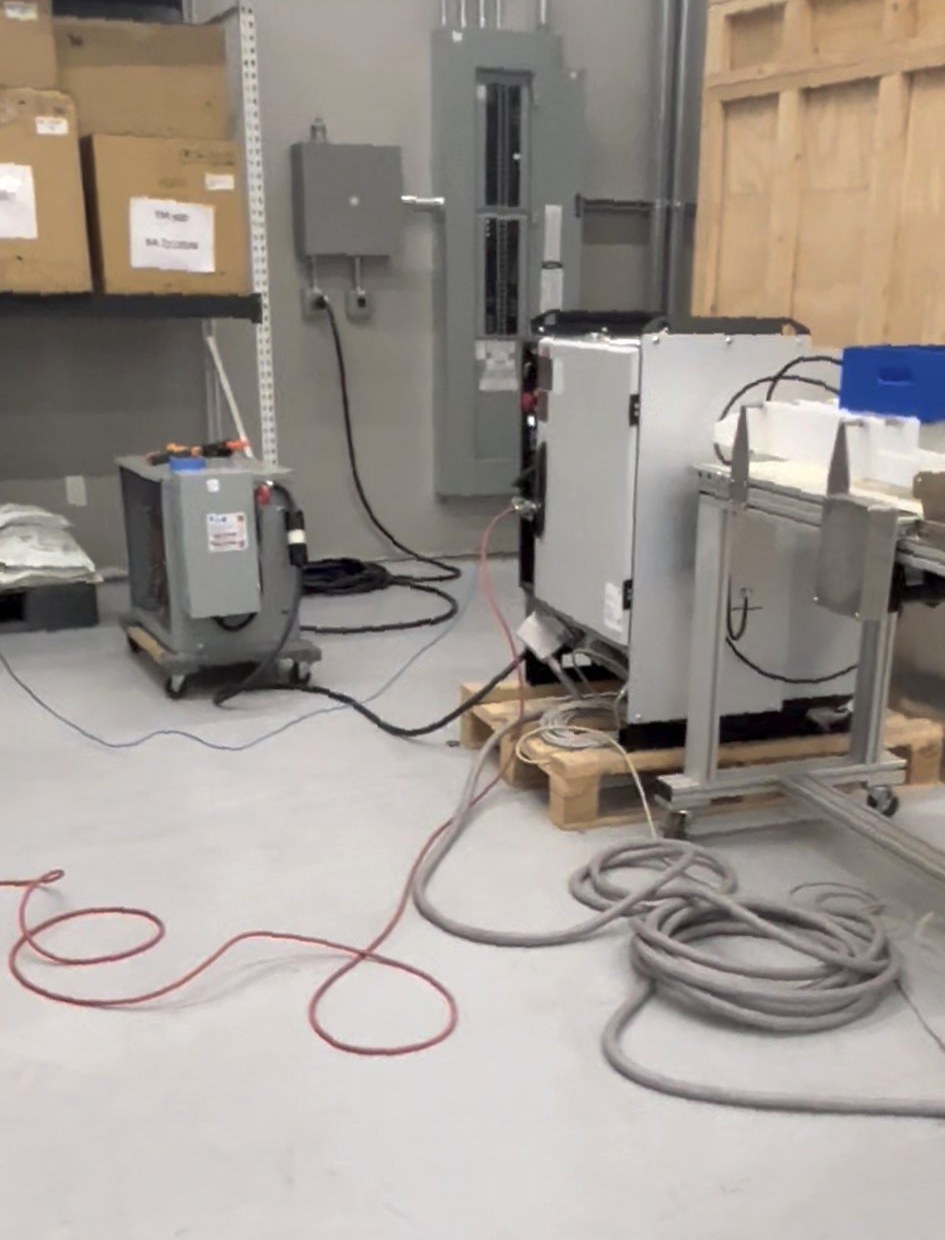
One transformer can power the whole building
A step-down transformer is not just equipment matching. Sized and placed properly, a single transformer takes a plant’s 600V service and delivers the 120/208V three-phase that runs the machines, the controls and the building itself. That is the kind of decision an engineer makes once — and the plant lives with for decades.
Tap a photo to view it full size.
Who we serve
Plants and teams across Toronto and the GTA who need the power side done by a licensed, engineer-led contractor.
Small manufacturers
First machines, bigger machines, a second line — power planned so each step up doesn’t mean starting the electrical from scratch.
Packaging & food plants
Case packers, sealers, conveyors and cobot cells on long runs, where one failed drive stops the whole line. Cobot cells are their own specialty — see our cobot and automation power page.
Facility & maintenance teams
A licensed contractor who knows your distribution, answers when a machine is down, and keeps a maintenance rhythm so stops get planned instead of suffered.
Machine builders & integrators
You build and program the cell; we deliver its power — distribution, drops, disconnects and commissioning support — so your install lands on power that is ready.
Powering a cobot or a packaging cell?
Cobots for packaging, packing and palletizing draw surprisingly little power — but they cannot survive bad power. Our dedicated page covers load calculations, dedicated circuits, surge protection and UPS support for cobot cells.
Credentials
Led by a Professional Engineer and Master Electrician
Most industrial electricians offer one licence or the other. 3e is led by both: Marcello Piccinato is a Professional Engineer and a Master Electrician, so the person who calculates your plant’s load and traces its faults carries the engineering and the trade licence behind the fix. Before electrical, he built heavy civil work — rail grade separations, bridges, big-box stores, hospitals and a dam — infrastructure where power and tolerances are not negotiable. 3e is in its ninth year.
- Marcello Piccinato, P.Eng., Master Electrician — leads design, diagnosis and delivery
- ECRA/ESA licence 7014948 — licensed electrical contractor; ESA permits and inspections handled in-house
- Engineer-led troubleshooting — faults traced by measurement and method, production back up as soon as possible
How a project runs
Five steps, in order — planned around your production, not against it.
Step 1
Assess & load calc
We take the machine list from you or your integrator, read each equipment spec sheet for its electrical requirements — voltage, phase and amperage — and calculate what it draws, and what your service can honestly carry.
Step 2
ESA permit
The notification is filed and the inspection booked before installation starts. No surprises after the fact.
Step 3
Install
Distribution, transformers, drops and disconnects installed and labelled — scheduled around production, nights and weekends when the line can’t stop.
Step 4
Commission
We power up alongside your integrator and prove every circuit under load before production depends on it.
Step 5
Maintain
Preventive maintenance on the distribution, and a number to call when a machine goes down.
Industrial automation power questions
Our machine is down. What do you check first?
We start at the machine and trace back toward the service: voltage at the disconnect, all three phases present and balanced, voltage held under load, breaker and fuse condition, and signs of overheating at terminations. It is engineer-led error diagnosis — measured, not guessed — and it separates a power fault from a controls fault fast. If the fault turns out to be inside the machine’s controls, we will tell you plainly and hand your integrator or machine builder the measurements to prove it.
Do you program PLCs or build control panels?
No — and we will always tell you that up front. Programming and control panels belong to your integrator or machine builder. We are the licensed electrical contractor for everything that feeds them: services and distribution, transformers, machine drops and disconnects, panel capacity, surge protection and power-side commissioning support, coordinated with your integrator from day one.
Can you add a machine to our existing panel?
That depends on what your panel can honestly carry, which is why the first step is a load calculation by our professional engineer — the machine’s real demand against your service and panel capacity. If there is room, we add the dedicated circuit and disconnect. If there isn’t, we will show you the options: a sub-panel, rebalancing, or a distribution upgrade sized for where the plant is going next.
Our building is 600V but our equipment needs 120/208V. What do we need?
A step-down transformer. Most industrial buildings in the GTA take a 600V service, while most machines and controls run on 120/208V three-phase. We size the transformer from the load calculation — for a single machine, a line, or the building’s entire 120/208V service — and install it with its distribution under ESA permit. More on transformers on our commercial and industrial hub.
Can you work around our production schedule?
Yes — that is the normal way this work runs. Installs that need the line stopped are planned for evenings, weekends or your scheduled shutdown windows, and troubleshooting is aimed at one thing: getting production back up and running as soon as possible.
Does this work need an ESA permit?
Yes. New circuits, distribution, transformers and machine connections in Ontario require an ESA notification and inspection. We file the permit, build to the Ontario Electrical Safety Code and meet the inspector — it is part of the job, not an extra.
Do you offer preventive maintenance for plant electrical systems?
Yes. Scheduled checks of the distribution that feeds your automation — terminations inspected and torqued, panels reviewed for heat damage and wear, findings reported in writing. Most power faults announce themselves weeks early as heat or looseness; preventive maintenance is how they get fixed on a planned stop instead of during your busiest shift.
Can you work out a machine’s power from its spec sheet?
Yes — that is exactly where we start. Send us the equipment spec sheet or a photo of the nameplate: voltage, phase and full-load amperage. From those three numbers we size the dedicated circuit, the local disconnect and any step-down or buck-boost transformer the machine needs, then hook the equipment up under ESA permit and prove it under load before your integrator commissions it.
We quote it. You approve it. We do it.
Machine down, or planning more automation?
Send us the machine list, the layout, or just the problem. We will calculate the load, trace the fault, quote the electrical work in writing, and build it inspection-ready — led by a Professional Engineer and Master Electrician.
We are among the best in the business.