Construction Site Temporary Power · Toronto & the GTA
Construction Site Temporary Power in Toronto
Generators, temporary services and distribution that keep a build moving — hooked up, grounded and ESA-notified by a licensed electrical contractor. From the first site trailer to the tower crane, one call covers the site’s power.
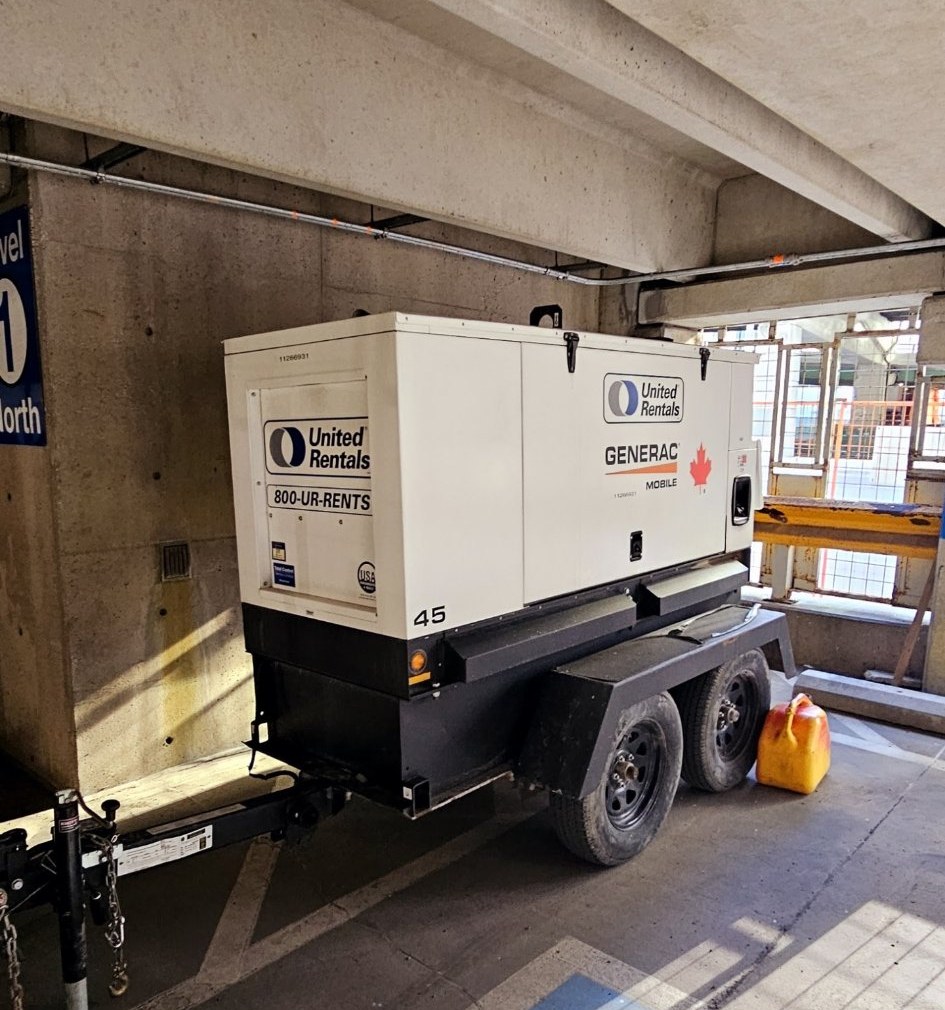
Generator hookups and grounding
A generator is a power source, and Ontario’s Electrical Code treats it like one. Section 76 covers temporary wiring on construction projects, and Rule 76-004 sends grounding and bonding back to Section 10 — the same standard as a permanent service.
A proper grounding electrode
A proper grounding conductor run to a grounding plate buried in the earth — a plate electrode sits at least 600 mm below grade under Section 10. Not a wire clipped to the trailer hitch and called done.
Bonding that trips breakers
The generator frame, distribution equipment and every metal enclosure bonded together, so a fault has a solid path back to the source — the path that trips the breaker instead of leaving a fault sitting live on a trailer wall.
The neutral, read off the label
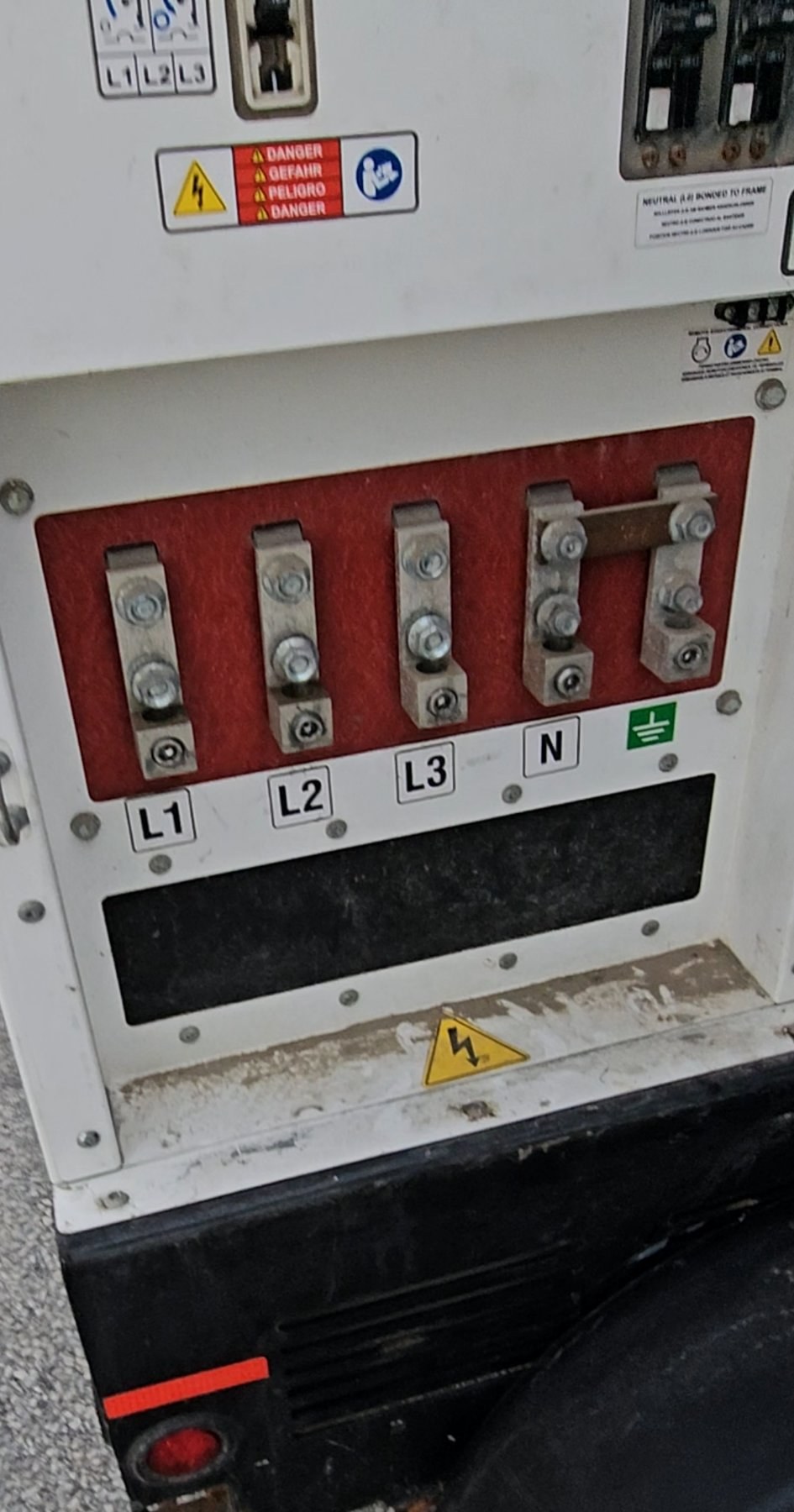
Every machine is marked NEUTRAL BONDED TO FRAME or NEUTRAL FLOATING, and ESA Bulletin 10-10-10 builds the grounding rules on that marking. A bonded-neutral generator connects directly to the grounding electrode.
The big diesels: 600V and 480V, not just 120/208
Trailers sip power. Tower cranes, hoists and heavy equipment drink it — at higher voltages. The large towable diesels are voltage-selectable, and with transformers in the distribution, one machine can feed several voltages on the same site.
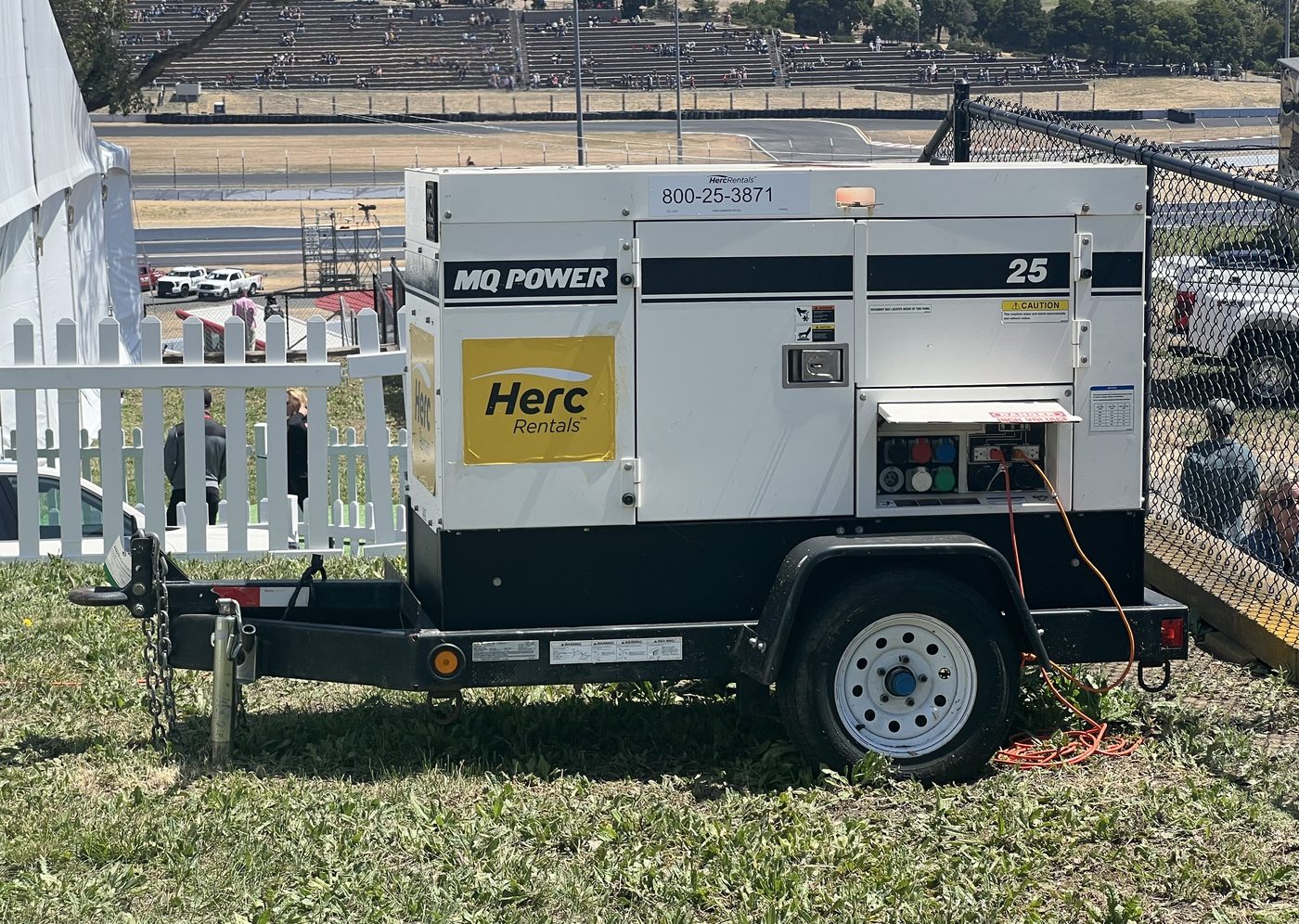
Small — 13–25 kW (~16–31 kVA)
One or two site trailers, small tools and site lighting.
Typical small towable class. Photo: TaurusEmerald, CC BY-SA 4.0, via Wikimedia Commons.
Mid — 36–64 kW (~45–80 kVA)
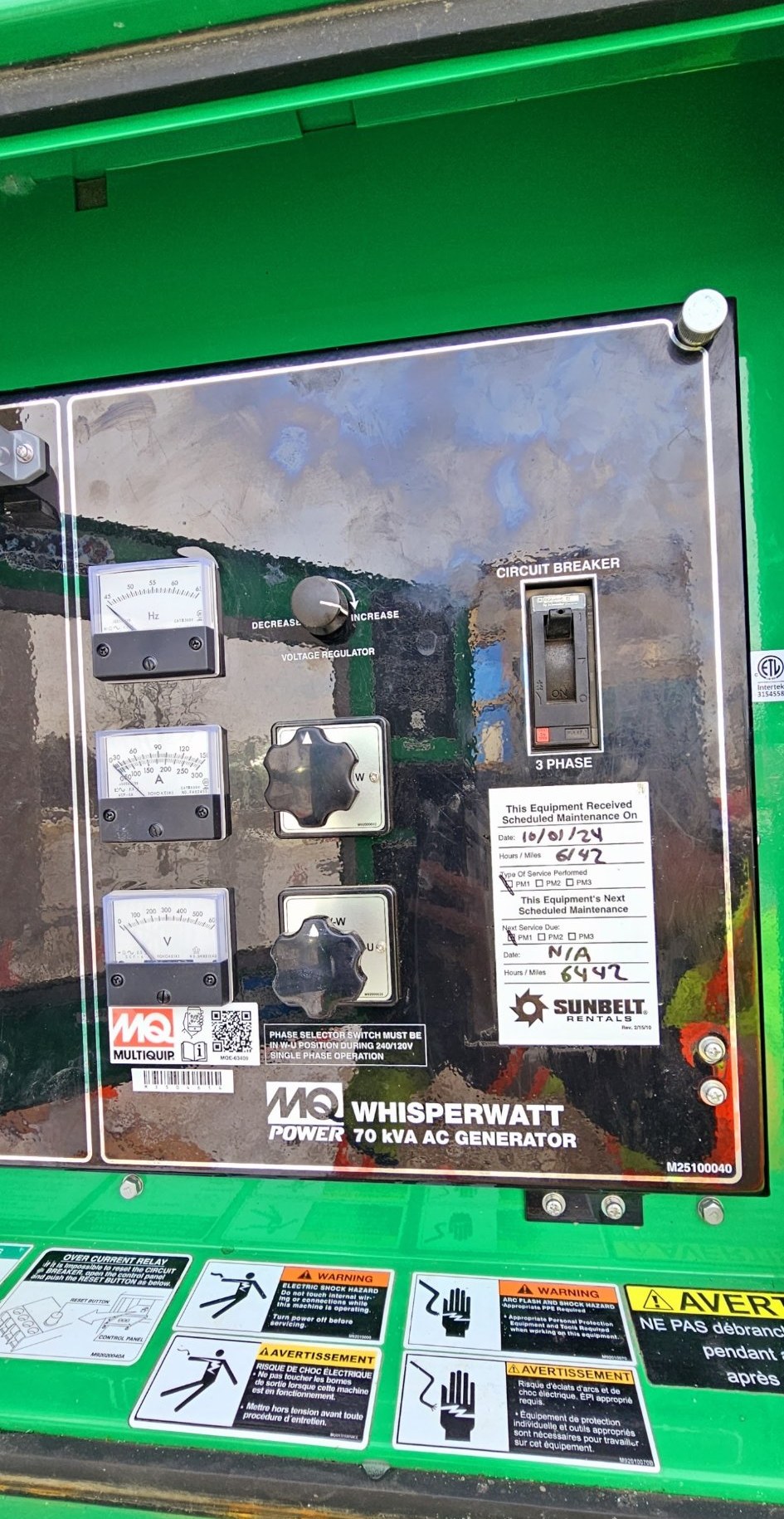
Several trailers, welders, a small hoist and pumps — the class of the 70 kVA machine in the photos below.
3e project — a mid-class towable diesel on a Toronto site.
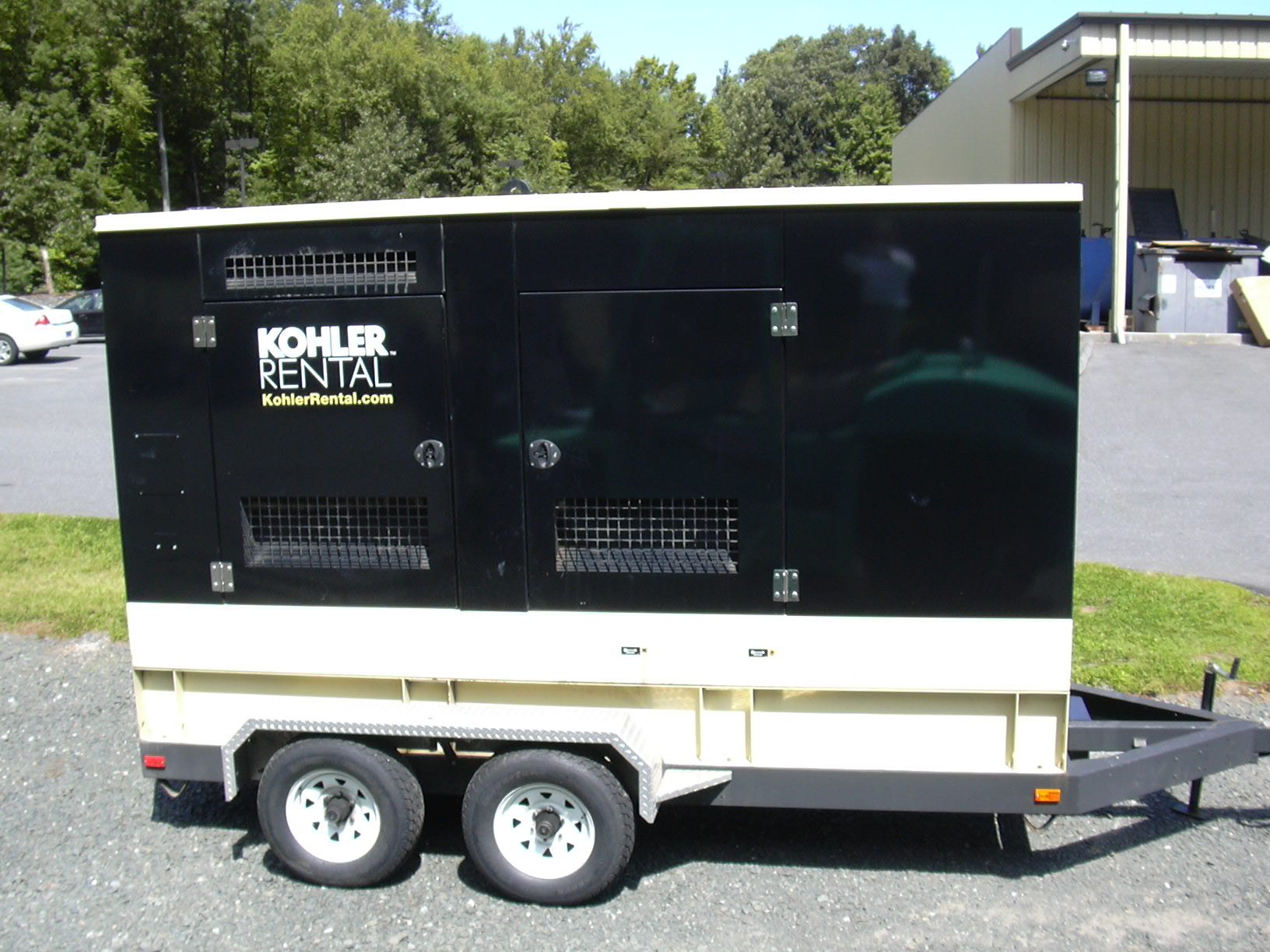
Large — 90–140 kW (~112–175 kVA)
A mid-size site: hoists, welders, dewatering, temporary heat and several trades drawing at once.
Typical large towable class. Photo: Kinsleyanalytics, CC BY-SA 3.0, via Wikimedia Commons.
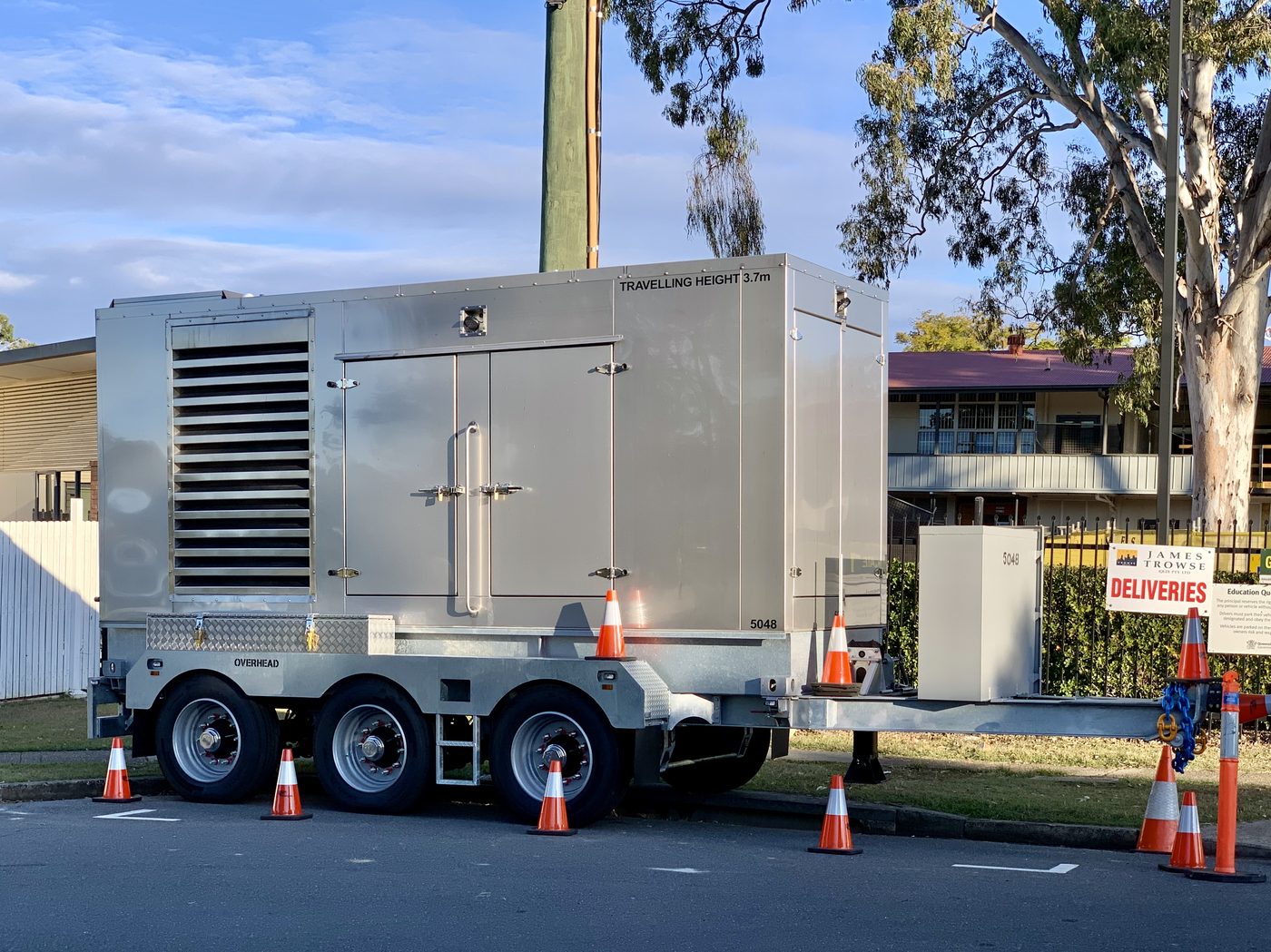
Big — 300 kW and up
Tower cranes, personnel and material hoists, and full site distribution on a high-rise build — 480V or 600V.
Typical big trailer class. Photo: Kgbo, CC BY-SA 4.0, via Wikimedia Commons.
Generator classes per United Rentals’ published towable diesel lineup, read October 2026. kVA to kW at the standard 0.8 power factor.
From the field
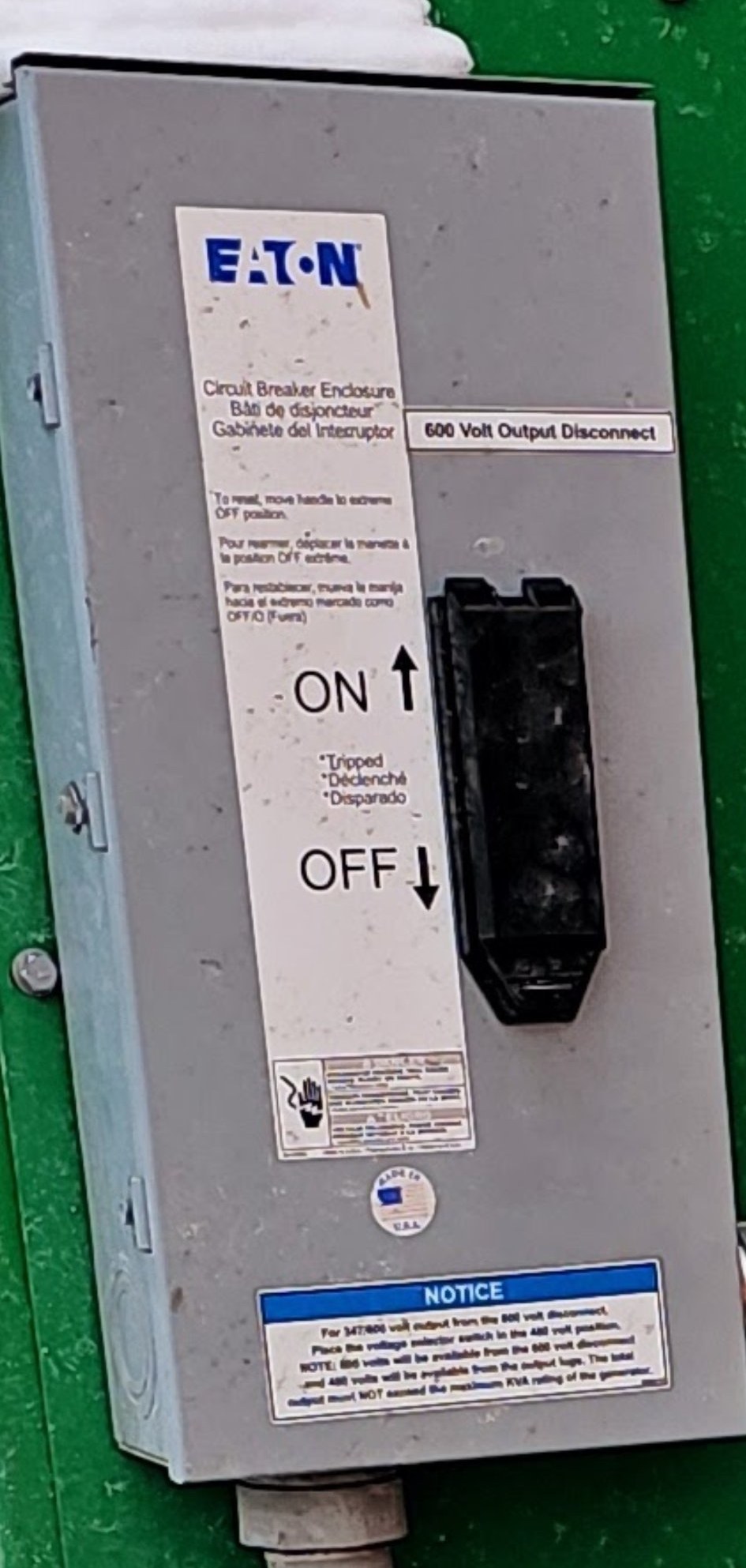
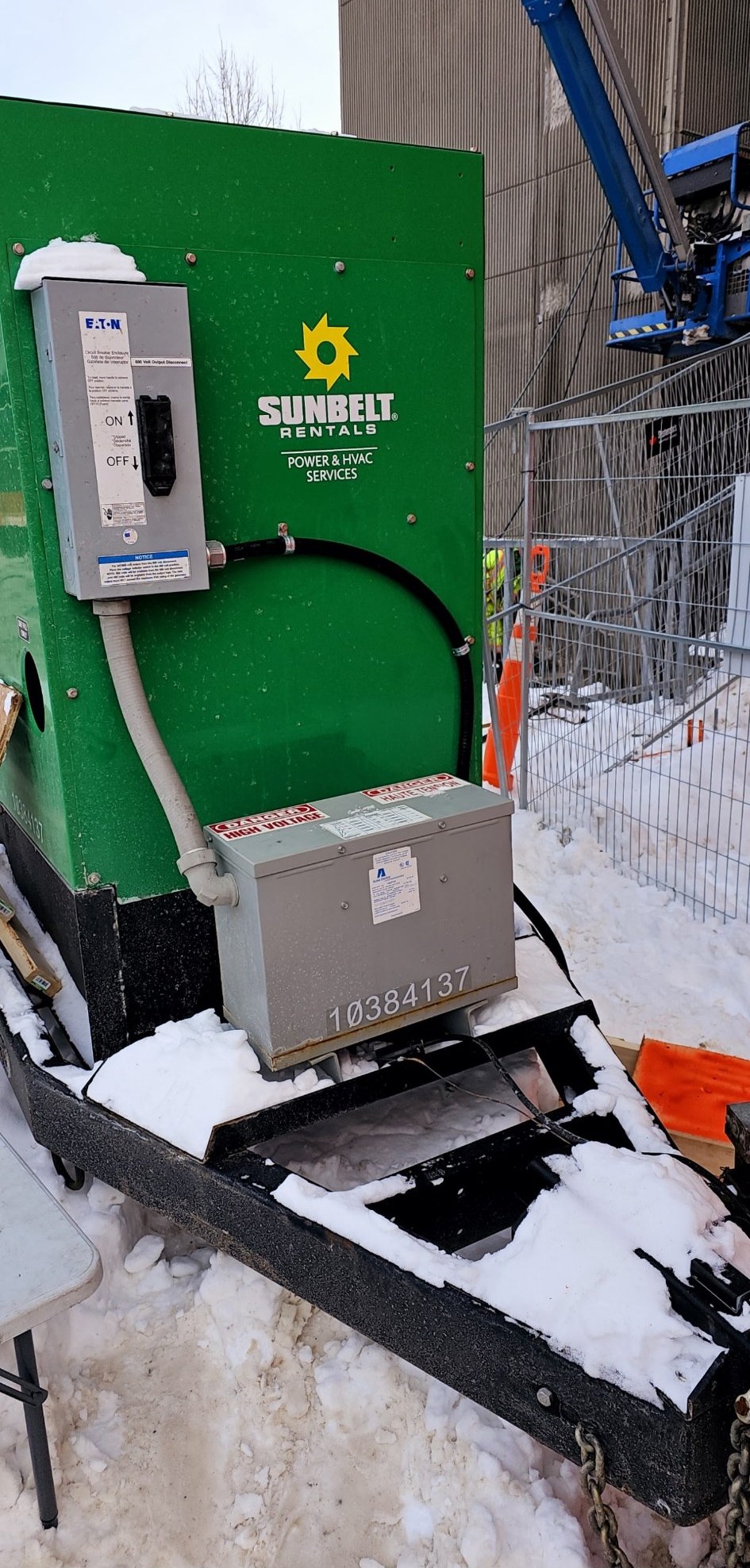
The 70 kVA WhisperWatt in these photos fed a winter site at three voltages at once. Its setup carried two transformers and a dedicated 600-volt disconnect: 347/600V from the disconnect, 480V from the output lugs at the same time, plus low-voltage power for the trailers — with the machine’s total kVA rating as the ceiling, exactly as the disconnect’s own notice spells out. That is what a proper load list buys: one rental machine, every voltage the site needs.
Temporary services and distribution
Whether the source is a rental generator or a temporary utility service, the distribution has to be built for a working site — weather, trucks and all.
Distribution centres
Weatherproof, mounted upright, and sized for the load they carry (Rule 76-008) — the hub every feeder runs from.
Feeders that survive the site
Armoured cable, or outdoor extra-hard-usage cable with its own bonding conductor, protected from mechanical damage the whole way (Rule 76-010): protected where trucks cross, and out of standing water.
Temporary services
Outdoor service equipment that is lockable, restricted to authorized people, and protected against weather and damage (Rule 76-006).
Kept separate
The temporary installation stays separate from the building’s permanent system, except by special permission (Rule 76-014) — and comes out when permanent power takes over.
Construction trailer hookups
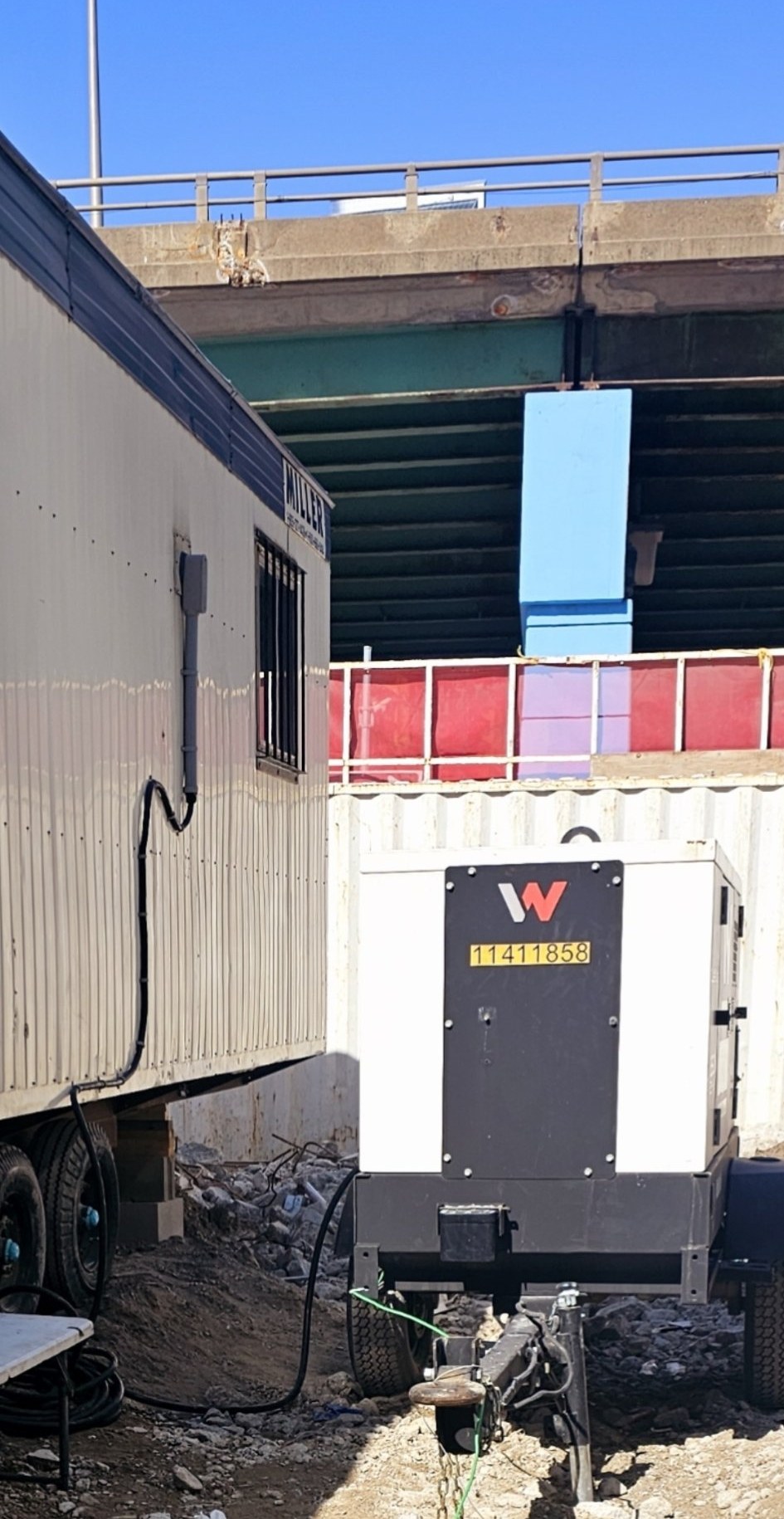
The generator or temporary service feeds a main distribution centre, and feeders run from there to each trailer. A site office trailer is a steady all-day load — heat, lights, computers — so each trailer gets its own feed and disconnect: one trailer’s problem never darkens the row.
Site lighting
In a Toronto winter, crews start before daylight and finish after it. Stairs, hoist areas and work faces need light that stays on all shift.

Separate circuits, by Code
Lighting branch circuits stay entirely separate from power branch circuits (Rule 76-012), so a tripped saw or heater never blacks out the site — and lighting loads are capped at 80% of the breaker rating, which suits a ten-hour burn.
Placed for the work
Even coverage on stairs and edges, fixtures mounted where a lift won’t take them out, and light at the distribution points so a breaker can be reset safely.
Pedestrian protection lighting
Developments go up next to sidewalks that never close. When hoarding and a covered walkway go in, that walkway becomes part of the site’s electrical job — the public side of the fence included.
The full length, evenly lit
No dark pockets at the entrances or halfway through. A covered walkway in shadow is its own hazard — for the public walking through it, and for the builder’s liability.
Built to run every night
Weatherproof fixtures that can take a knock, on a timer or photocell, and maintained for the life of the hoarding: a burnt-out section is a complaint waiting to happen.
Built for a Toronto winter
Toronto builds run all winter. Temporary power has to be set up for snow, freeze-thaw and short days — and maintained until the day permanent power takes over and the temporary wiring comes out.

ESA notification and inspection
Temporary power is a new electrical installation in Ontario, and it runs through the Electrical Safety Authority like any other. We file the paperwork and stand the inspection — here is what that involves.
Notification before work
Ontario’s Rule 2-004: the contractor files a notification with the ESA before the work starts, and the ESA’s connection authorization comes before the installation is used.
No exemption for temporary
ESA Bulletin 2-3-19: all new installations require a notification, regardless of who does the work. Temporary power is a new installation — it is filed, every time.
Licensed contractor
The work is done by a licensed electrical contractor under O. Reg. 570/05. 3e Electrical Construction — ECRA/ESA licence 7014948.
Built to Section 76
Grounding and bonding to Section 10, distribution and feeders to the temporary-wiring rules, and Class A GFCI protection on construction receptacles (Rule 76-016).
From our sites
Tap a photo to view it full size.
3e project — towable diesel generator, temporary site power.
3e project — output lugs, and the “Neutral Bonded to Frame” marking that decides how the machine is grounded.
3e project — the 70 kVA WhisperWatt: 3-phase main breaker and voltage selector on one panel.
3e project — the Eaton 600 Volt Output Disconnect. Its notice: for 347/600 volt output, place the selector in the 480 volt position — 600 volts at this disconnect, 480 volts at the output lugs.
3e project — generator power to a site office trailer.
3e project — from the field: this winter setup carried two transformers and delivered 600, 480 and 120 volts on the one site.
Questions
Does a construction-site generator have to be grounded?
Yes. Section 76 of the Electrical Code covers temporary wiring on construction projects, and Rule 76-004 requires grounding and bonding to Section 10 — the same standard as a permanent service. That means a proper grounding conductor to a grounding electrode such as a buried plate, bonding throughout, and the neutral arranged according to the machine’s own marking: ESA Bulletin 10-10-10 builds the rules on whether the label reads NEUTRAL BONDED TO FRAME or NEUTRAL FLOATING.
Does temporary power need an ESA notification or inspection in Ontario?
Yes. Under Ontario’s Rule 2-004, the contractor files a notification with the Electrical Safety Authority before the work starts, and ESA’s connection authorization comes before the installation is used. ESA Bulletin 2-3-19 confirms that all new installations require a notification — temporary power is a new installation. The work must be done by a licensed electrical contractor (O. Reg. 570/05).
Can one generator run 600V equipment and site trailers at the same time?
Yes — with the right machine and transformers in the distribution. On one winter site, our 70 kVA towable setup delivered 347/600V from a dedicated disconnect and 480V from the output lugs at the same time, plus low-voltage power for the trailers. The ceiling is the machine’s total kVA rating, which is why the load list comes first.
Who supplies the generator?
On most sites the generator is a rental — the machines in our photos are rental units from the big fleets. We handle the electrical side: sizing the hookup to your load list, the connection and grounding, distribution, trailer feeds, site and walkway lighting, and the ESA notification.
Do construction-site receptacles need GFCI protection?
Yes. Rule 76-016 requires the standard 15 and 20 amp receptacles provided for construction power (5-15R and 5-20R) to be protected by Class A ground fault circuit interrupters — no exceptions for temporary work.
What happens to the temporary power when the building’s own power is ready?
The two systems stay separate: Rule 76-014 keeps a temporary installation separate from the building’s permanent installation, except by special permission. When permanent power takes over, the temporary wiring is disconnected and removed.
Power your site from day one
Tell us the site, the schedule and the load list — trailers, cranes, hoists, lighting. We will size it, quote it in writing, and hook it up properly.
Request a QuoteWe quote it. You approve it. We do it.