3e Electrical — Service Repair
Clevis Installation & Repair in Etobicoke
The streets of Mimico, New Toronto and Long Branch were wired overhead in the forties and fifties — and a lot of those original clevises are still up there, holding Hydro’s drop through every lake storm since. When the anchor that holds your power to the house rusts out or starts tearing out of the brick, we replace it properly: into the structure of the wall, not the finish.
How much does clevis repair cost? See the full breakdown ↓
We quote it. You approve it. We do it. ⚡
Request a Quote★★★★★ 4.9 from 200+ reviews
Why the lake wears clevises out first
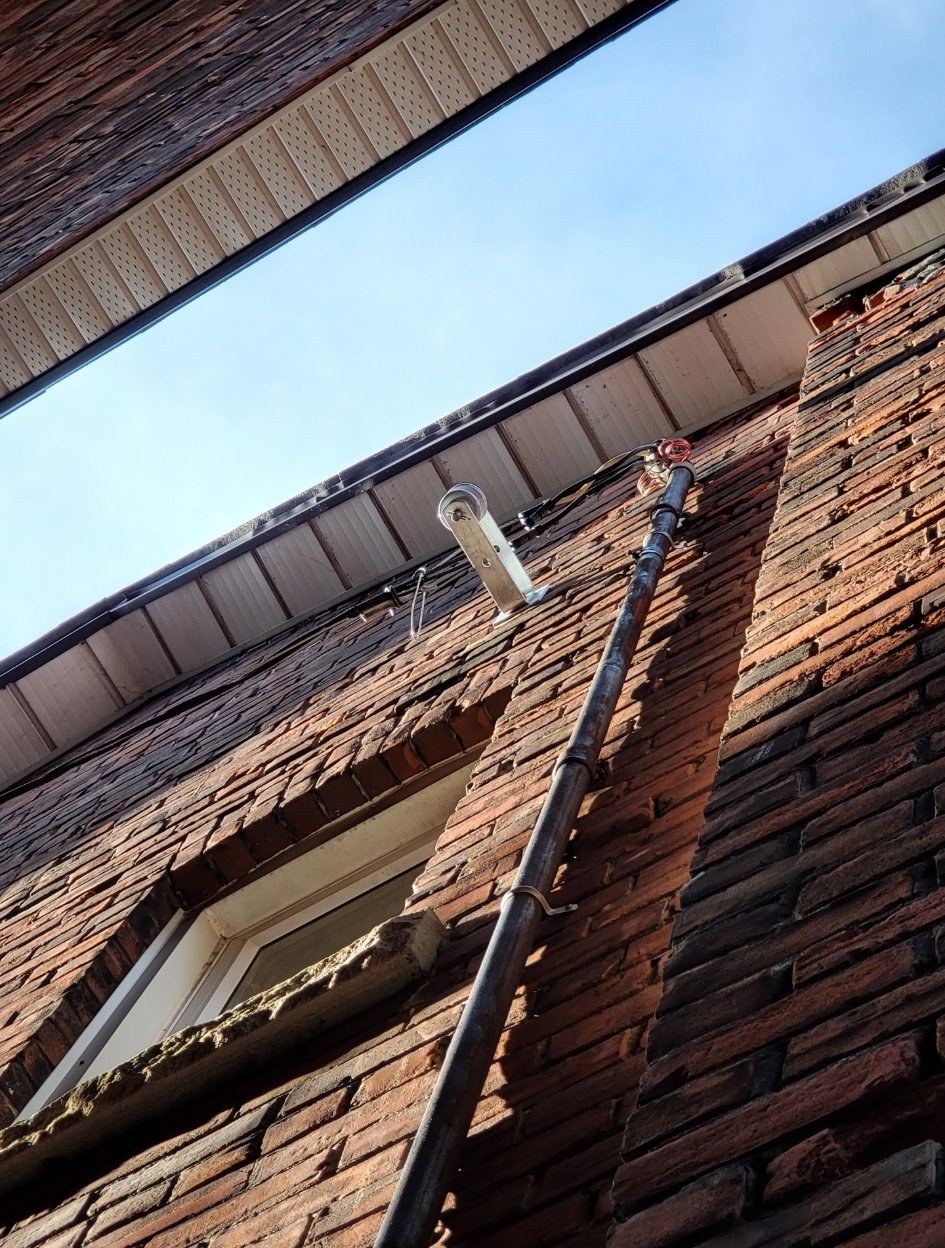
A clevis has one job — hold the service drop to the house — and in Etobicoke that job comes with weather. The wind gets a straight run off Lake Ontario and worries the drop back and forth, season after season. Rain and road salt feed the rust. Ice loads the line in a storm, and the freeze–thaw cycle works the brick around the bolts. Steel that was galvanized in 1955 has long since lost that coating.
None of that makes a clevis fail fast. It makes it fail slowly, invisibly, over decades — until one storm asks more of it than it has left. The clevises we replace in Etobicoke are rarely broken by a single event. They are used up.
Whose part is it? Yours.
Homeowners are often surprised: the cable belongs to Toronto Hydro, but the clevis it hangs from belongs to the house. Hydro’s service standard draws the line at the connection — the mast, the weatherhead and the clevis are the customer’s to supply, install and maintain, and the work has to be done by a licensed electrical contractor. When Hydro’s crews or an ESA inspector flag a failing point of attachment, the repair — and the bill — sit with the homeowner.

The letter that comes after the storm
On the lake side of the city, clevis work often starts with a storm — and finishes with paperwork. Once Hydro has your power back with a temporary repair, a letter follows. The ESA’s own guidance puts the clock on it: you have 30 days to make the temporary repairs permanent.
From Toronto Hydro, the word is “deficiencies.” Hydro’s Conditions of Service cover customer-owned equipment — the service mast included: Hydro notifies you of the deficiencies, gives you a reasonable time to correct them, and may disconnect if they aren’t corrected.
From the ESA, it’s a “defect notice” — the defects an inspector found on your service, to be corrected by a Licensed Electrical Contractor.
When those letters mention the point of attachment, the standpipe (Hydro’s word for the service mast), or the connection point, they’re talking about the clevis end of your service — the homeowner’s end. The ESA draws the line at the wall: your ownership begins where the wires attach to the house. We make the repair permanent — permitted and inspected — well inside the 30 days.
What a failing clevis looks like on an Etobicoke house
- Rust streaks running down the brick from the clevis — the galvanizing is gone and the steel is going
- The clevis sitting proud of the wall, no longer pulled tight to it
- Cracked or crumbling brick and mortar around the bolts
- A drop that sags lower over the driveway or yard than it used to
- A note from Toronto Hydro or ESA about your point of attachment
- On bungalows: a low drop now within reach of a ladder, a truck, or a tree that has grown into it
If the drop is already down: treat every wire as live. Keep people and pets well clear, call Toronto Hydro first, then call us for the repair.
How we replace one
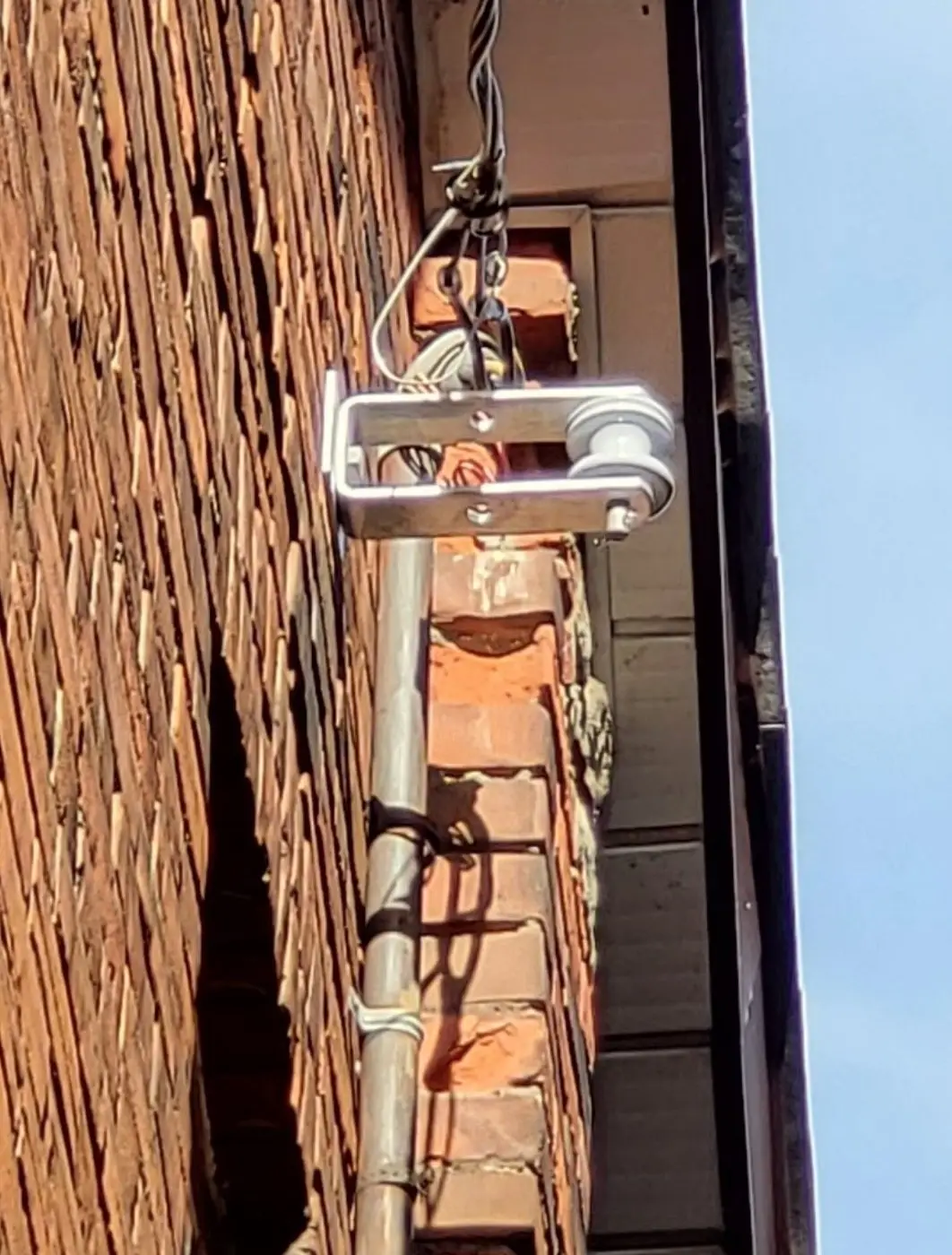
First, we read the wall. Etobicoke’s older stock is a mix — solid double-brick on the wartime houses, a single brick veneer over block on many sixties builds. Solid structure can carry an anchor; veneer cannot. It is a finish nailed over the real wall, and a clevis bolted to veneer alone is a clevis on its way out.
Then the anchor matches the wall. Into sound structure, we anchor into the structure. Through veneer, we fit an extended clevis that reaches both layers of brick and through-bolts to a plate inside, so the load rides on the whole wall. Height and clearances go back to Toronto Hydro’s service standard — for most bungalows that also means a refreshingly reachable job, which you will see in the price.
Permitted, inspected, reconnected. The job runs on an ESA permit with an inspection, and we book Toronto Hydro’s disconnect and reconnect around it. You deal with us; we deal with everyone else.
More than the clevis
While the drop is down and the ladder is up, the rest of the run gets finished:
- Service mast straps renewed — the straps holding your mast to the house
- Meter straps renewed — the straps below the meter base, too
- Panel inspection and maintenance — your panel cleaned out, and every connection in it checked and tightened
One visit, and the whole path from the pole to your panel is sound again.
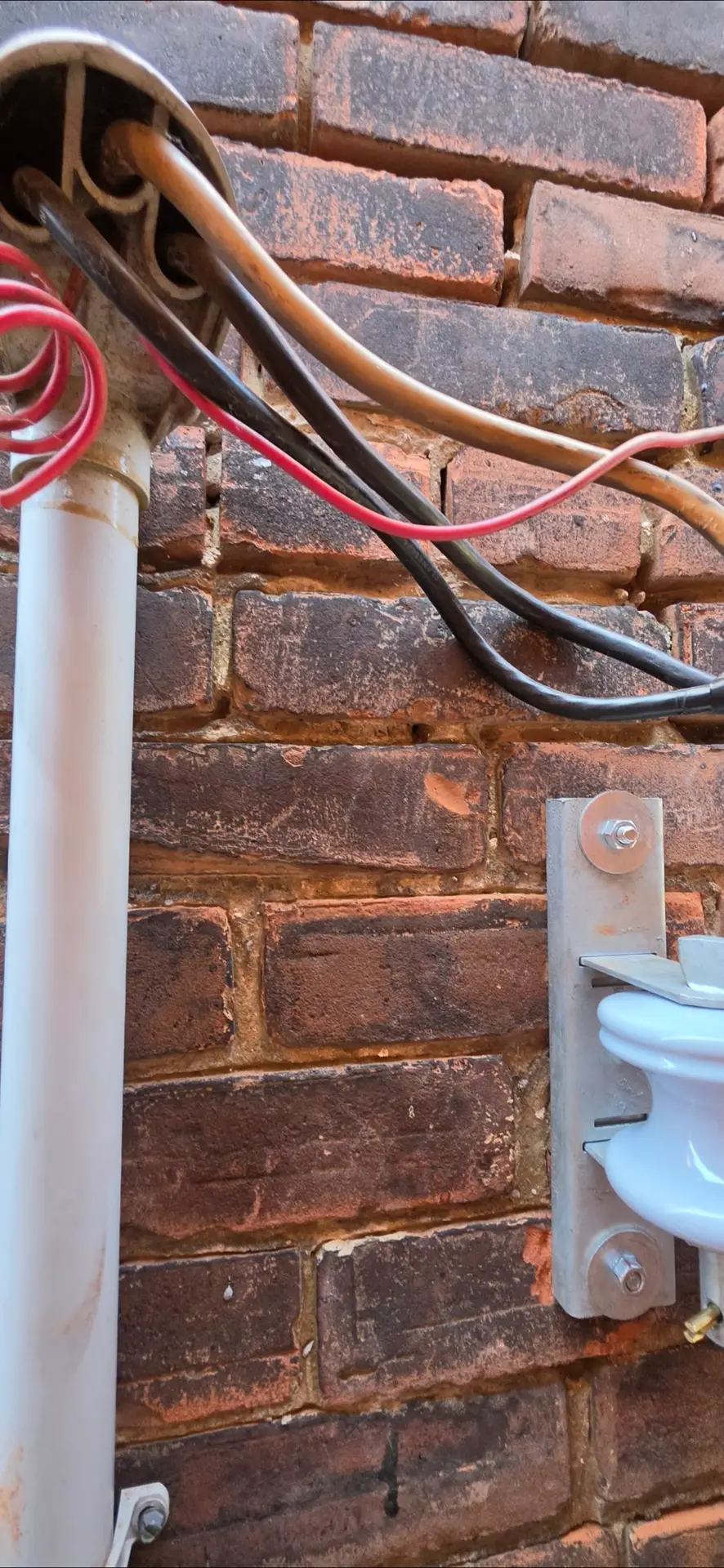
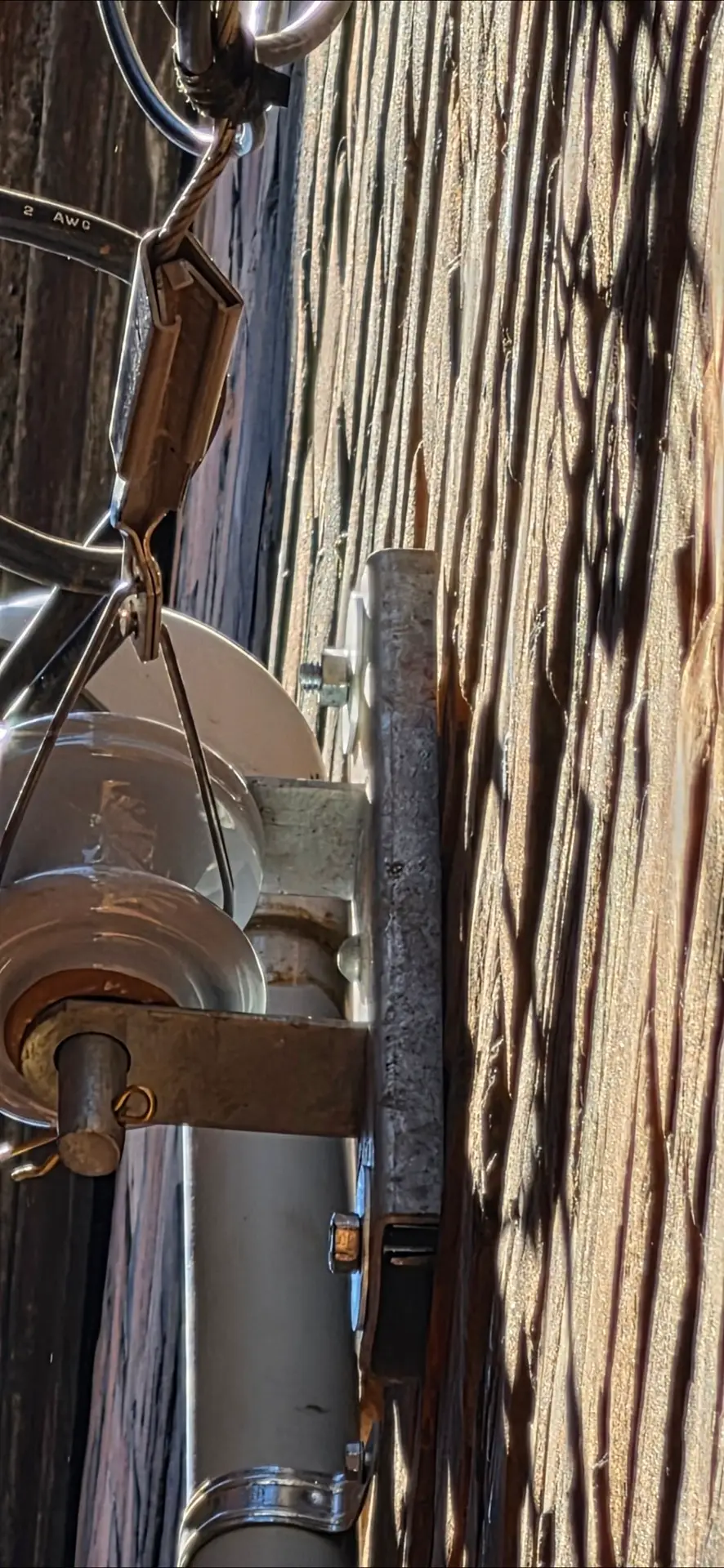
What the finished work looks like
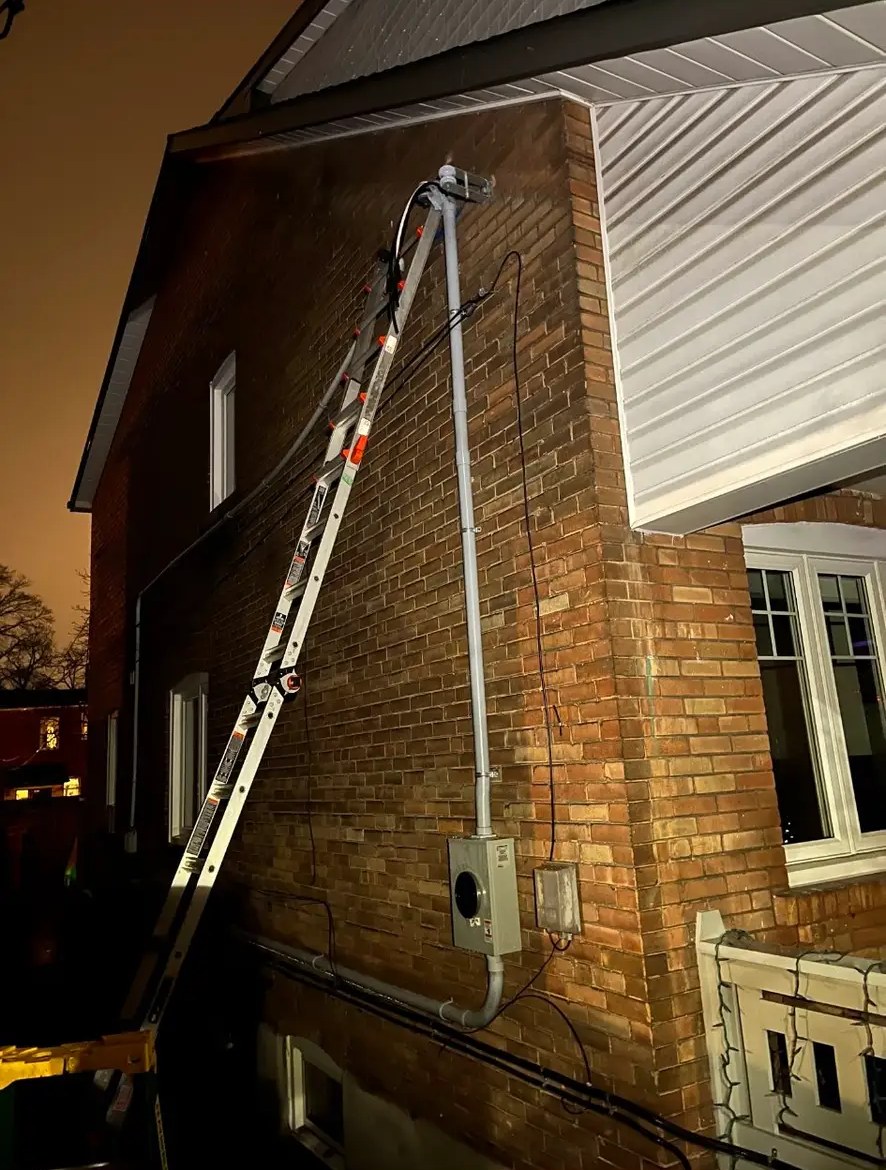
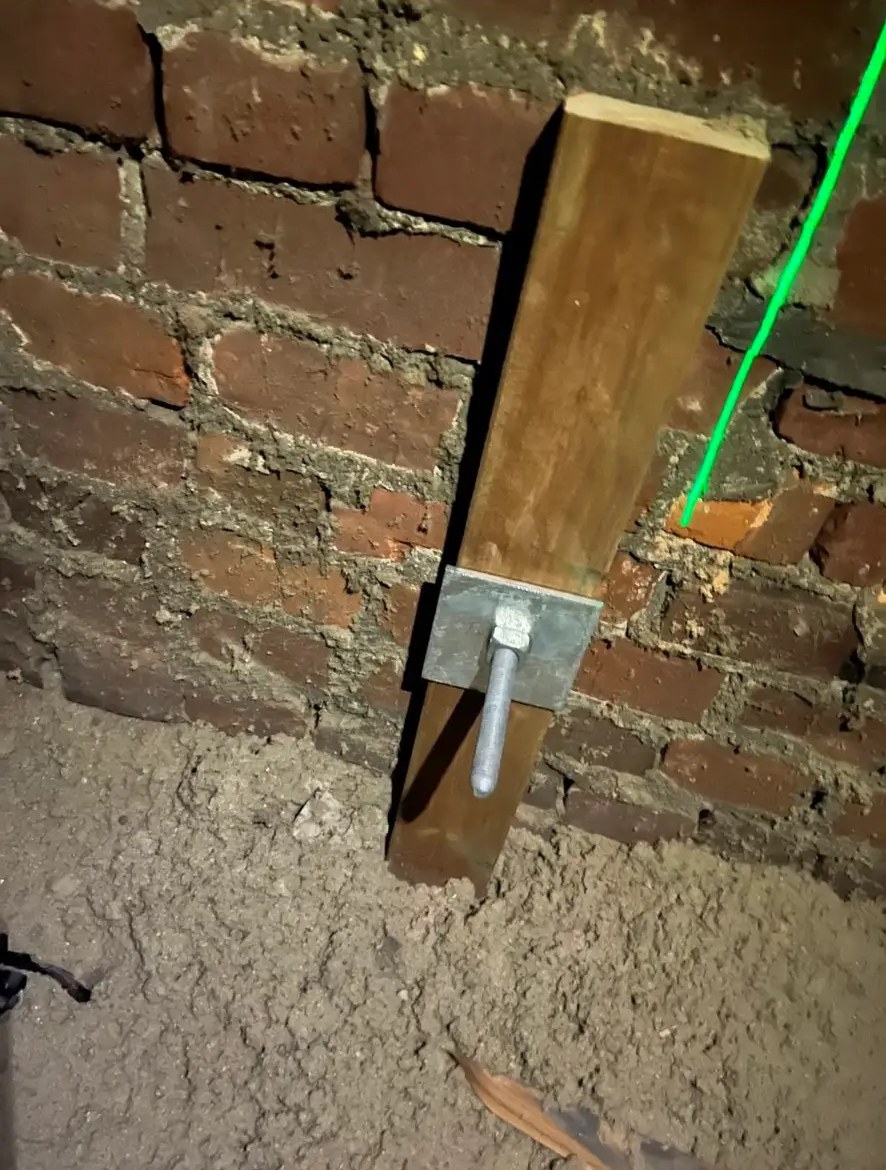
Clevis repair cost in Etobicoke
How much does it cost to replace a clevis in Etobicoke? Two fixed fees come before our work even begins — and neither one is ours:
$600 + HST = $678
$92 + HST = $103.96
The $600 is a Toronto Hydro price, and Etobicoke is Toronto Hydro territory — the fee applies here exactly as it does downtown, no matter who does the repair. Other utilities — Alectra, for one — don’t charge it.
All in, most Etobicoke clevis repairs land between $1,450 and $2,400 + HST. Where yours sits depends on the job:
- Height — Etobicoke’s bungalows work in your favour: their attachments sit near the bottom of Toronto Hydro’s 4,500–5,500 mm (15–18 ft) band — the simplest version of this job
- The wall — solid wartime brick anchors cleanly; sixties veneer that needs a through-bolted extended clevis adds work
- Access — the tight side yards between wartime houses, and porches or additions under the drop, slow everything down
- Company it keeps — a tired mast or weatherhead is cheaper to renew while the drop is already down
Send us a photo of your clevis and the wall around it, and we will tell you where in the range your job sits.
Request a Quote★★★★★ 4.9 from 200+ reviews
Questions, answered straight
Toronto Hydro made a temporary repair after a storm. What happens next?
You have 30 days to make the temporary repairs permanent — that is the ESA’s wording, and a letter will say so. The permanent repair to the clevis and attachment has to be done by a Licensed Electrical Contractor, on an ESA permit, and inspected. Book it early in the 30 days: Hydro’s disconnect and reconnect for the permanent work has to be scheduled inside the same window.
My house is a bungalow. Is the repair cheaper?
Usually, yes. Height is one of the main drivers of this job’s price, and a bungalow’s attachment sits at the bottom of Toronto Hydro’s height band — about 4,500 mm (15 ft), where the band runs 4,500–5,500 mm (15–18 ft) — the most reachable version of this job. Bungalow jobs tend to sit toward the lower end of the $1,450–$2,400 + HST range — the wall and access still get a say.
A storm off the lake brought my drop down. What do I do first?
Stay clear of every wire and treat them all as live — a downed drop can be energized even when it looks harmless. Call Toronto Hydro to make it safe. Then call us: the clevis and attachment are the homeowner’s repair, and we will rebuild them so Hydro can reconnect.
Is the clevis my responsibility, or Toronto Hydro’s?
Yours. Hydro owns the cable and makes the connection to the clevis, but the clevis itself — like the mast and weatherhead — is on the customer’s side of Hydro’s service standard. Supplying, installing and maintaining it is the homeowner’s job, done by a licensed electrical contractor.
How much does clevis repair cost in Etobicoke?
Most clevis repairs in Etobicoke land between $1,450 and $2,400 + HST. Two fixed fees come first: Toronto Hydro’s disconnect and reconnect fee, $600 + HST ($678), and the ESA permit and inspection, $92 + HST ($103.96). What moves it is the complexity of the job: the structure of the facade, the height of the clevis, and how tight the space is to the neighbouring house. Your quote is fixed before we start.
My clevis is rusty but still holding. Can it wait?
Rusty is the warning, not the failure — yet. Once the galvanizing is gone, the steel thins every year, and the anchor’s strength goes with it. A clevis that is rusting but tight, on sound brick, can usually be planned rather than rushed. One that is pulling, cracking its brick, or streaking rust down a veneer wall should be booked. Send us a photo and we will tell you honestly which one yours is.
How long will my power be off?
Toronto Hydro disconnects at the start of the job and reconnects once the new work is inspected — plan on the power being off for the working part of the day. We coordinate the timing with Hydro and will give you the window when we book, so nothing about the day is a surprise.
Get your clevis quoted
Send a photo of the clevis and the wall — in Etobicoke that one photo usually tells us the wall type, the height, and half the story — and we will come back with a straight quote and a plan.
Request a Quote★★★★★ 4.9 from 200+ reviews
Working across Etobicoke’s overhead-service streets — Mimico, New Toronto, Long Branch, Alderwood, The Queensway, Humber Bay, Islington, Markland Wood, Eatonville, and beyond.
Also: clevis installation in Toronto · clevis installation in North York
Prices are subject to change without notice. Errors and omissions excepted. All prices plus HST unless stated otherwise.