3e Electrical — Service Repair
Clevis Installation & Repair in North York
North York was built in a hurry after the war — and built the same way, street after street: a single layer of brick over block, with the Hydro drop hung from a clevis on that wall. Fifty to seventy years later, those anchors are the weak point of the service. We replace them the way the wall actually needs — anchored into structure, or through-bolted where the wall is veneer — and we do a lot of them alongside 200 amp upgrades, while the drop is already down.
How much does clevis repair cost? See the full breakdown ↓
We quote it. You approve it. We do it. ⚡
Request a Quote★★★★★ 4.9 from 200+ reviews
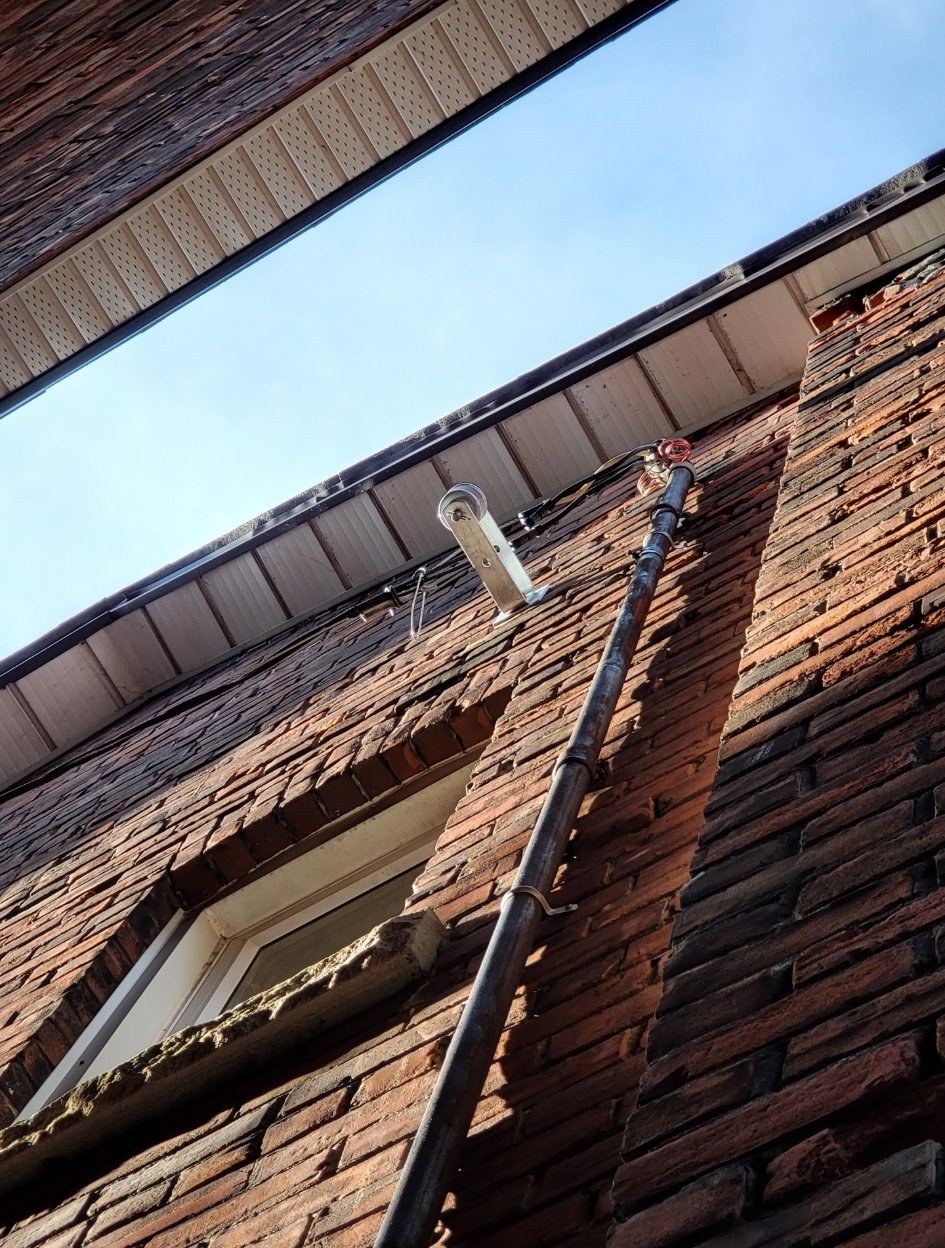
North York’s postwar problem
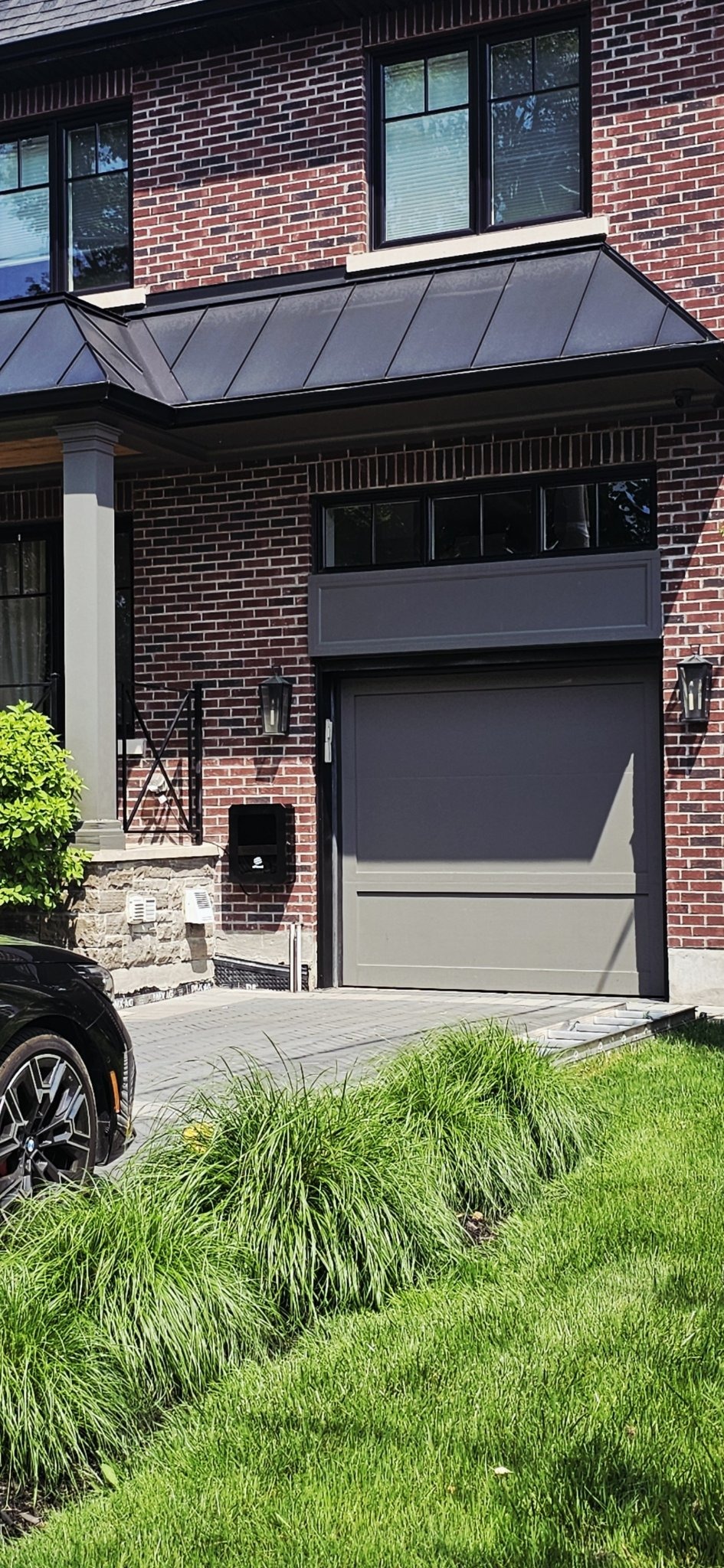
Drive the older streets of Willowdale, Don Mills or Downsview and you are looking at one repeated wall: brick veneer over concrete block. It was fast, it was economical, and it has lasted — as a wall. What it was never meant to be is an anchor. Veneer is a single wythe of brick tied to the block behind it; it carries its own weight and nothing else.
But on thousands of these houses, the original clevis was bolted to exactly that — into the veneer, or worse, into a mortar joint. For decades the loads were small enough to get away with. Now the houses are asking more of their services (bigger panels, EV chargers, hot tubs and additions hang off the same drop), the anchors are fifty-plus years old, and the margin is gone. When Hydro or ESA looks at a North York service today, the point of attachment is one of the first things they flag.
Whose part is it? Yours.
The cable from the pole belongs to Toronto Hydro. The bracket it hangs from belongs to the house. Under Hydro’s service standard, the clevis — along with the mast and weatherhead — is customer equipment: the homeowner supplies, installs and maintains it, through a licensed electrical contractor. Hydro connects to it. When it fails inspection, or fails outright, the repair is the homeowner’s.

Flagged on paper? What the words mean
A lot of North York clevis jobs arrive as paperwork first: an ESA inspection for another job, a Hydro visit, a home purchase. The documents use their own vocabulary — and it rarely includes the word clevis:
“Defect notice” (ESA). When an ESA inspector finds problems, the defects are listed and must be corrected by a Licensed Electrical Contractor. The support for the overhead conductors — the point of attachment, covered by Code rule 6-112 — is inspected like everything else on the service.
“Deficiencies” (Toronto Hydro). Hydro’s Conditions of Service use this word for problems with customer-owned equipment, service masts named among them: the customer is notified, given a reasonable time to correct the deficiencies, and can be disconnected if they aren’t.
Both documents are pointing at the same hardware this page is about — the point of attachment, the standpipe or mast, the connection point. If your flag came up during a panel or service upgrade, it’s usually cheapest to correct it in that same visit — see the upgrade section below. Either way, the correction has to be permitted, inspected, and done by a licensed contractor. That’s the job.
How North York clevises show they are done
- Flagged during a panel change or a 200 amp upgrade quote — the most common way we meet them
- The anchor visibly set in a mortar joint, or in the veneer with nothing behind it
- Brick cracking in a star pattern around the bolts, or a whole brick starting to walk out
- The drop’s attachment sitting lower than the neighbours’ — the wall is slowly giving it up
- Rust blooming on the clevis and spool on a wall that otherwise looks fine
- Perished, split mast straps on the same run — the whole attachment is of an age
If the drop is down or hanging by a wire: treat every wire as live. Keep people and pets well clear, call Toronto Hydro first, then call us for the repair.
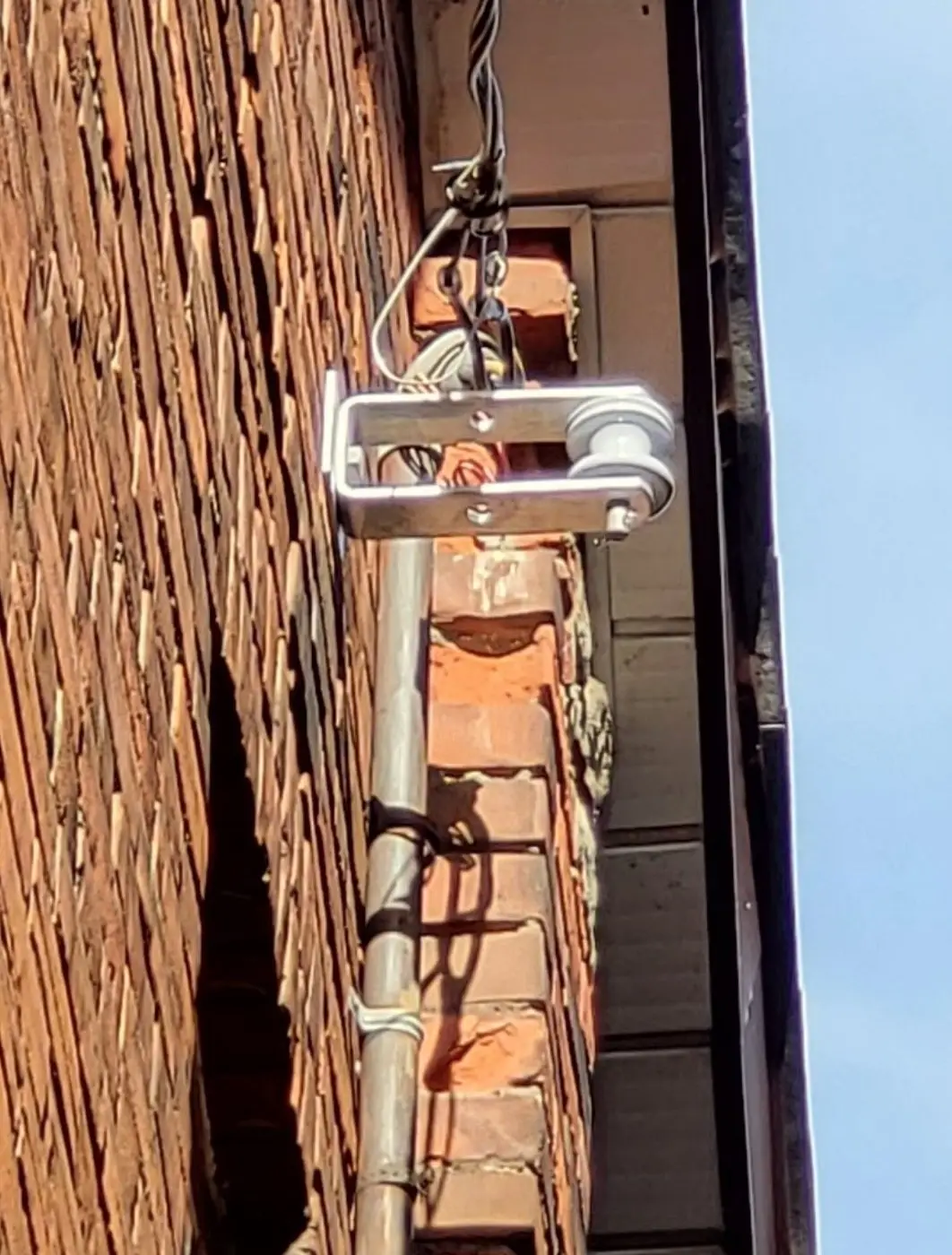
The fix: anchor to the wall you actually have
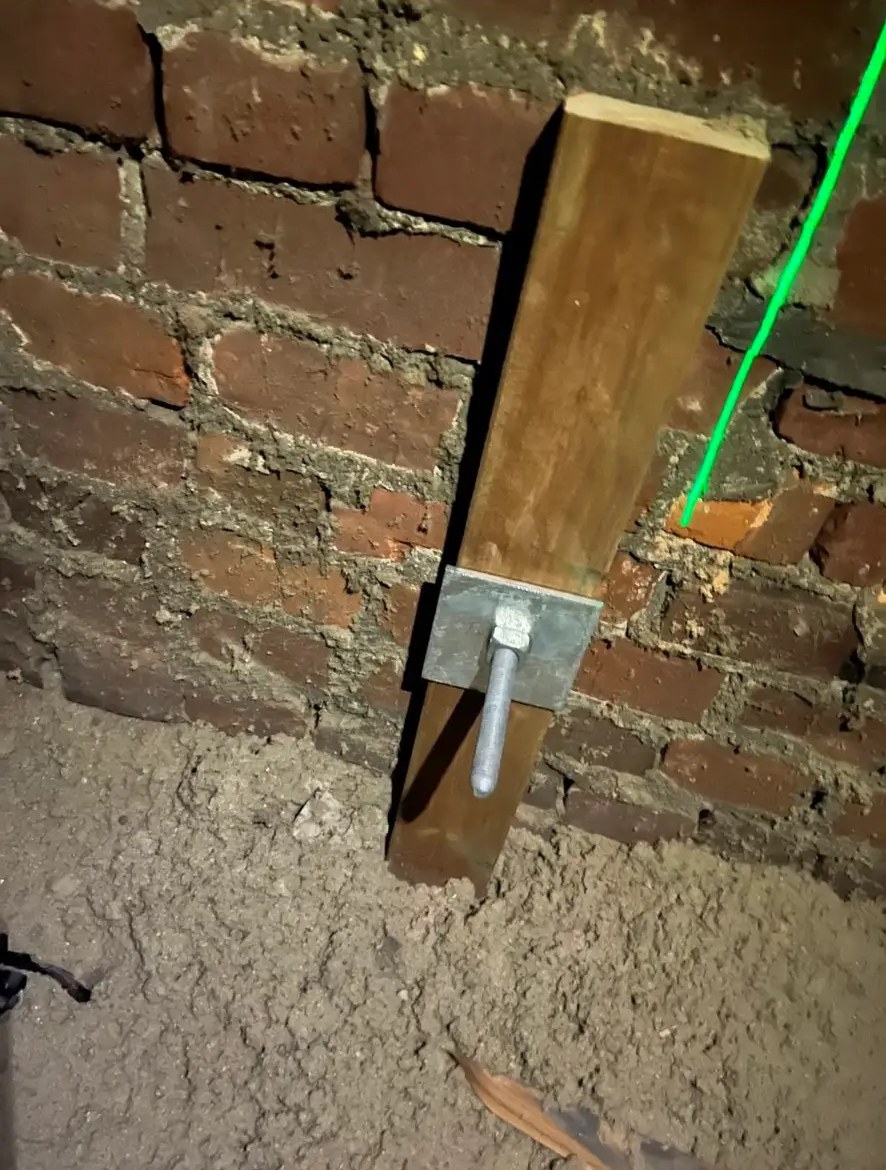
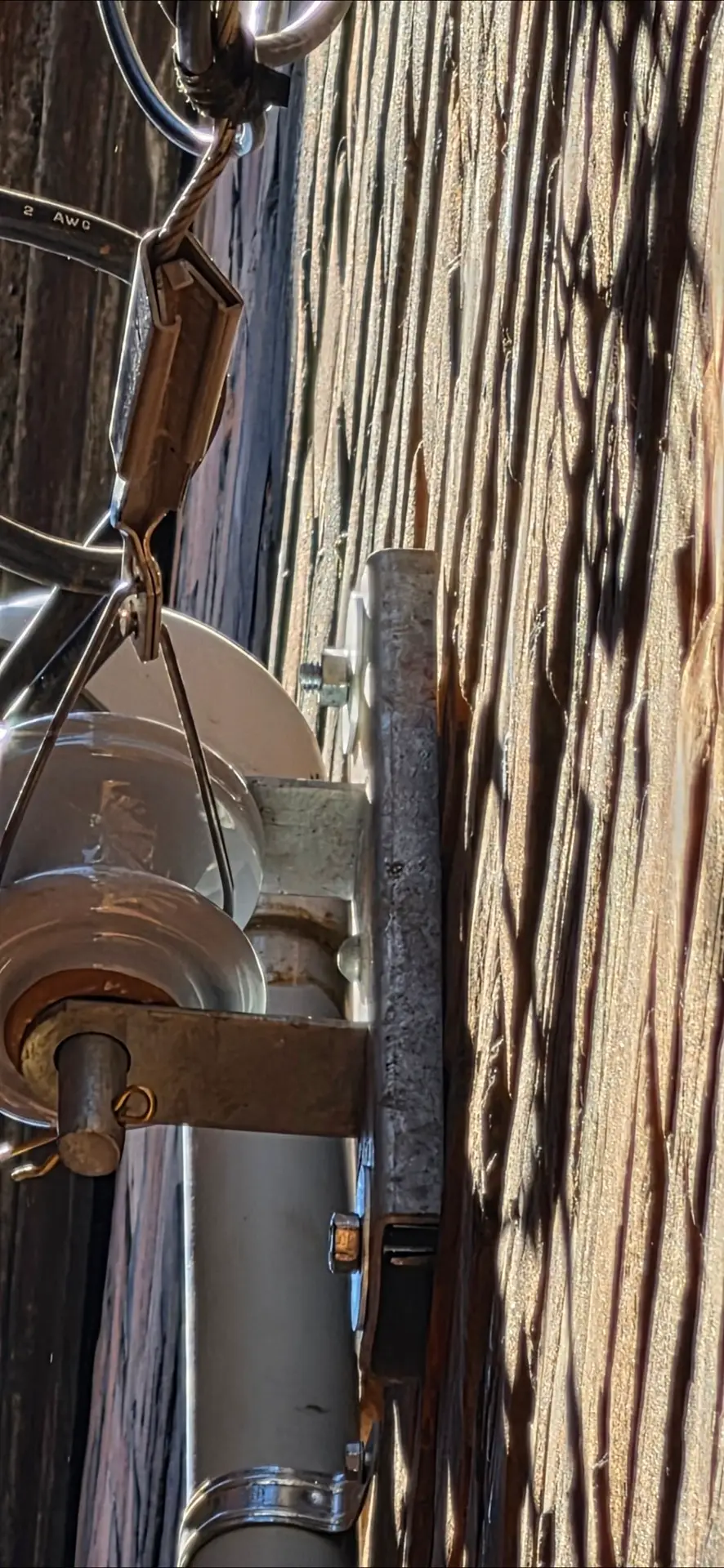
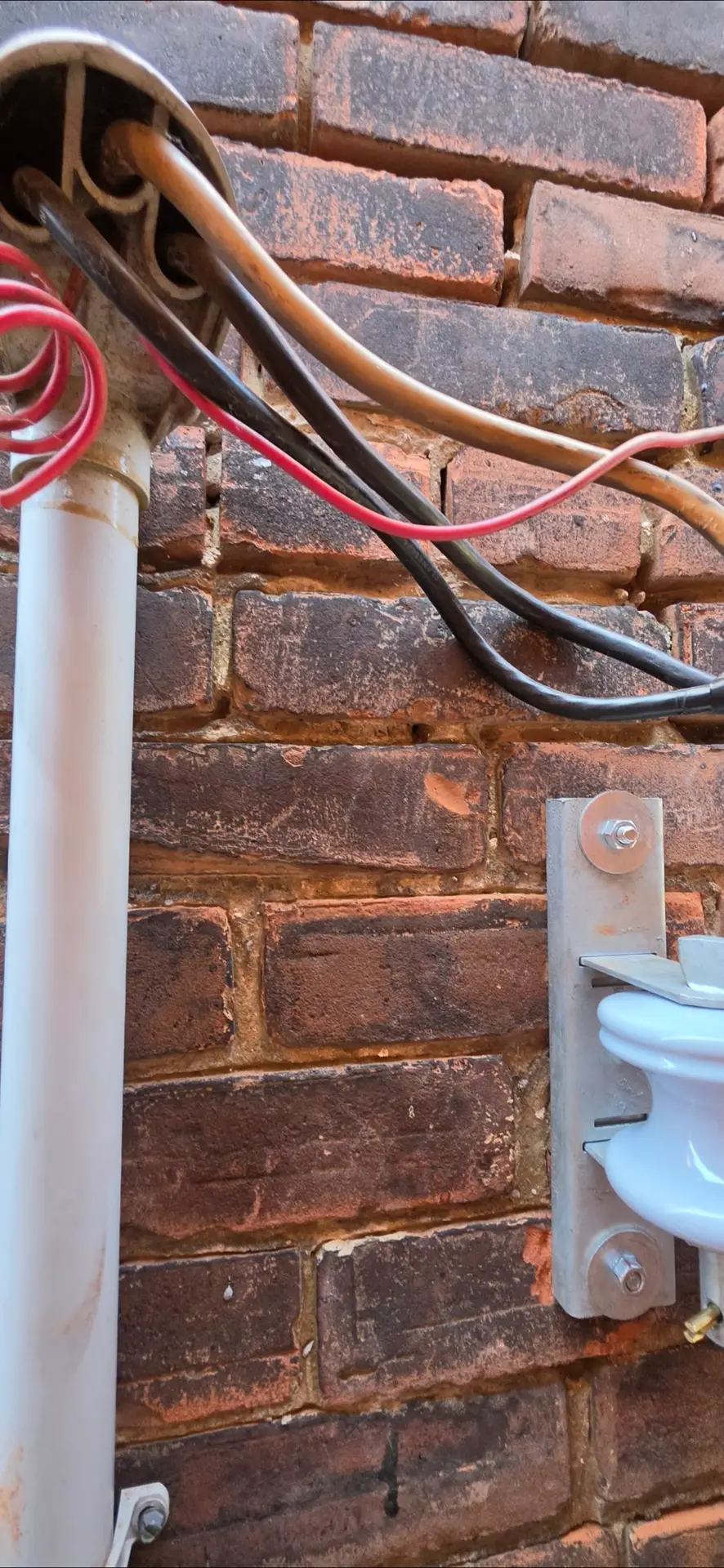
We start by identifying the wall. On a postwar North York house there are two honest options, and the wall decides which one you get. Where the block behind the veneer is sound and reachable, the anchor goes through the veneer and sets into the block — real structure, properly engaged. Where it is not, we fit an extended clevis: it passes through both layers of brick and through-bolts to a plate on the inside, spreading the drop’s pull across the whole wall assembly instead of hanging it on the finish.
What we will not do is re-anchor into the same veneer or mortar that just failed — that is how you buy this job twice. Height and clearances are set to Toronto Hydro’s service standard, the job runs on an ESA permit with inspection, and Hydro’s disconnect and reconnect are booked around the work.
Upgrading to 200 amps? This is the moment.
A clevis replacement and a service upgrade need the same two expensive things: Toronto Hydro’s disconnect and reconnect, and an ESA inspection. Booked separately, you pay for both twice. Booked together — new 200 amp service, new mast, new clevis anchored for the next fifty years — you pay once, your power is off once, and the upgraded service hangs from an attachment that was actually built for it.
It is the single most common way we do this job in North York, where the postwar 100 amp services are meeting EV chargers and electric everything. If an upgrade is anywhere in your plans, tell us before you book the clevis alone.
More than the clevis
The same visit finishes the rest of the run:
- Service mast straps renewed — the straps holding the mast to the house
- Meter straps renewed — the straps below the meter base, too
- Panel inspection and maintenance — the panel cleaned out, every connection in it checked and tightened
On a fifty-year-old service, those are not extras. They are the other half of the same job.
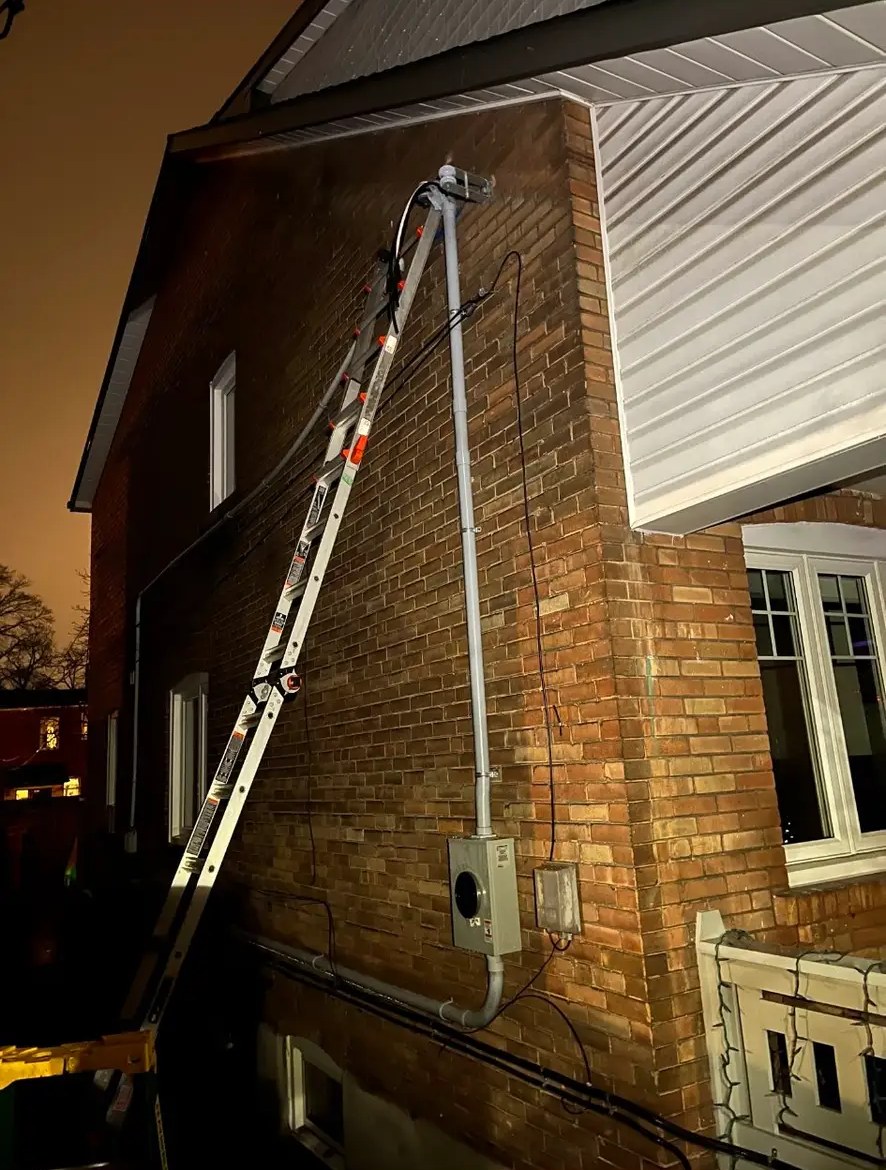
What the finished work looks like
Clevis repair cost in North York
How much does it cost to replace a clevis in North York? Two fixed fees come before our work even begins — and neither one is ours:
$600 + HST = $678
$92 + HST = $103.96
The $600 is a Toronto Hydro price, and North York is Toronto Hydro territory — the fee applies here exactly as it does downtown, no matter who does the repair. Other utilities — Alectra, for one — don’t charge it.
All in, most North York clevis repairs land between $1,450 and $2,400 + HST. Where yours sits depends on the job:
- The wall — the big one here: clean block behind the veneer anchors directly; a wall that needs the extended, through-bolted clevis sits higher in the range
- Height and shape — attachments sit in Toronto Hydro’s 4,500–5,500 mm (15–18 ft) band, and North York’s split-levels put them at awkward spots within it, over roofs and additions
- Access — the wide lots usually help; fences, decks and carports in the ladder’s way do not
- Bundling — paired with a 200 amp upgrade, the clevis shares one Hydro fee and one inspection instead of paying for its own
Send us a photo of your clevis and the wall around it — and tell us if a service upgrade is in your plans — and we will tell you where in the range your job sits.
Request a Quote★★★★★ 4.9 from 200+ reviews
Questions, answered straight
What is a defect notice, and who can fix what is on it?
It is the ESA’s list of the defects an inspector found on your service. Corrections have to be made by a Licensed Electrical Contractor. For a point-of-attachment defect, the correction is this repair — a new clevis, anchored to structure, on an ESA permit — and the work is re-inspected so the defect is cleared from your file.
I am upgrading to 200 amps for an EV charger. Does the clevis get done too?
It should — and it is the cheapest moment to do it. The upgrade and the clevis share the same Toronto Hydro disconnect fee and the same ESA inspection, so together they cost less than separately, and your new service hangs from an anchor built for it. On North York’s postwar stock, we recommend the two together more often than not.
How can I tell if my wall is solid brick or veneer?
Look at the wall where it ends — at a door or window opening, or an unfinished section in the garage or basement. Solid brick shows two bricks’ depth (about 8 inches of brick); veneer shows one brick’s depth (about 4 inches) with block, or a gap, behind it. A photo of that edge usually tells us. When we are on site, we can confirm in minutes.
Is the clevis my responsibility, or Toronto Hydro’s?
Yours. Hydro owns the cable and connects it to the clevis, but the clevis — like the mast and weatherhead — is customer equipment under Hydro’s service standard. The homeowner supplies, installs and maintains it, through a licensed electrical contractor.
How much does clevis repair cost in North York?
Most clevis repairs in North York land between $1,450 and $2,400 + HST. Two fixed fees come first: Toronto Hydro’s disconnect and reconnect fee, $600 + HST ($678), and the ESA permit and inspection, $92 + HST ($103.96). What moves it is the complexity of the job: the structure of the facade, the height of the clevis, and how tight the space is to the neighbouring house. Your quote is fixed before we start.
My clevis was flagged during another job’s quote. How fast do I need to move?
A flag is not an emergency — it is a deadline with some slack in it. It means the attachment no longer meets standard, so it should be replaced on a planned schedule, not ignored until a storm decides for you. If the same wall is already scheduled for a panel or service upgrade, fold the clevis into that visit and pay the Hydro fee once.
Do I need a permit for a clevis replacement?
Yes — an ESA permit, with an inspection of the finished work. It is part of why the job is documented and warrantable, and it is what Hydro wants to see before they reconnect to a rebuilt attachment. We file it as part of the job.
Get your clevis quoted
Send a photo of the clevis, the wall, and — if you can — the wall’s edge at a door or window. That tells us veneer or solid before we ever climb, and your quote comes back straight.
Request a Quote★★★★★ 4.9 from 200+ reviews
Working across North York’s postwar streets — Willowdale, Lansing, Downsview, Humber Summit, Bathurst Heights, Don Mills, Bayview Village, and beyond.
Also: clevis installation in Toronto · clevis installation in Etobicoke
Prices are subject to change without notice. Errors and omissions excepted. All prices plus HST unless stated otherwise.