Power Your Property With Commercial EV Charging
3e designs and installs commercial EV charger systems for business fleets, workplaces, condos and retail properties across Toronto and the GTA. 3e is a licensed electrical contractor (ECRA/ESA 7014948), so the design, the installation and the inspection sit with one accountable company.
Request a QuoteLicensed electricians · Engineer-led design

In fact, more drivers are going electric every year, and commercial properties that offer charging win tenants, customers and fleet efficiency. Whether you need a single Level 2 station or a networked bank of DC fast chargers,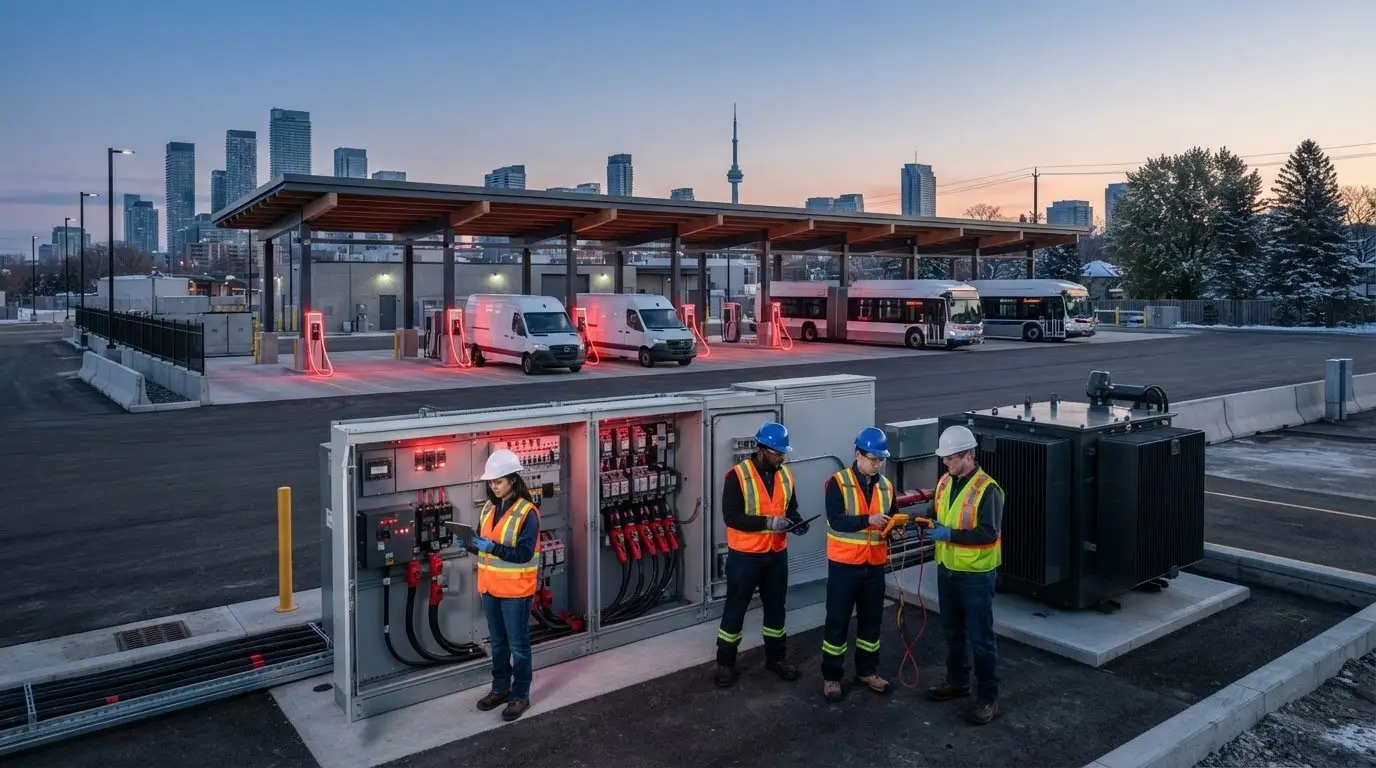
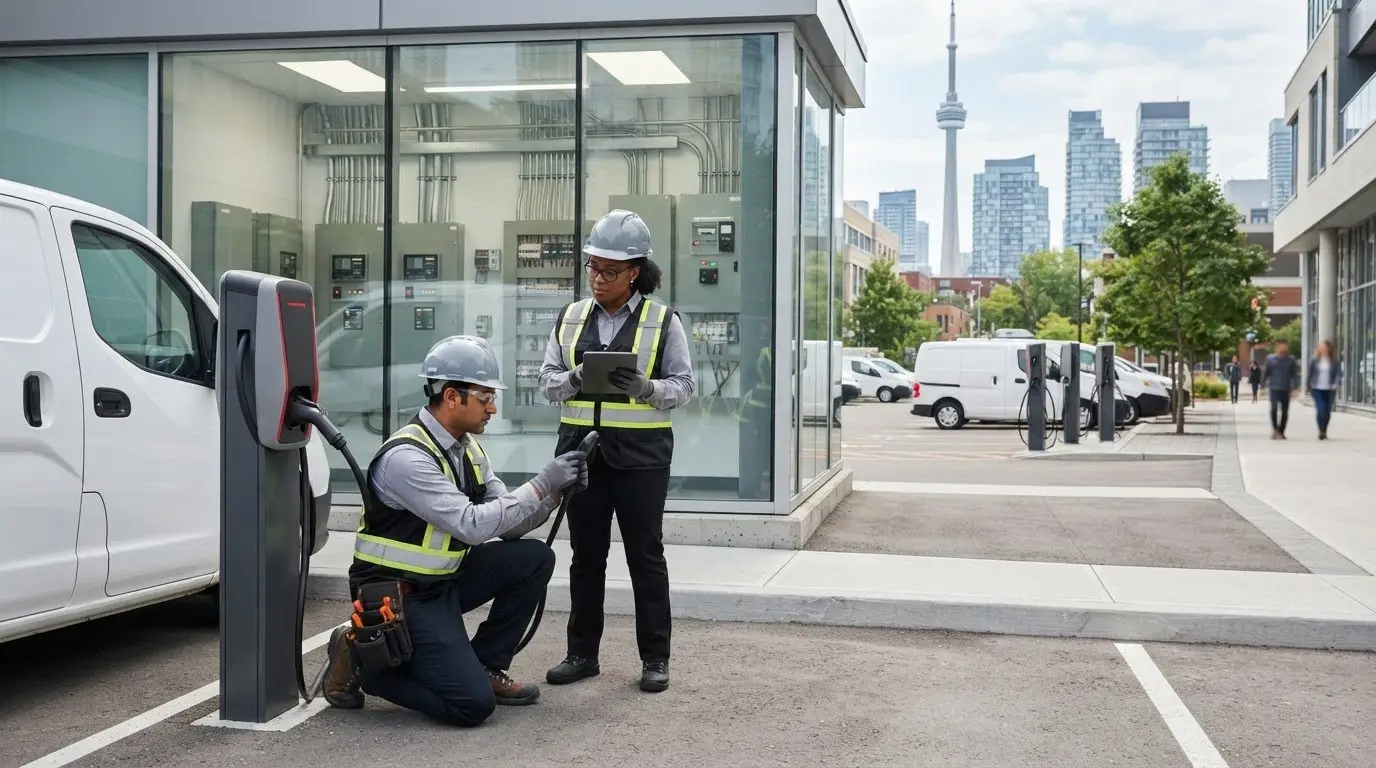
Level 2 vs Level 3: Commercial EV Charging Compared
Choosing the right charger therefore starts with understanding how fast each level charges, what power it needs and where it makes sense.
Level 2 Charging
Speed: Typically 208/240V at 30 to 80 amps, adding roughly 40 to 80 km of range per hour of charging.
Best for: Workplaces, condos and retail locations where vehicles park for several hours at a time.
Power requirements: Moderate. Most commercial buildings, for example, can support multiple Level 2 stations when paired with load management.
Level 3 (DC Fast) Charging
Speed: Typically 400/480V three-phase, adding hundreds of kilometres of range in about 20 to 40 minutes.
Best for: Fleets with tight turnaround schedules, public-facing sites and locations where drivers need a fast top-up.
Power requirements: Significant. In particular, DC fast chargers often require dedicated high-capacity services and coordination with your utility.
How to Choose a Commercial EV Charger
The key is to match the charger to vehicle dwell time. For example, cars parked for hours do not need DC fast charging, while fleet vehicles on tight schedules do. We also weigh daily mileage, the number of vehicles, available electrical capacity and your budget before recommending a mix of Level 2 and Level 3 stations.
Commercial EV Charger Costs and Pricing Factors
However, every commercial site is different, so honest pricing always starts with a site assessment. These are the main factors that determine your project cost:
- Number of ports: More stations mean more equipment, wiring and labour.
- Trenching and conduit runs: The distance from the electrical room to the parking area drives trenching, conduit, concrete cutting and restoration work.
- Panel capacity: If your existing service cannot handle the added load, a panel or service upgrade adds to the project.
- Networking and software: Billing platforms, access control, load management hardware and cellular or Wi-Fi connectivity.
- Permits and inspections: ESA permits, engineering drawings where required and inspection fees.
To get an accurate number for your property, book a site assessment and we will provide a detailed written quote — in other words, no surprises.
Load Calculations and Panel Capacity
Adding one home charger is simple. In contrast, adding ten networked chargers to a commercial building is an engineering exercise, and it starts with a proper load calculation.
Under the Ontario Electrical Safety Code, every commercial EV charger installation must be supported by load calculations that prove the existing service can handle the added demand. Otherwise, undersized services lead to tripped breakers, overheated equipment and failed inspections.
Our licensed electricians calculate your building’s real spare capacity, apply the correct demand and diversity factors, and design around them. Where capacity is tight, we use intelligent load management systems that share available power across chargers instead of forcing an expensive utility service upgrade. The result is a safe, code-compliant installation that passes ESA inspection the first time. That is the advantage of hiring an electrical contractor with engineering in-house: the load numbers are run before a single charger is ordered.
Billing and Payment Options for Commercial EV Chargers
In fact, commercial chargers can be a revenue stream, a tenant amenity or both. The main models are:
- Third-party billing: Networked stations with built-in payment processing let drivers pay per kWh or per session. You set the pricing, control access and receive usage and revenue reports.
- Free charging for customers: Offer charging as a complimentary amenity to attract shoppers, diners, tenants or employees. The setup is simpler and the energy cost becomes an operating expense.
- Hybrid models: Free charging for employees or residents with paid public access, or validated free sessions for customers.
We install OCPP-compliant stations that work with the major billing networks. As a result, you are not locked into a single provider and can change networks if your needs evolve.
Government Rebates and Incentives
Federal and provincial incentive programs for commercial EV charging infrastructure exist, but they change over time. Programs such as the federal Zero Emission Vehicle Infrastructure Program (ZEVIP) have supported commercial, workplace and multi-unit installations in the past, and new or updated programs are announced periodically by federal, provincial and utility bodies.
Because eligibility rules, covered costs and funding windows change, we review the programs currently available during your site assessment and design your project to meet program requirements. So ask us what incentives are open right now, and we will help you navigate the application process.
Workplace, Fleet and Multi-Unit Charging
In practice, different properties need different charging strategies, so we design for each:
- Workplaces and offices: Employee charging as a benefit, with scheduled sessions that spread load across the workday.
- Fleets and depots: Overnight depot charging sized to your routes, with load management that avoids costly utility demand charges.
- Condos and multi-unit buildings: Individual resident billing, load sharing across parkade stations and access control that keeps charging fair.
- Retail and hospitality: Customer-facing chargers that attract EV drivers and increase time spent on site.
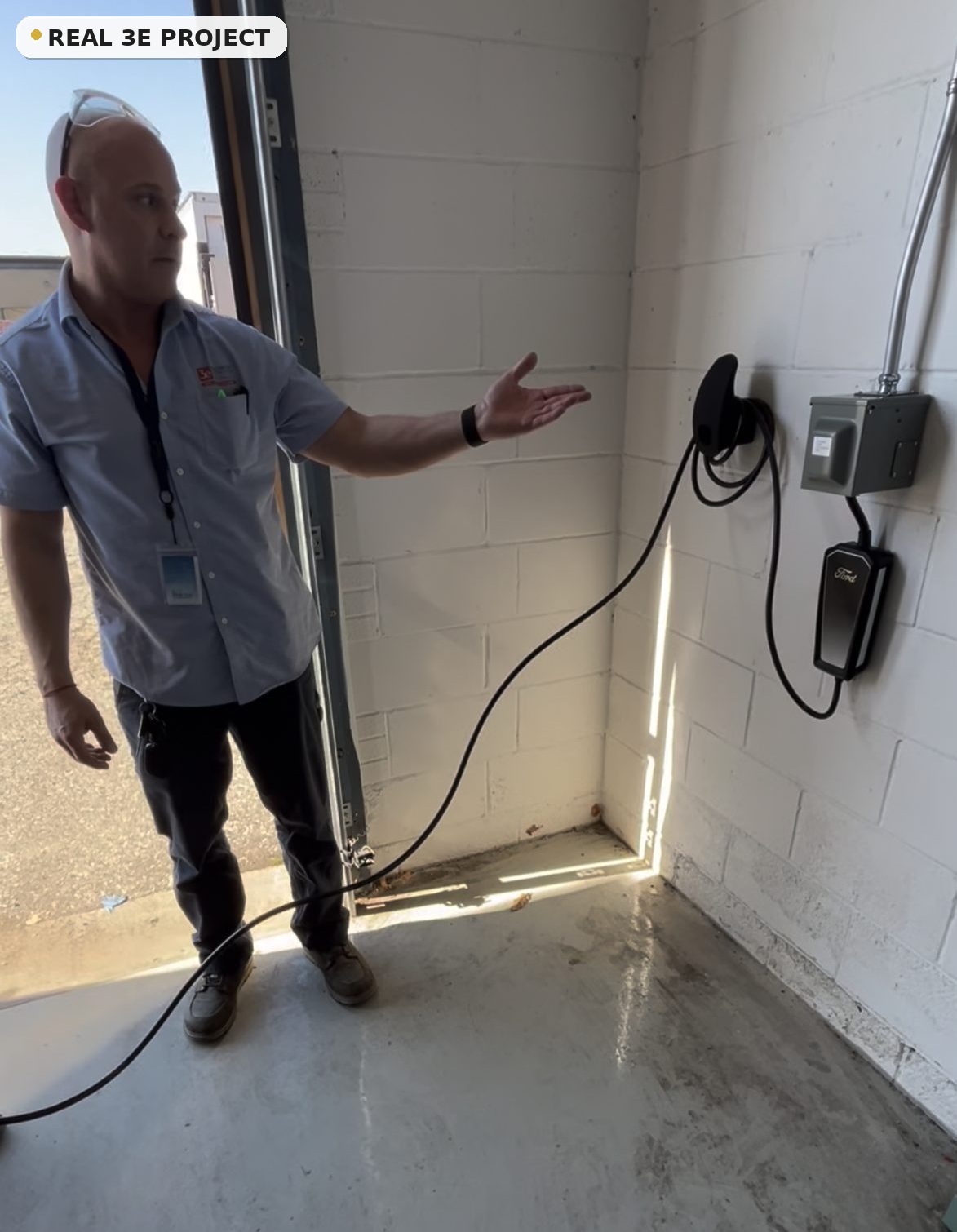
A 3e project: fleet charging in Etobicoke
An armored car company runs two Ford E-Transit vans out of its Etobicoke facility, and those vans have to leave charged every day. However, other contractors had priced the job around a new step-down transformer and a rebuild of the site’s distribution to make room for it.
Instead, our engineer-led inspection and proper load calculations found the capacity was already there. In fact, the site has two services, and several circuits were sitting unused. We put that space to work instead, and installed a 50-amp circuit delivering 40-amp Level 2 commercial EV charging for the vans. No transformer, no distribution rebuild — and the client saved over $12,000.
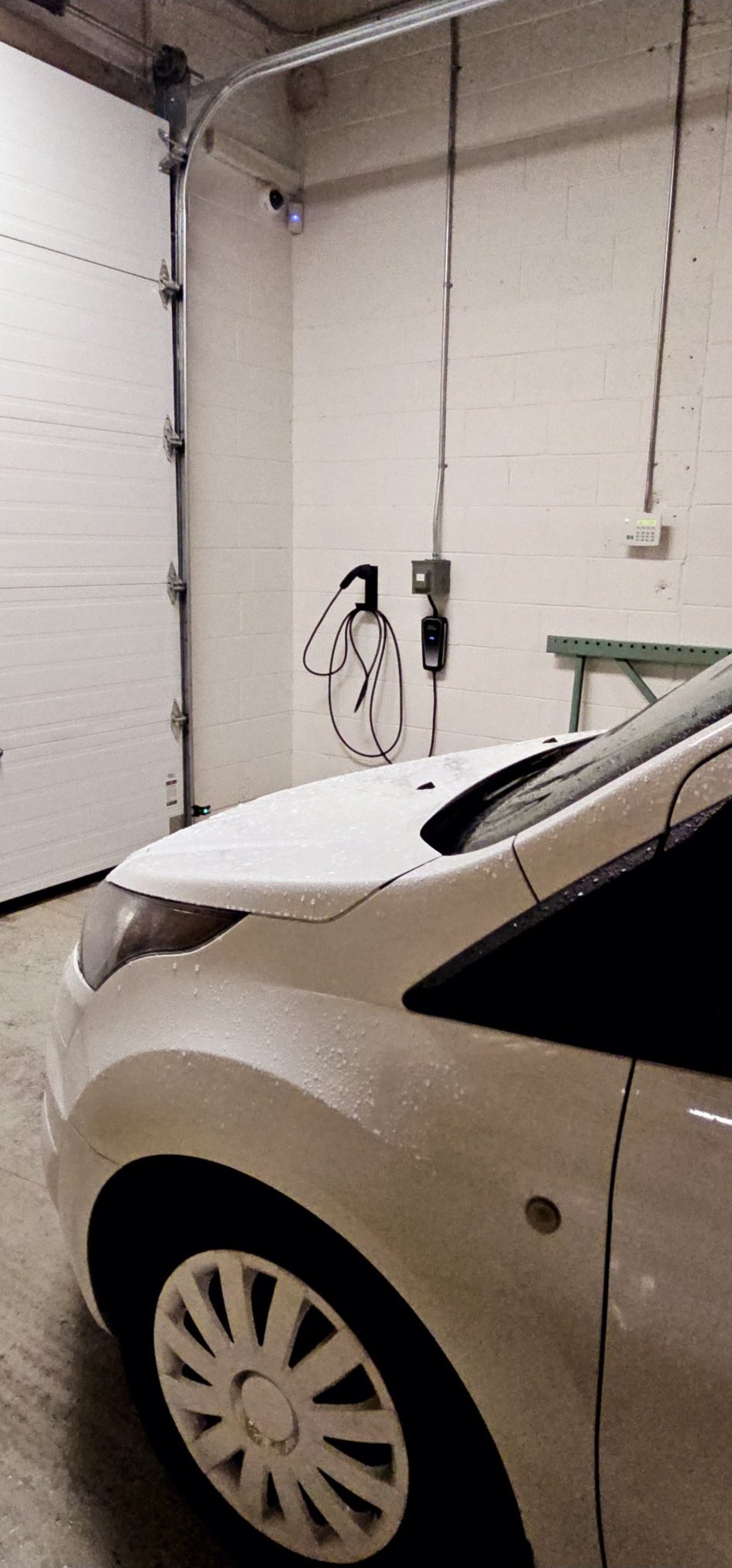
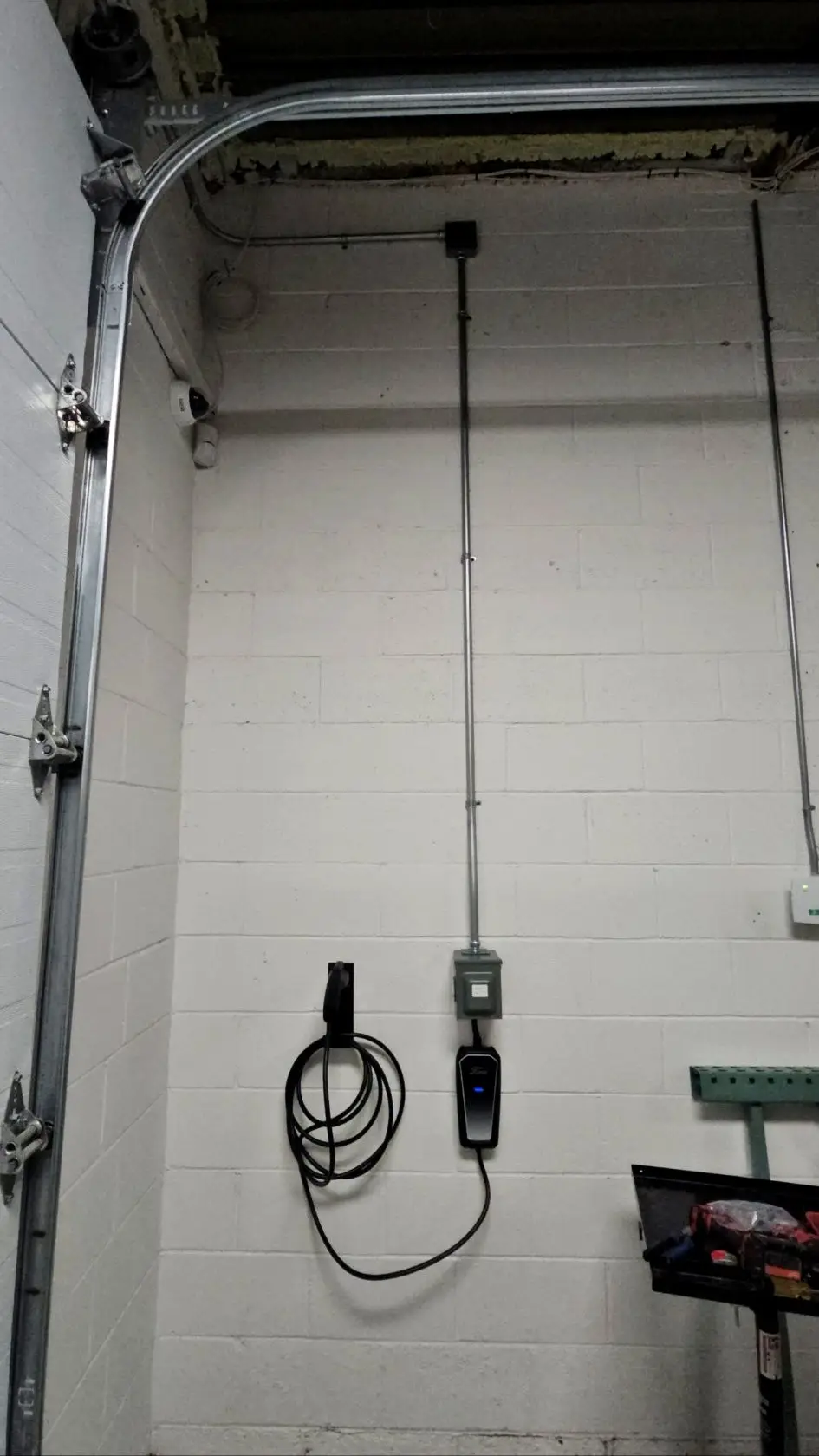
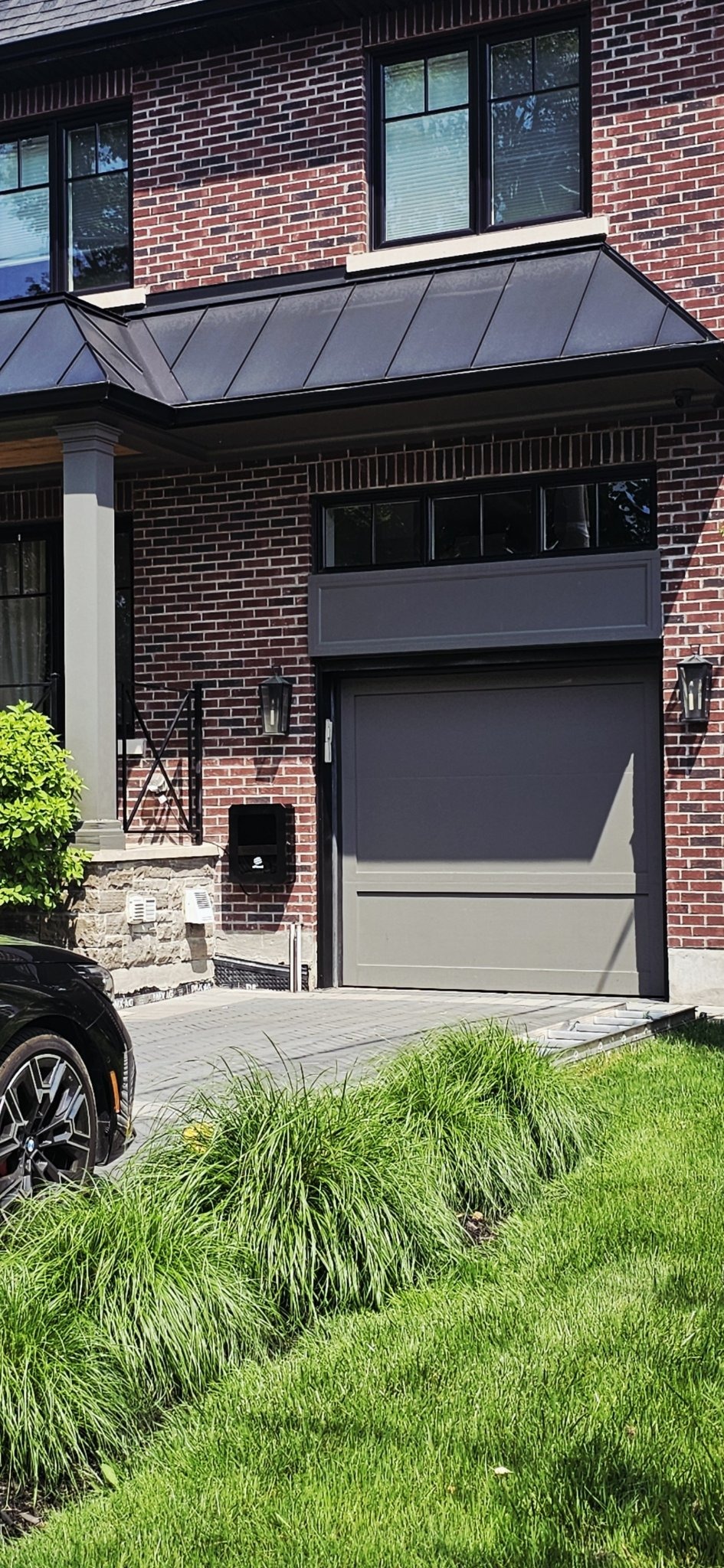
Tap a photo to view it full size. 3e project — fleet EV charging, Etobicoke.
Read the case study: how the load calculation saved over $12,000
Commercial EV Charger Maintenance and Networking
Commercial chargers are tenant-facing or revenue-generating assets, so they need to work every day. Therefore, we build every project on networked, OCPP-compliant stations with:
- Remote monitoring: Real-time status, fault alerts and usage reporting from a single dashboard.
- Load management: Dynamic power sharing that protects your electrical service as you add stations.
- Firmware updates: Automatic updates that keep stations secure and compatible with new vehicles.
- Preventive maintenance: Scheduled inspections, cleaning and testing that catch issues before they cause downtime, backed by manufacturer warranty support.
Frequently Asked Questions
How much does it cost to install a commercial EV charger?
Overall, the cost depends on the number of ports, trenching distance, existing panel capacity, networking and permits. Because every site is different, we provide pricing after a site assessment with a detailed written quote.
Do I need a permit for a commercial EV charger installation in Toronto?
Yes. Specifically, electrical permits and ESA inspections are required for commercial EV charger installations in Ontario. 3e Electrical handles all permits, drawings where required and inspection scheduling for you.
How long does a commercial EV charger installation take?
Typically, straightforward Level 2 projects go from site assessment to energization in a matter of weeks. Larger multi-port projects or DC fast charging installations that need service upgrades or utility coordination take longer. We give you a realistic schedule with your quote.
Should my business choose Level 2 or Level 3 charging?
In practice, it depends on how long vehicles stay parked. Cars parked for hours, such as employee or resident vehicles, are well served by Level 2. Fleets with tight turnaround times or public sites needing fast top-ups benefit from Level 3 DC fast charging. Many sites use a mix of both.
Are there rebates for commercial EV chargers in Ontario?
Federal and provincial incentive programs for commercial EV infrastructure change over time. For this reason, we review the programs currently available during your site assessment and help you navigate eligibility and applications.
Do commercial EV chargers need maintenance?
Yes. In particular, we recommend networked stations with remote monitoring. In addition, a preventive maintenance plan covering inspections, cleaning, testing and firmware updates keeps them reliable, backed by manufacturer warranty support.
Commercial EV services
Commercial EV charging options for workplaces, fleets, retail and multi-unit properties across Toronto and the GTA.
Ready to Add Commercial EV Charging to Your Property?
First, get a site assessment and a detailed written quote for your commercial EV charger installation, from licensed electricians serving Toronto and the GTA.
Request a QuoteFrequently Asked Questions
How much does it cost to install a commercial EV charger?
Overall, the cost depends on the number of ports, trenching distance, existing panel capacity, networking and permits. Because every site is different, we provide pricing after a site assessment with a detailed written quote.
Do I need a permit for a commercial EV charger installation in Toronto?
Yes. Specifically, electrical permits and ESA inspections are required for commercial EV charger installations in Ontario. 3e Electrical handles all permits, drawings where required and inspection scheduling for you.
How long does a commercial EV charger installation take?
Typically, straightforward Level 2 projects go from site assessment to energization in a matter of weeks. Larger multi-port projects or DC fast charging installations that need service upgrades or utility coordination take longer. We give you a realistic schedule with your quote.
Should my business choose Level 2 or Level 3 charging?
In practice, it depends on how long vehicles stay parked. Cars parked for hours, such as employee or resident vehicles, are well served by Level 2. Fleets with tight turnaround times or public sites needing fast top-ups benefit from Level 3 DC fast charging. Many sites use a mix of both.
Are there rebates for commercial EV chargers in Ontario?
Federal and provincial incentive programs for commercial EV infrastructure change over time. For this reason, we review the programs currently available during your site assessment and help you navigate eligibility and applications.
Do commercial EV chargers need maintenance?
Yes. In particular, we recommend networked stations with remote monitoring. In addition, a preventive maintenance plan covering inspections, cleaning, testing and firmware updates keeps them reliable, backed by manufacturer warranty support.