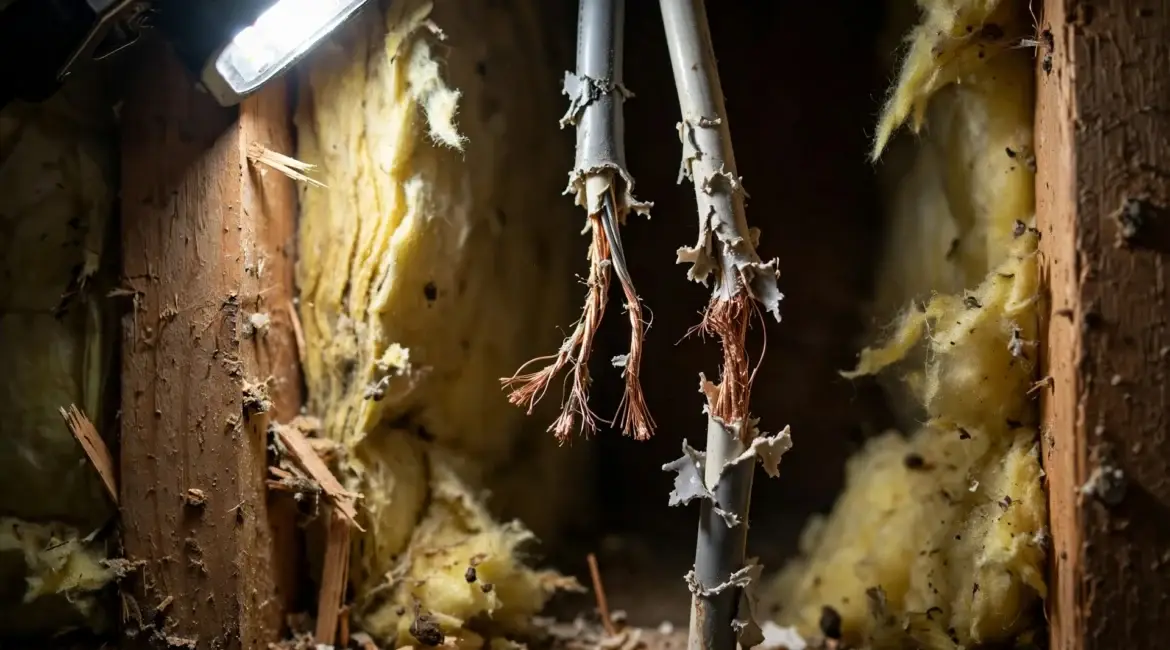
Yes. Mice and rats chew through electrical wiring — and they do it in Toronto homes every year. It usually starts small: a flickering light, an outlet that works when it feels like it. Left alone, chewed wiring can arc, overheat, and start a fire inside your walls. And the repair bill runs from a few thousand dollars to well over $10,000.
Here is why it happens, what it costs, and the warning signs to watch for.
Key Takeaways
- Mice and rats gnaw wiring to wear down their ever-growing teeth — live wires do not stop them.
- Major street construction and renovations displace rodents straight into nearby homes.
- Chewed wires cause power failures, arc faults, and house fires.
- Repairs typically run into the thousands; severe damage tops $10,000.
- Flickering lights, scratching sounds, and droppings near your panel are the three big warning signs.
On This Page
Why Street Construction Sends Rodents Into Your Home
Toronto never stops building — road work, sewer replacements, condo excavations, whole-street revitalizations. For the rats and mice living under sidewalks, in embankments, and around construction sites, that work is an eviction notice. Their burrows collapse, their food sources vanish, and they move. They do not move far. They move inside — into the nearest warm, dry structure. Yours.
Attics, wall cavities, and basement ceilings become the new burrow. And once rodents are nesting in your walls, your electrical wiring is sitting right in their path — and in their teeth.
What Happens When Rodents Chew Electrical Wires
A rodent’s teeth never stop growing, so it gnaws constantly to wear them down. The plastic insulation on household wiring happens to be the perfect texture. The wire being live does not deter them.
Once the insulation is stripped away:
- Short circuits and power failures. Exposed conductors touch each other or grounded metal, and the circuit dies — or the breaker trips again and again.
- Arc faults. Damaged wires can arc — essentially tiny lightning strikes inside your wall — throwing off intense heat and sparks.
- Fire. That heat lands on wood framing, insulation, and dust. Electrical arcing from damaged wiring is a documented cause of house fires.
One chewed cable can knock out a single circuit. Several chewed runs — common once rodents nest — can mean damage across multiple rooms or at the panel itself.
The Real Cost: Thousands to Over $10,000
Fixing rodent-chewed wiring is not a patch job. An electrician has to open walls or ceilings to find every damaged run, replace the cable, verify the circuit is safe, and then everything has to be closed up and refinished. The costs stack fast:
- A single damaged circuit, caught early: typically a few thousand dollars.
- Multiple rooms, or damage at the panel feed: $10,000 or more, once you count electrical work plus drywall and paint.
- Many homeowners insurance policies exclude rodent damage outright — so this often comes straight out of pocket.
That is why catching it early matters so much. A $300 inspection today can prevent a five-figure repair tomorrow.
5 Warning Signs of Rodent Damage in Your Walls
- Flickering lights or intermittent outlets. A connection that works sometimes and fails sometimes is a classic sign of damaged conductors.
- Breakers tripping for no clear reason. If a breaker keeps tripping and nothing new was plugged in, suspect the wiring — not the breaker.
- Scratching, gnawing, or scurrying sounds in walls or ceilings, especially at night when rodents are active.
- Droppings near your electrical panel, in the attic, or along basement walls.
- A burning or unusual smell near outlets or the panel. Stop using that circuit and call a licensed electrician immediately — this one is urgent.
What to Do If You Suspect Chewed Wiring
Do not ignore it, and do not DIY the repair — damaged wiring is exactly the kind of job that needs a licensed electrician. In Ontario, that means a licensed electrical contractor — the repair has to be verified safe, not just patched. If you smell burning or see scorch marks around an outlet or your panel, treat it as urgent and call right away.
A proper visit covers two things: the electrician finds and repairs every damaged run and confirms your system is safe, and you deal with the rodents themselves — because repaired wires with the mice still in the walls just become chewed wires again. Pair the electrical repair with pest control.
Frequently Asked Questions
Can mice really chew through electrical wires?
Yes. Mice and rats routinely chew through the plastic insulation on household wiring, and they can damage the copper conductors underneath. Their teeth grow continuously, so gnawing is constant — and electrical cable is a convenient target wherever rodents travel through walls, attics, and basements.
Why do rodents chew on wires in the first place?
They are not after the electricity — they are filing their teeth. A rodent’s incisors never stop growing, and it must gnaw on hard materials to keep them worn down. Wire insulation has an appealing texture and sits exactly along the routes rodents travel inside walls.
Can chewed wires actually cause a house fire?
Yes. When insulation is stripped away, damaged conductors can arc — producing intense heat and sparks inside the wall cavity. That heat can ignite wood framing, insulation, and dust. Arc faults from damaged wiring are a recognized cause of residential fires.
How much does it cost to repair rodent-chewed wiring?
A single damaged circuit caught early typically costs a few thousand dollars. When rodents have damaged wiring across multiple rooms, or the damage reaches the panel feed, total repairs — electrical work plus opening and refinishing walls — can exceed $10,000. Many insurance policies exclude rodent damage, so homeowners often pay out of pocket.
Does homeowners insurance cover rodent damage to wiring?
Often, no. Many policies explicitly exclude damage caused by rodents, classifying it as a maintenance issue rather than a sudden insurable event. Check your policy wording — and do not assume you are covered until you have confirmed it.
How do I keep rodents away from my home’s wiring?
Seal entry points (gaps around pipes, vents, and the foundation), keep attics and basements uncluttered, and address any known rodent activity with pest control promptly — especially during nearby street construction. If you have had rodents in the walls, have a licensed electrician inspect the wiring even if everything seems to work.
Do Not Wait for a $10,000 Problem
If your lights are flickering, a breaker keeps tripping, or you have heard scratching in the walls, get your wiring checked now. Call 3e Electrical at (647) 560-7995 or request a free remote estimate — a licensed electrician will inspect your wiring and tell you straight what is going on. 3e is a licensed electrical contractor in Toronto, so the inspection, the repair and the safety verification all come from one company.