An electrical panel upgrade is rarely just about swapping out a grey metal box on your basement wall. It is a deliberate, whole-system capacity expansion engineered to protect your property and modernize how your home functions. If your breakers trip when heavy appliances run at once, or an older fuse panel is driving up your insurance premiums, you already feel the limitation. Modern living demands reliable current. Powering electric vehicle charging and high-efficiency heat pumps on legacy wiring simply does not work.
You might wonder whether your home needs a simple breaker replacement or a full amperage service upgrade from the utility line. You might also feel uncertain about ESA permits, power disconnection timelines, and local utility coordination. That apprehension is understandable. Major electrical work should restore peace of mind, not introduce disruption or costly guesswork.
In this guide, you will understand when a panel upgrade is functionally and legally necessary, how residential service capacity works, and what the Ontario Electrical Safety Code mandates. We walk through the exact steps of the upgrade process, giving you the knowledge to plan your home power capacity safely without overpaying for unneeded capacity.
Key Takeaways
- Distinguish between a standard breaker box replacement and an upstream service capacity expansion to ensure you invest in the correct scope of work.
- Recognize the physical and operational warnings that signal your home requires an electrical panel upgrade to safely support modern additions like EV chargers or heat pumps.
- Learn how engineering load calculations accurately assess real demand, establishing whether a 100-amp or 200-amp system fits your property without excess expenditure.
- Understand the Ontario regulatory roadmap, spanning mandatory Electrical Safety Authority permits, regional utility coordination, and final inspection sign-offs.
- Identify the core credentials required for a Licensed Electrical Contractor to guarantee full code compliance, safety assurance, and long-term home reliability.
What Is an Electrical Panel Upgrade and How Does It Work?
Every watt of power entering your property passes through a single control point. Commonly known as an electrical panel, breaker box, or load centre, this enclosure acts as the central distribution hub for your home. Technically classified as a distribution board, its primary job is routing high-voltage utility power into isolated branch circuits while protecting your home’s wiring from dangerous thermal overloads and short circuits.
Electricity travels from local utility distribution lines, overhead through a weatherhead or underground via lateral conduit, directly into an exterior meter base. From the meter, heavy-gauge service conductors pass through the foundation wall into the main breaker. This main switch dictates your dwelling’s total simultaneous electrical capacity, measured in amperes (amps). If current draw exceeds safe operational limits, the breaker trips to prevent wiring degradation and fire risk.
The Core Components of Your Electrical Service
A residential service assembly functions as an interconnected safety ecosystem:
- Main Breaker: The primary shutoff switch that limits total amperage across the entire dwelling.
- Hot Busbars: Dual solid metal tracks carrying 120-volt current per leg to power branch breakers.
- Neutral and Ground Busbars: Conductive strips that return current safely to ground and balance operational voltage.
- Branch Circuit Breakers: Individual thermal-magnetic or electronic switches sized to protect downstream 15-amp, 20-amp, or dedicated 240-volt circuits.
- Grounding Electrodes: Copper-clad steel rods driven deep into soil, combined with metallic water pipe bonds, directing utility surges and lightning strikes safely into the earth.
Panel Replacement vs. Service Upgrade: Crucial Distinctions
Homeowners often conflate a simple panel replacement with a true service upgrade. Swapping out a deteriorating 100-amp breaker box gives you modern components, updated busbars, and fresh breakers. It does not supply more current from the street. If your incoming utility cables are only rated for 100 amps, the capacity ceiling of your home remains unchanged.
A complete electrical panel upgrade, by contrast, targets the entire electrical infrastructure. When demand outgrows older 16-space or 24-space enclosures, a true upgrade replaces incoming utility conductors, installs larger external conduit, updates the exterior meter base, and expands the panel to a 40-circuit or 60-circuit configuration. Modern living requires substantial, continuous current. Upgrading both the service equipment and the distribution board ensures your home reliably handles level-2 vehicle charging, secondary suites, and clean-energy mechanical systems without compromise.
Key Signs Your Home Requires an Electrical Panel Upgrade
Your electrical infrastructure sends distinct warnings before a critical failure occurs. In many Ontario homes built before 1990, original distribution systems were sized for a modest lifestyle of 60 to 100 amps. Today, these systems strain under modern appliance profiles. Ignoring clear indicators risks equipment failure, thermal hazards, or policy cancellations from insurance providers unwilling to underwrite vintage fuse blocks and uncertified hardware.
Physical and Operational Warning Signals
Daily operational disruptions often reveal an overtaxed panel. If running an air fryer and a microwave on the same circuit trips a breaker, your panel is signaling capacity exhaustion. Watch for these clear physical symptoms:
- Flickering or Dimming Lights: Noticeable illumination drops when major appliances cycle on indicate sudden voltage sags.
- Auditory Indicators: Faint buzzing, sizzling, or clicking sounds radiating from the enclosure reveal active electrical arcing or loose terminal connections.
- Thermal Warning Signs: Enclosure surfaces warm to the touch or discolouration on breaker housing signal severe internal resistance and persistent heat buildup.
Obsolete hardware introduces compounding risks. Legacy 60-amp services and discontinued equipment fail to clear faults reliably. Insurance underwriters routinely flag these panels, requiring certified replacements supported by documented ESA Notifications and Inspections before issuing or renewing coverage.
Demands Driven by Electrification and High-Draw Loads
Lifestyle electrification rapidly exhausts legacy service capacity. Modern shifts away from fossil fuels, such as installing whole-home heat pumps or high-output induction ranges, place continuous, heavy draws on your main distribution system. Basement apartment conversions introduce separate kitchens and laundry suites that push existing circuits past safe operating margins.
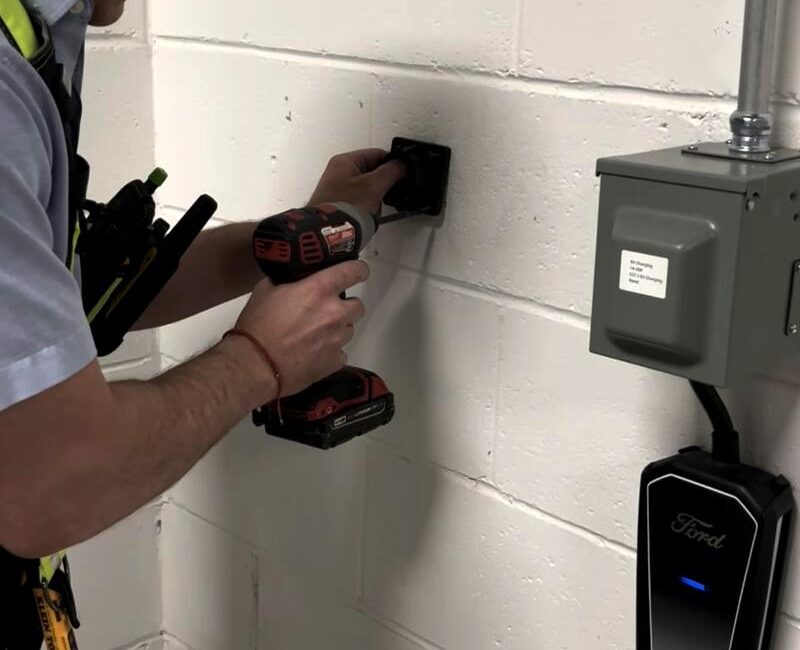
Electric transportation creates an even steeper demand curve. Adding a dedicated 240-volt charging circuit onto a standard 100-amp service often leads to dangerous overload conditions. Completing a dedicated EV charger installation assessment clarifies your total draw before you introduce high-amperage hardware. When simultaneous appliance use triggers breaker trips, an electrical panel upgrade ceases to be an optional project; it becomes an essential infrastructure requirement. If your current service struggles with these modern loads, arranging a thorough system review with 3e Electrical protects both your equipment and your household.
100-Amp vs. 200-Amp Service: Sizing and Load Calculations
Determining your home’s electrical capacity is a matter of applied physics, not rough estimation. While older GTA residences functioned comfortably on 100 amps of total capacity, modern residential demand patterns look vastly different. Evaluating whether your home requires an electrical panel upgrade to 200-amp service begins with a methodical load calculation governed by the Ontario Electrical Safety Code.
Calculating Residential Electrical Load Accurately
A common misconception is that adding up the numerical values stamped on individual breaker handles indicates your total load. It does not. Breakers represent circuit-level overcurrent safety thresholds, not continuous energy draws. In practice, a standard home panel may contain 150 amps or more in cumulative breaker handles on a 100-amp main switch without violating safety standards.
Licensed professionals rely on Section 8 of the safety code to calculate total demand. This formula assigns a baseline wattage determined by living area square footage, incorporating set watts-per-square-metre thresholds. From there, specific demand factors apply:
- Electric Space Heating: Factored at 100 percent of the initial 10 kilowatts, with remaining heating loads adjusted downward depending on thermostat zoning.
- Electric Ranges and Ovens: Assessed with a standard code allowance that accounts for typical domestic usage patterns rather than continuous peak draw.
- Continuous High-Amperage Loads: Central air conditioning, electric vehicle supply equipment, and continuous tankless water heaters are evaluated at full nameplate rating.
Choosing Between a Service Upgrade and a Subpanel
When an existing panel physically runs out of breaker spaces, homeowners often assume their total electrical capacity is exhausted. That is not always the case. If your calculated continuous demand remains comfortably within 100 amps, installing a subpanel resolves slot limitations efficiently. A subpanel is a subsidiary distribution board fed directly from the main panel via a dedicated two-pole breaker, providing additional physical breaker knockouts for standard circuits without altering your incoming utility line.
Conversely, a full service expansion becomes inescapable when aggregate continuous demand surpasses safe operating margins. Installing multi-ton central heat pumps alongside level-2 vehicle charging routinely pushes total calculated loads past 120 amps. When that threshold is crossed, a physical subpanel cannot resolve the bottleneck. You must proceed with a complete electrical panel upgrade to 200-amp service. Reviewing the province’s guidelines on Hiring a Licensed Electrical Contractor ensures your load calculations and capacity expansions follow strict regulatory and engineering protocols.
The Ontario Electrical Panel Upgrade Process Step by Step
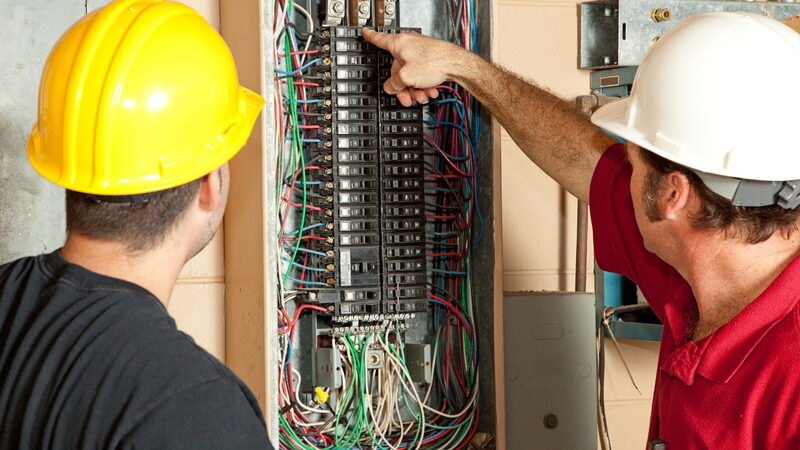
Executing an electrical panel upgrade requires structured logistics. It is not an isolated indoor task. Instead, it is an interconnected technical process spanning administrative permits, municipal grid coordination, physical installation, and formal regulatory safety approvals. Navigating these requirements methodically ensures your power is restored smoothly without code violations or safety delays.
Permitting and Local Utility Coordination
Work begins long before tools touch your basement wall. Under provincial law, a Licensed Electrical Contractor must first file a notification of work with the Electrical Safety Authority (ESA). This formal filing registers your project details, initiating the regulatory oversight process.
Your contractor then coordinates directly with your Local Distribution Company (LDC), such as Toronto Hydro or Alectra Utilities. This stage requires meticulous scheduling. The utility must unlock the meter base and disconnect grid power to the dwelling. For overhead feeds, technicians coordinate physical disconnects at the service pole. For underground setups, crews pull the primary meter safely. Because this work demands a complete power outage, clear coordination ensures grid disconnects align precisely with the contractor’s arrival on site.
Installation Day Execution and Commissioning
Once utility crews isolate the main service, the mechanical installation proceeds in tight sequence:
- Decommissioning Legacy Hardware: The electrician disconnects branch circuits, safely removes obsolete distribution enclosures, and examines the incoming path for structural deterioration.
- Mounting and Enclosure Assembly: Technicians anchor the new panel board, mount updated exterior conduit, set a modern meter base, and install heavy-gauge copper or aluminum service entrance conductors.
- Balancing Branch Circuits: Branch wiring is led neatly through punch knockouts into the enclosure. Circuits are systematically split between both busbar phases to ensure evenly distributed current draw across the panel.
- System Grounding: Technicians bond cold water piping and drive dual exterior ground rods to secure continuous path-to-earth surge protection.
- Labeling and Inspection: Installers complete an accurate circuit directory identifying every room, receptacle, and major appliance.
Before grid power can be restored, an ESA inspector reviews the entire installation to verify compliance with the 2024 Ontario Electrical Safety Code. Once approved, the inspector issues an official connection authorization to your utility. Only then will utility technicians reconnect the lines and re-energize your home. Following final sign-off, you receive an official Certificate of Acceptance, proving to insurance providers that your infrastructure meets provincial safety laws. For a seamless installation backed by comprehensive permit management, schedule your service modernization with 3e Electrical.
Selecting a Licensed Electrical Contractor for Safe Modernization
Executing major high-voltage alterations demands uncompromised technical qualification. In Ontario, an electrical panel upgrade cannot legally be performed by a general handyman or an uncertified tradesperson. Provincial regulations mandate that all commercial and residential panel modernizations must be contracted through a Licensed Electrical Contractor (LEC). Engaging certified specialists ensures your project satisfies the Ontario Electrical Safety Code while keeping your home insurance fully valid.
Verifying Credentials and Regulatory Compliance
Protecting your property starts with verifying legitimate operating credentials. A certified journeyperson electrician is qualified to perform electrical work, but only an LEC possesses the legal authority to pull required permits, carry commercial operating insurance, and run an electrical contracting business in Ontario.
Before authorizing any scope of work, confirm these standard operational requirements:
- ECRA/ESA Licence Number: Every licensed contractor displays a seven-digit Electrical Contractor Registration Agency (ECRA) number on their vehicles, estimates, and marketing materials. You can verify this number directly via the ESA public directory.
- WSIB Clearance: Active Workplace Safety and Insurance Board coverage is mandatory, shielding homeowners from direct liability in the event of an on-site injury.
- Comprehensive Liability Insurance: Reputable contractors carry substantial commercial general liability policies to protect your dwelling during complex service cutovers.
Ensuring Complete System Integrity and Clean Execution
Precision execution reflects internal engineering standards. When firms operate under the dual oversight of a Professional Engineer (P.Eng) and a Master Electrician, the modernization process benefits from meticulous calculation and rigorous tradecraft. Feed conductors are shaped with clean, uniform radius bends. Terminals receive exact torque verification to prevent resistive heating. Rather than deciphering illegible, scribbled pencil markings on a panel door, you receive a cleanly typed, unambiguous circuit directory identifying every dedicated run.
Modernization should also integrate future-proof protection. Commissioning a whole-home Surge Protective Device (SPD) alongside your new panel protects sensitive smart home electronics, heat pump controllers, and induction circuitry from external grid voltage spikes. When you plan an electrical panel upgrade, select a partner that treats safety regulations as foundational engineering baselines, ensuring your home infrastructure remains resilient, compliant, and durable for decades to come.
Power Your Home Safely for the Decades Ahead
A resilient electrical system is the quiet backbone of modern domestic safety. As Ontario households transition toward heat pumps and electric vehicles, expanding your capacity ensures your infrastructure operates without thermal stress or insurance complications. Investing in a properly sized electrical panel upgrade delivers lasting security, turning an aging distribution box into a dependable, future-ready foundation for your property.
Executing high-voltage modernization safely requires rigorous technical command. Led by an experienced Professional Engineer and Master Electrician, 3e Electrical manages every phase with discipline. We handle comprehensive ESA permitting to secure your final Certificate of Acceptance, integrate whole-home surge protection, and deliver immaculate circuit mapping with respectful site care. When you’re ready to modernize your home power with uncompromised tradecraft, request a meticulous electrical service consultation with 3e Electrical. Your home deserves an electrical infrastructure engineered to stand the test of time.
Frequently Asked Questions
How much time does a typical electrical panel upgrade take from start to finish?
The physical installation of an electrical panel upgrade typically takes one full working day, usually lasting between six to ten hours. Utility crews arrive in the morning to disconnect service at the street or meter, allowing our electricians to mount the new enclosure and balance circuits safely. Once the ESA inspector completes their inspection and authorizes reconnection, the local utility restores grid power before evening. Administrative lead time for utility scheduling across Toronto and Mississauga generally takes one to three weeks beforehand.
Is an ESA permit and inspection legally mandatory for an electrical panel upgrade in Ontario?
Yes, an Electrical Safety Authority (ESA) permit and final inspection are legally mandatory across Ontario for every panel replacement or service upgrade. Working on your home’s main distribution system without an ESA notification violates provincial law. Your utility will not reconnect grid power without inspector clearance. Following completion, the ESA issues an official Certificate of Acceptance, which proves the installation meets code and protects your insurance standing.
Can I keep my existing 100-amp panel if I want to install a Level 2 EV charger?
You can sometimes retain a 100-amp panel, but it depends entirely on a formal load calculation of your home’s total demand. If your dwelling in North York or Etobicoke uses natural gas for space heating, domestic water, and cooking, you may have sufficient remaining headroom for a 30-amp or 40-amp charger. However, if your home features central air conditioning, an electric dryer, or induction cooking, an upgrade to 200 amps or an intelligent energy management device is typically necessary to prevent overloads.
What happens if my home still has an active 60-amp fuse box?
Operating on an active 60-amp fuse box severely restricts your electrical usage and poses serious insurance compliance challenges. Most Canadian property insurers will not issue or renew standard homeowner policies on 60-amp service due to elevated fire hazards and age-related deterioration. Beyond insurance denial, a 60-amp system cannot safely accommodate modern major appliances, air conditioning, or home renovations. Replacing it with a modern 100-amp or 200-amp breaker panel is vital for both safety and property insurability.
Can I upgrade my electrical panel myself if I own the property?
No, homeowners cannot legally perform an electrical panel upgrade or service replacement on their own in Ontario. Provincial safety regulations require that service cutovers, meter base replacements, and panel modernizations be executed strictly by a Licensed Electrical Contractor (LEC). Because this work involves coordinating high-voltage utility disconnections and live service conductors, utilities like Toronto Hydro and Alectra will not disconnect or reconnect power for unlicensed individuals. Hiring an LEC guarantees code compliance and safety.
How do I know whether I need a service upgrade or just a subpanel?
You need a subpanel if you only lack physical breaker slots, but you require a full service upgrade if your total calculated electrical load exceeds your main breaker rating. If your total amperage draw remains safely below your 100-amp limit, a subpanel adds needed circuit spaces without extra grid capacity. When you introduce major continuous draws like central heat pumps or multiple vehicle chargers that exceed that threshold, only a full 200-amp capacity expansion can safely resolve the load.
Will my power be completely shut off during the electrical panel installation?
Yes, your home will experience a planned power outage while technicians perform the panel replacement. Safety dictates that incoming grid power must be fully isolated by your local utility before technicians remove the existing enclosure and handle service conductors. Disconnections usually occur early in the morning, and power remains off until the physical installation finishes and the ESA grants authorization to re-energize. Planning ahead for food refrigeration and temporary heating ensures a smooth installation day.