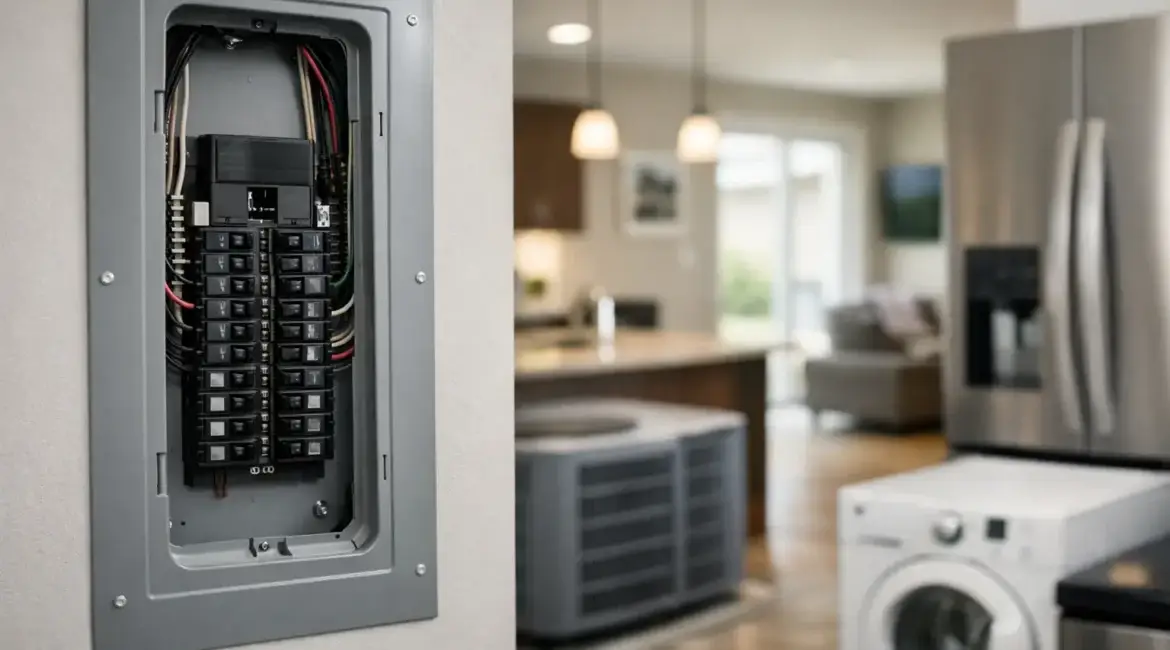
Signs your electrical panel needs upgrading.
What to watch for, what it means, and when to call an electrician.
Lights flickering? Breaker tripping again? These are among the most common signs your electrical panel needs upgrading.
Short version: symptoms are reasons to investigate, not proof the panel must be replaced.
The short version.
No single symptom proves your panel needs replacing. Look for patterns, not one-offs.
Burning smells, smoke, sparking, or a hot panel are urgent — keep away and call an electrician right away.
Flickering lights and tripping breakers often come from something simpler: a loose connection, an overloaded circuit, or a faulty appliance.
Write down when symptoms happen, which rooms are affected, and what was running. Never open the panel yourself.
9 signs your electrical panel needs upgrading.
Match what you notice with a likely meaning and a sensible next step. One row alone doesn’t confirm anything — recurring or multiple symptoms deserve an assessment.
| Symptom | What it can mean | What to do |
|---|---|---|
| Breaker trips repeatedly | Overloaded circuit, faulty appliance, or worn breaker | Note which breaker trips and what was running; don’t keep resetting it |
| Lights flicker or dim | Loose connection or overloaded circuit | Note which rooms are affected; call an electrician if it persists |
| Burning smell at the panel | Overheating wire or breaker — fire risk | Keep away; call an electrician immediately |
| Panel feels hot; scorch marks | Overheating components | Keep away; call an electrician immediately |
| Smoke or sparking | Immediate hazard | Leave the area; contact emergency services |
| Buzzing or humming | Loose breaker or wiring | Call an electrician |
| Rust, damage, discoloration | Deteriorating equipment | Don’t touch it; arrange an assessment |
| Old fuse box | May not suit modern electrical loads | Have it assessed before adding big loads like an EV charger |
| No free breaker slots | Panel at capacity | Assessment needed before adding circuits |
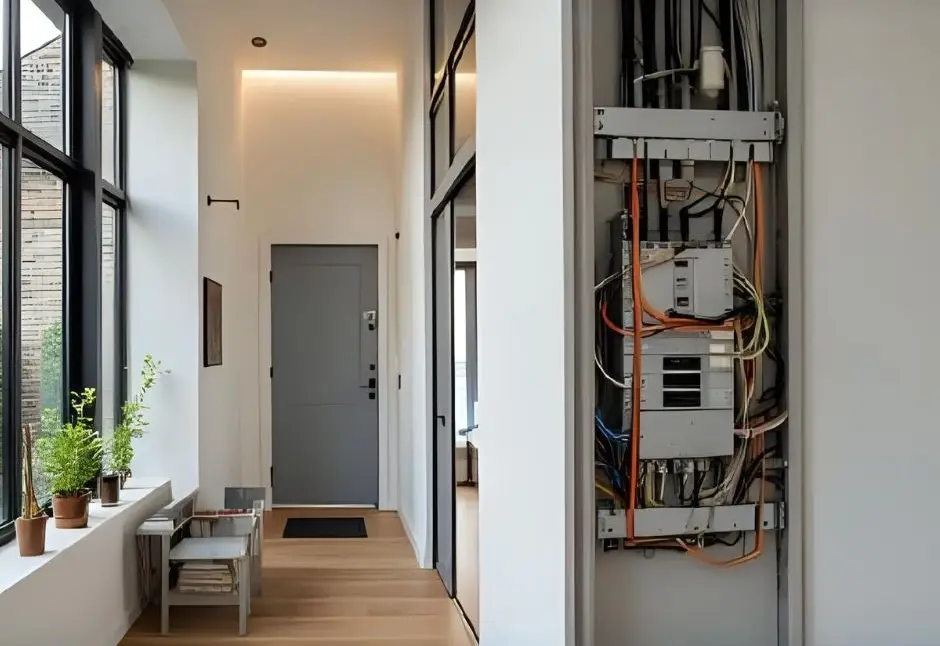
Panel warning signs: when to act fast.
Some symptoms can’t wait.
Burning odours, smoke, sparking, or unusual heat at the panel. Keep away — don’t open the cover or touch anything.
If there is smoke, fire, or immediate danger, leave the area and contact emergency services.
What flickering lights and tripping breakers really mean.
A tripping breaker or flickering light tells you something is happening — not why. The cause is often a single circuit, a loose connection, or an appliance, not the panel itself.
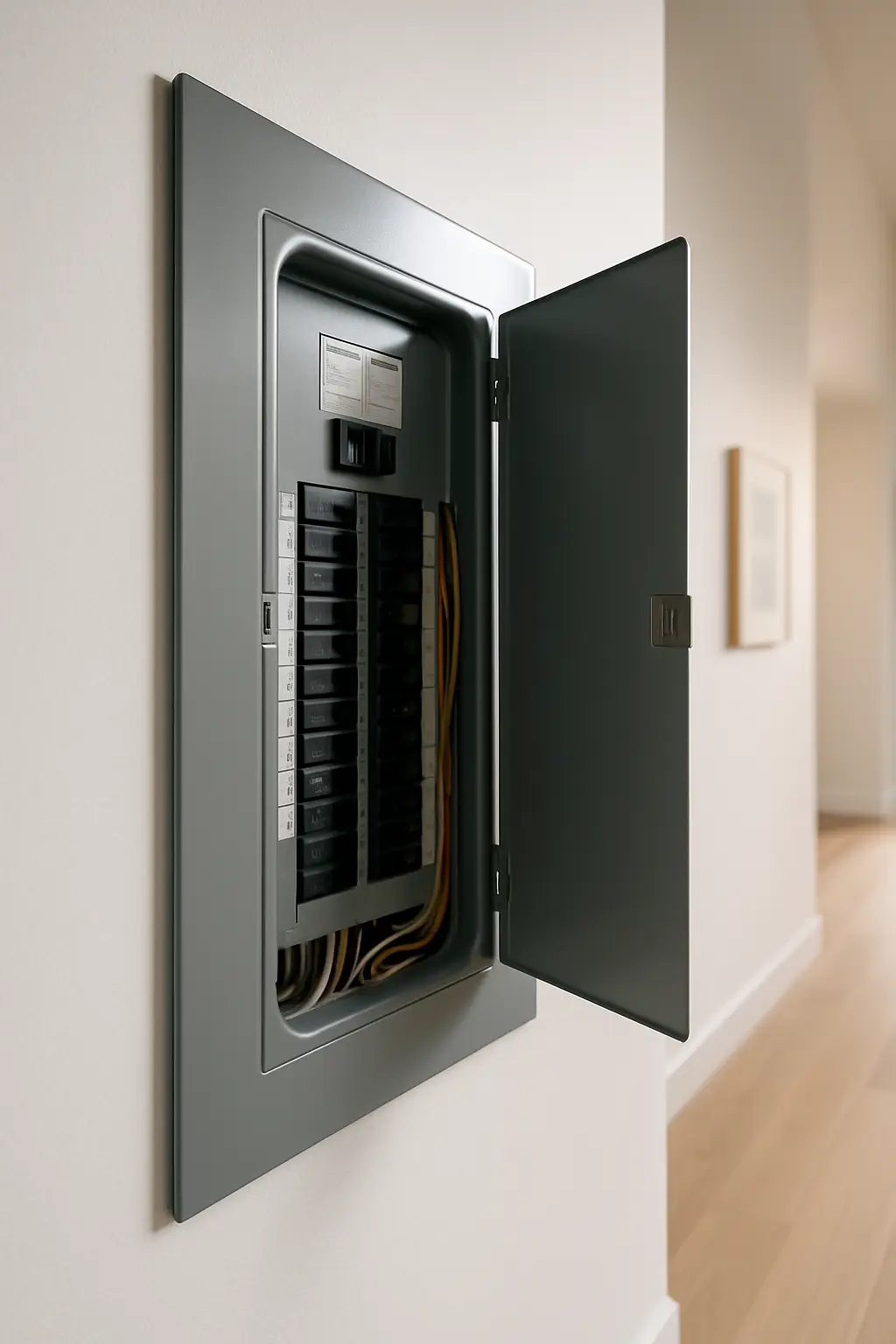
Age alone doesn’t condemn a panel either. An older panel or fuse box deserves assessment, but condition and capacity decide — not the manufacturing date. For background on capacity planning, see this Ontario panel upgrade guide.
A note for Ontario homeowners.
In Ontario, panel upgrades must be notified to the Electrical Safety Authority (ESA) and inspected — this is work for a licensed electrical contractor, not a DIY project. Choose panels and breakers certified to Canadian standards: look for CSA certification from established manufacturers such as Siemens. If your panel is at capacity, see our panel upgrade service.
What to tell your electrician.
You don’t need to diagnose anything. Just bring notes:
- 1
When it happens. Note the timing and how often symptoms occur.
- 2
Where it happens. Which rooms, circuits, or equipment are affected — and what was running.
- 3
What changed. Any recent renovations, new appliances, heating equipment, or EV charging plans.
Electrical panel upgrade FAQs.
Frequently Asked Questions
Do flickering lights mean I need a new panel?
Not necessarily. Flickering often comes from a loose connection, an overloaded circuit, or the fixture itself. If it is persistent or affects several rooms, have an electrician investigate.
My breaker keeps tripping — is the panel bad?
Usually the breaker is doing its job: the circuit is overloaded or there is a fault in connected equipment. Note which breaker trips and what was running, then arrange an assessment instead of repeatedly resetting it.
How old is too old for a panel?
There is no magic age. Condition, capacity, and your household’s electrical needs matter more than the date on the panel. A fuse box or unfamiliar equipment is worth having assessed, especially before adding major loads.
Does adding an EV charger mean I need a panel upgrade?
Not automatically — but your available capacity should be reviewed. An electrician will look at your service, panel, existing loads, and the charger you plan to install. This EV charger installation guide explains more about planning charging work safely.
What happens during a panel assessment?
The electrician reviews your notes, examines the visible equipment, and checks whether your service and panel can support your household’s needs. The findings might point to a circuit or appliance issue rather than the panel — the recommendation should follow the evidence.
Should I choose a 100-amp or 200-amp panel?
It depends on your home’s size, heating type, and plans like EV charging or a hot tub. A licensed electrician will do a load calculation to determine what your service can support — many Ontario homes still run fine on 100 amps, while larger or all-electric homes often need 200.
Can I upgrade my electrical panel myself in Ontario?
No — panel upgrades in Ontario must be notified to the Electrical Safety Authority (ESA) and inspected, and this is work for a licensed electrical contractor, not a DIY project. Unpermitted panel work can create safety risks and insurance or resale problems.
How long does a panel upgrade take?
A straightforward like-for-like panel swap is often a single day of on-site work. The timeline stretches when the incoming service needs upgrading, the panel moves to a new location, or ESA inspection scheduling adds days. Your electrician will confirm the timeline after assessment.
How much does a panel upgrade cost in Ontario?
A like-for-like panel swap runs $1,400–$2,800 plus HST, depending on new breakers, panel brand, and panel size. A full service upgrade costs more: with copper feeds, costs start at $4,300 plus HST, varying with factors like circuit extensions, AFCI breakers, length of feed, and the make and model of the panel. The only accurate figure for your home comes from an on-site assessment — treat flat quotes given sight unseen with suspicion.
Recurring symptoms deserve attention, but you don’t have to diagnose them yourself. Note what you see, stay clear of the panel, and let a qualified electrician determine the next step.
If the checklist points at your panel, read about panel upgrades or request a quote — serving Toronto and the GTA.